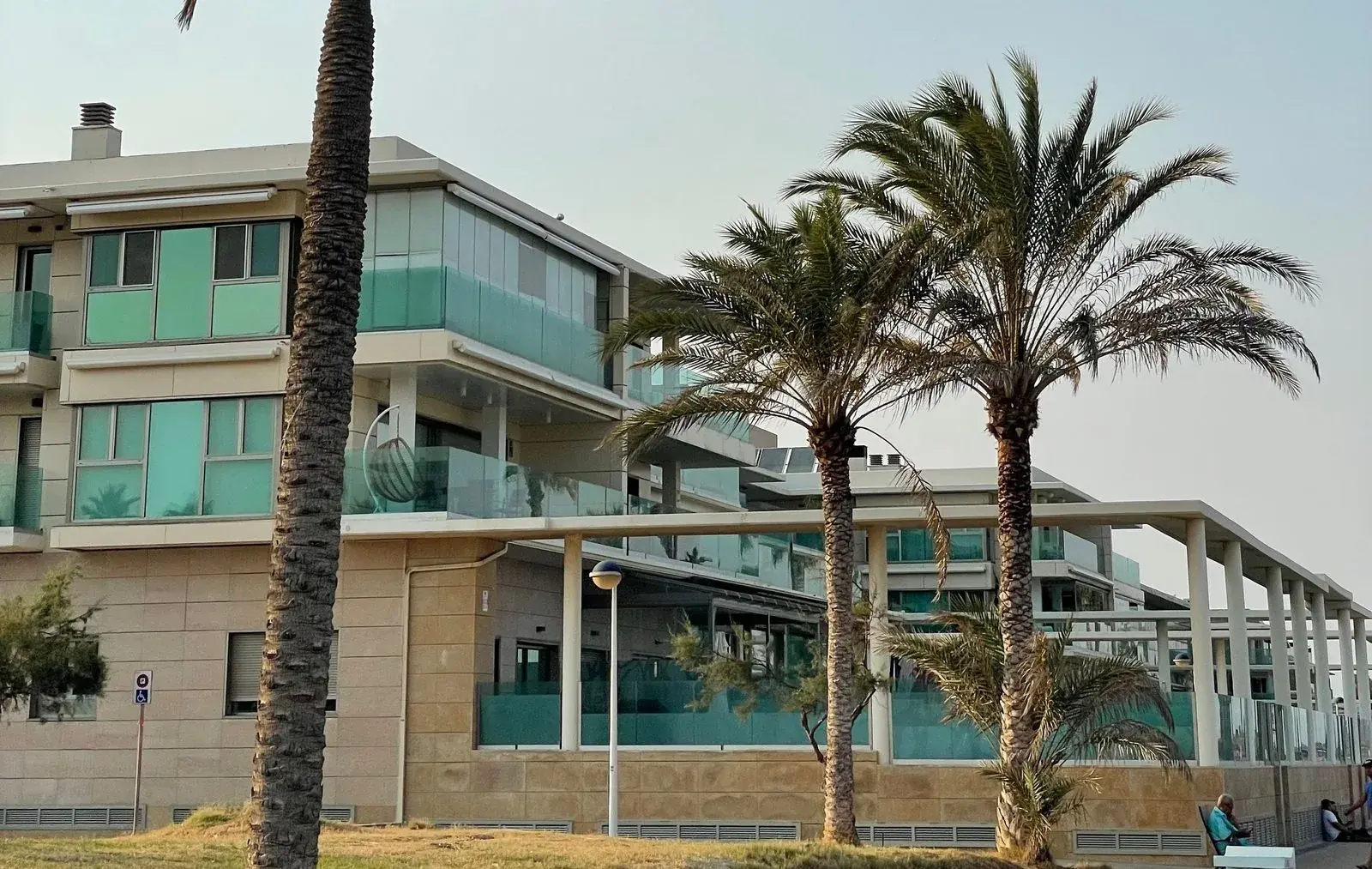
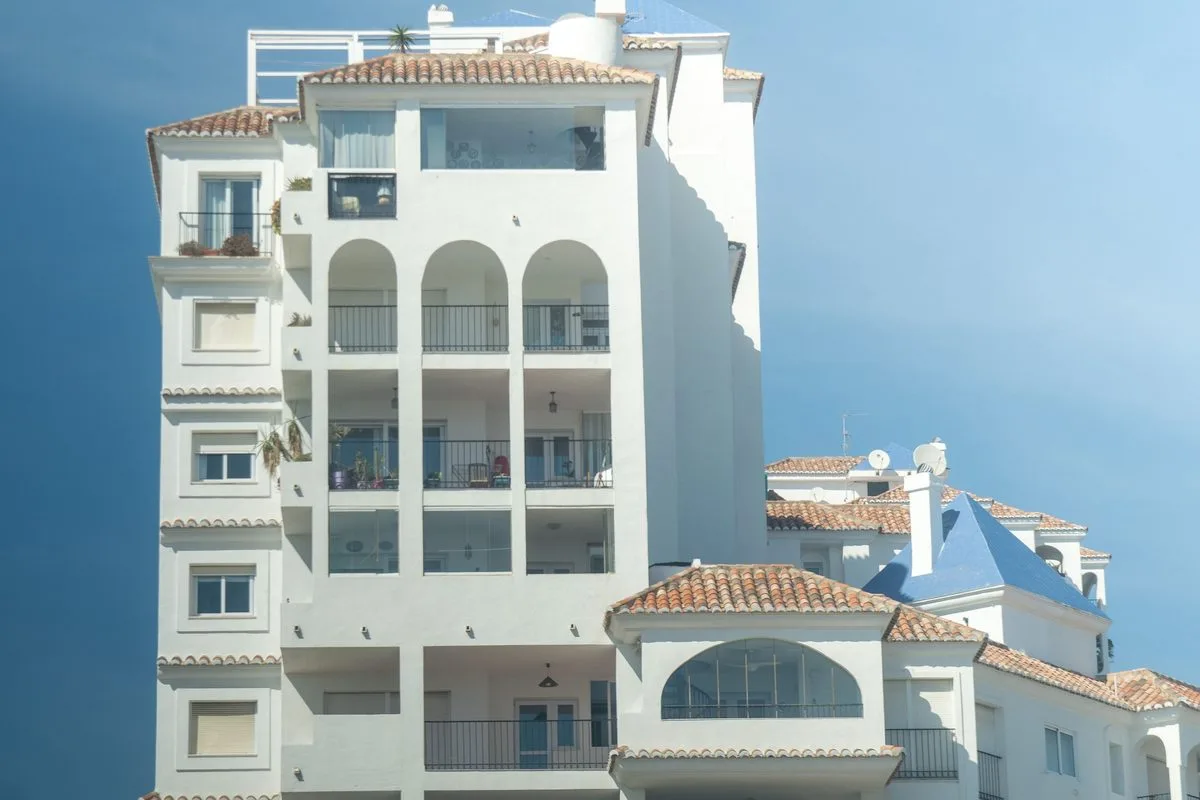
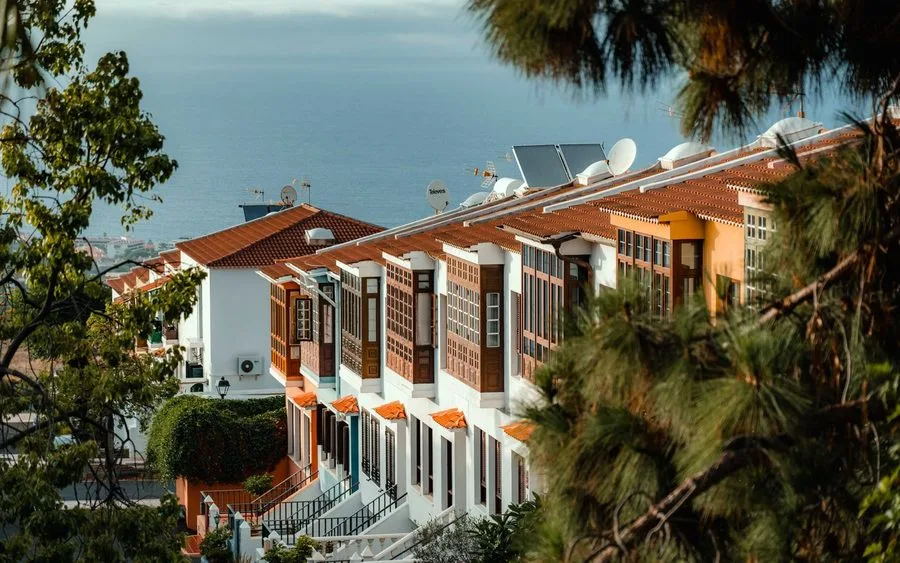
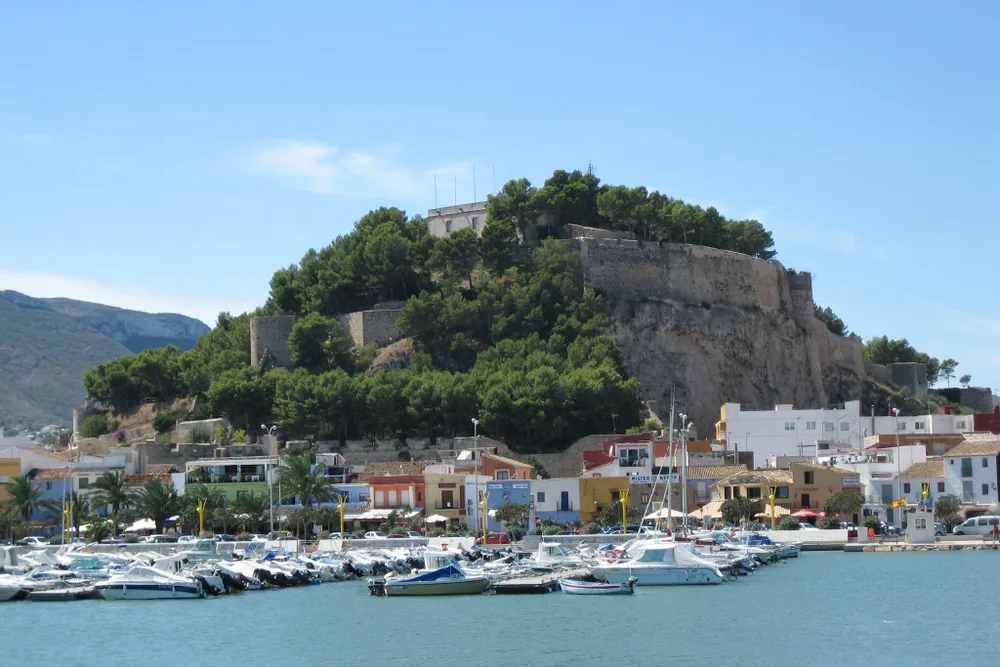
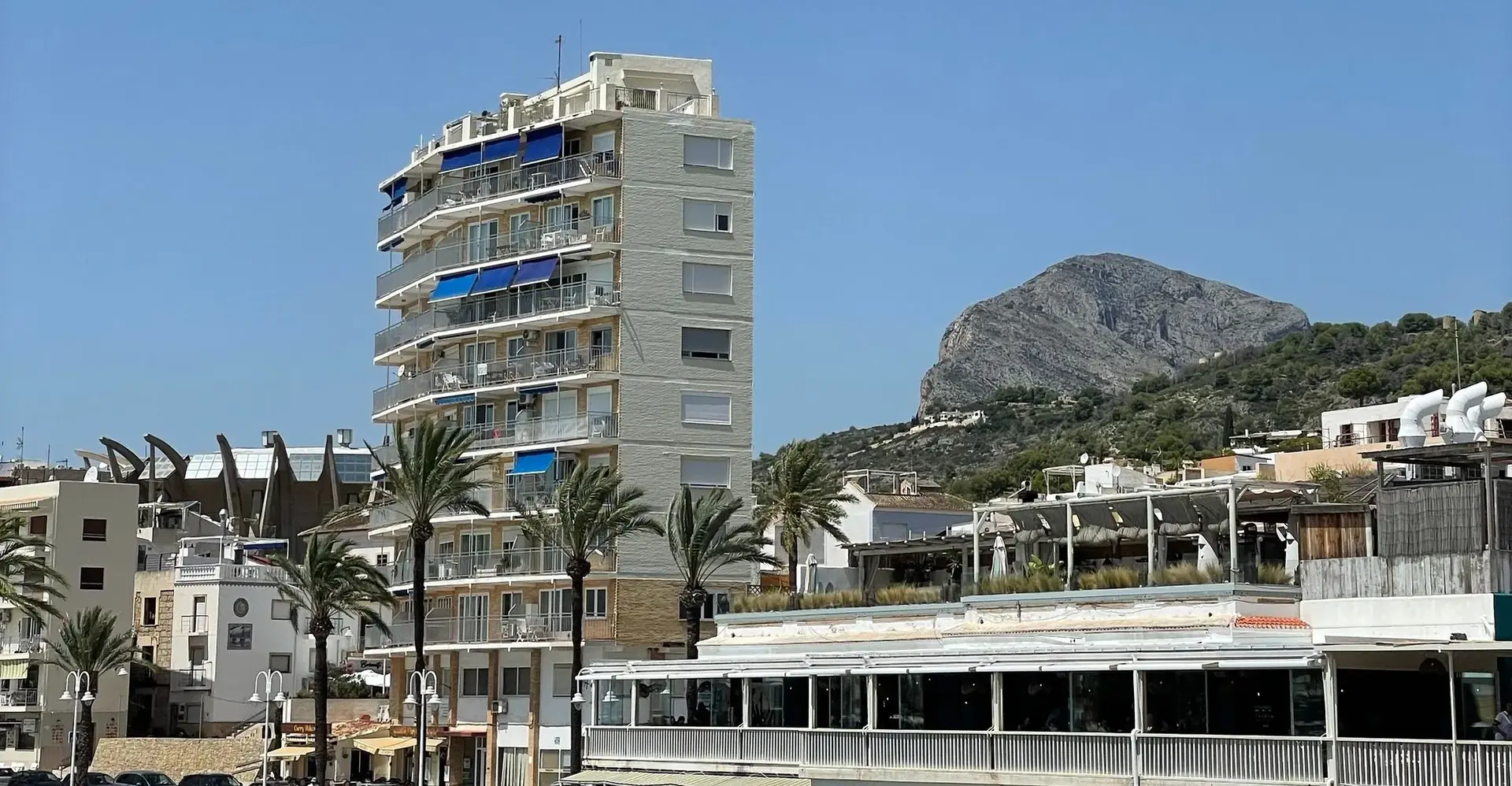
Apartment building with blue awnings and palms on the port of Jávea, Montgó in the background

Costa Blanca North · Jávea · Apartments

Apartments for Sale in Jávea

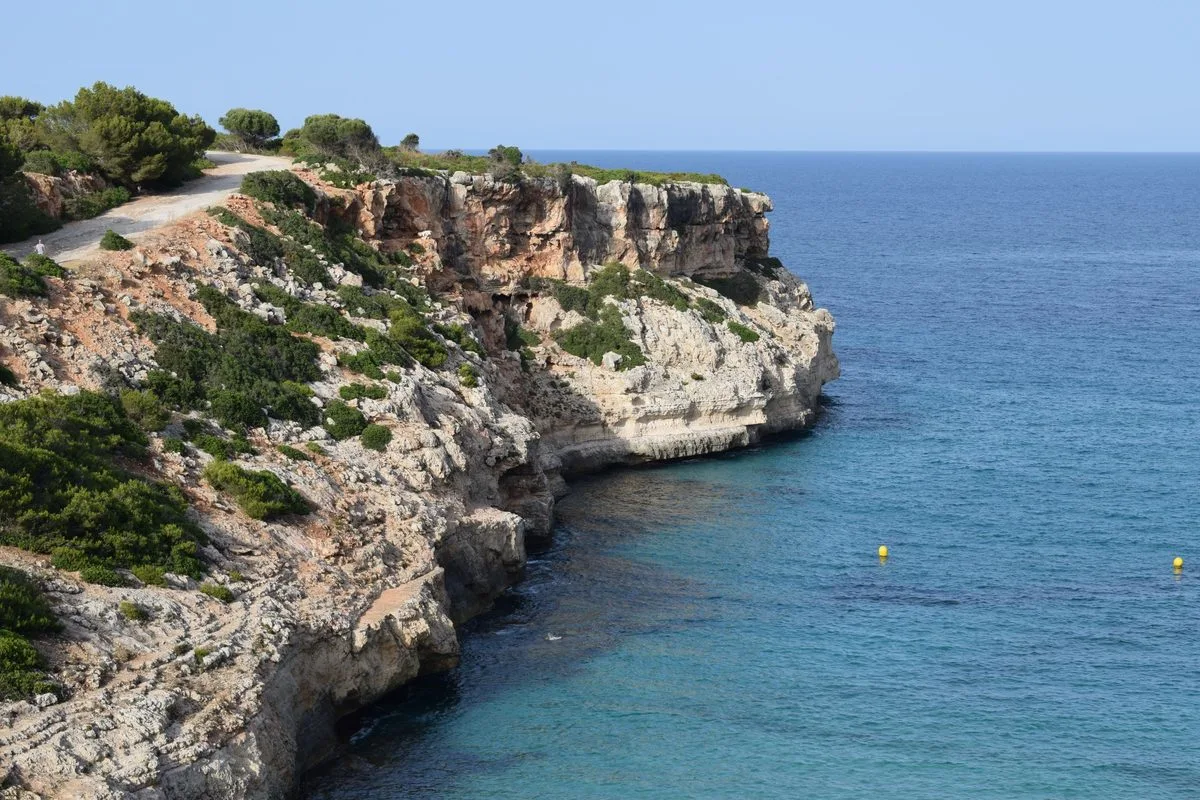
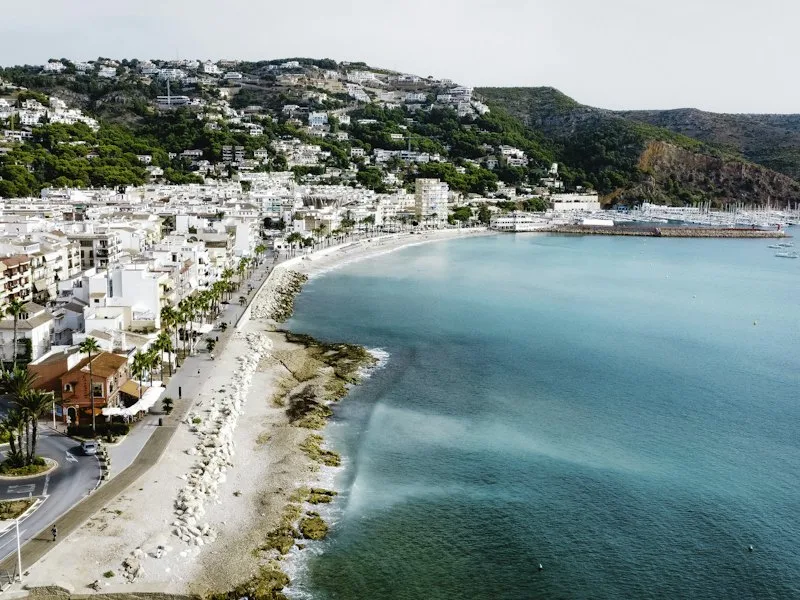
Apartments along the bay of Xàbia: from Arenal beach and the Montañar seafront to the harbour quarter of Duanes de la Mar, the centre with its year-round services and the southern coves — with the Montgó as a backdrop.

Prevalence

How prevalent are apartments in Jávea?

Apartments in Jávea are readily available, with the stock concentrated in five distinct areas — El Arenal, Centro Ciudad, Montañar, Puerto/Duanes de la Mar and Cala Blanca — while the outer urbanisations around Portichol–Balcón al Mar, La Granadella–Costa Nova, Tosalet and parts of Cap Martí are dominated by detached houses and offer few apartments. Within those areas, the stock spans several building periods: Centro Ciudad and Puerto/Duanes have established town and harbour blocks where renovations, lift access, façades and glazed terraces need to be checked in each building; El Arenal and Montañar combine coastal buildings and gated urbanisations from the late twentieth and early twenty-first centuries with newer developments; and Cala Blanca is low-rise with a limited but established selection. No official dataset splits Xàbia’s apartment stock by district or building era — the overview below is a market assessment rather than a statistical breakdown. Buying in Jávea means choosing a lifestyle as well as an apartment.

Modern white apartment building with glass balconies behind palm trees

What is a typical apartment in Jávea like?

There is no single typical Jávea apartment: each part of the bay offers a different lifestyle. El Arenal offers a beach lifestyle: one-to three-bedroom apartments within walking distance of the municipality’s main sandy beach, with terraces, lifts, parking and communal pools, in established coastal buildings and gated urbanisations alongside new-build developments. Puerto/Duanes de la Mar offers harbour living: older blocks and renovated units around La Grava, the marina and the Nuestra Señora de Loreto church, with more year-round services than its reputation as a holiday destination might suggest. The Montañar offers seafront living: apartments on the coastal strip between Arenal and the port, priced according to their views, orientation and terrace space. And Centro Ciudad offers town living: flats in and around the historic core near the San Bartolomé church, larger renovation opportunities and new developments in the town centre. At the top of the market are penthouses and duplex penthouses, with prices reflecting their open sea views and limited availability.

Where apartments in Jávea are usually found

El Arenal: walking distance to the beach, terraces, lifts and poolsCentro Ciudad: year-round living around the historic coreMontañar: the seafront strip between Arenal and the portDuanes de la Mar: the harbour quarter with La Grava, the Lonja and the Loreto church
Very active
El Arenal & Montañar
The beach and seafront belt of the municipality. El Arenal is Xàbia’s tourist centre beside its main sandy beach: a promenade with restaurants and leisure facilities, the Parador building at the northern end, and apartment complexes around it ranging from established coastal buildings to new gated developments. The Montañar extends along the seafront strip between Arenal and the port — Primer and Segon Montañar, with new-build developments marketed along roads such as the Carretera Cabo de la Nao. This area brings together beach access, promenade life and sea views.
This coastal belt has one clear trade-off: seasonality. Summer in Arenal is lively, with traffic, busy restaurant terraces and holiday rentals, all of which are part of buying here. For each building, consider the orientation, the distance to the promenade, high-season noise and the condition of the exterior after exposure to salt and storms; visit shortlisted properties in July and January to understand both sides of living here.
Locations in this areaEl ArenalPrimer & Segon MontañarCabo de la Nao
Active
Centro Ciudad & Puerto/Duanes de la Mar
The year-round base of the apartment market. Centro Ciudad is the historic core around the San Bartolomé church and the town hall: older town blocks, larger renovation opportunities, flats above shops and an active pipeline of new developments along streets such as Historiador Palau, Arquitecte Urteaga, Rei Juan Carlos I and the Avenida de Palmela. Puerto/Duanes de la Mar is the harbour quarter: La Grava, the marina with the Club Náutico, the fish market/La Lonja, Casa del Cable and the Loreto church — a quarter the municipality describes as active all year. Together they form the main residential areas for year-round living around the bay.
These year-round areas call for closer checks of the building and legal documentation than the beach areas: older blocks are more likely to have altered layouts, glazed terraces and lifts due for replacement, and in the harbour quarter the exact address determines whether the apartment is on the seafront or one row back. Request the owners’ association meeting minutes, the IEEV.CV building report for older apartment blocks and evidence of occupancy authorisation before making an offer.
Locations in this areaCentro CiudadDuanes de la MarLa Grava
Steady
Cala Blanca & the southern coves
The smaller coastal market south of the port: Cala Blanca is a low-rise urbanisation by the cove, with a limited but established selection of apartments — renovated second-row stock, a few new-build additions and many original two-storey buildings. The setting is calmer than Arenal and greener than the centre, but the choice is limited: buyers should follow the local market over time and assess each property’s distance from the seafront, exposure to the sea and maintenance of the common parts.
Access is a key consideration here: in cove urbanisations, the exact road, parking space and gradient matter, and the distance on a map says little about the daily route to shops, beach and services. Walk the route from parking space to front door, check the seaward-facing exterior for salt and damp, and read the community budget — a special levy can cost each owner more in a small complex than in a large building.
Locations in this areaCala Blancacoves south of the port

Current supply

The current apartment supply in Jávea

Apartment supply in Jávea falls into three segments across five main areas. The largest segment is resale: established town and harbour blocks in Centro Ciudad and Puerto/Duanes, coastal buildings and gated urbanisations around El Arenal and the Montañar, and low-rise stock in Cala Blanca. The renovated segment is also well represented, particularly in the centre, the port and Arenal, where a lower purchase price or an established location comes with a need to verify permits, community approvals and building condition. New build is particularly visible: a minority of the market, but active and concentrated in Centro Ciudad, El Arenal, Montañar and Cala Blanca, with developments marketed under names such as Jávea Garden and Serestar in the centre, Unic on the Rei Juan Carlos I, Marina Bay Sunset and Adeya around Arenal, Blue Gardens and Nusa Dua on the Montañar and Atenas 82 in Cala Blanca. Compare properties by lifestyle and building: the condition of the building and community charges matter as much as the location.

Resale

The established stock

The largest segment by volume, with the oldest buildings: established town and harbour blocks in Centro Ciudad and Puerto/Duanes, coastal buildings and gated urbanisations from the late twentieth and early twenty-first centuries around El Arenal and the Montañar, and low-rise stock in Cala Blanca. The range runs from compact beach units with a communal pool to spacious flats in and around the historic core, and from year-round harbour quarters to developments that are busiest in summer. The breadth of choice is the advantage: compare buildings of similar ages within the same area. The trade-off is age: every block needs its façade, roof, lift, pool and community budget checked, and glazed terraces or altered layouts are not always reflected in the title deeds, Land Registry and Cadastre.

Renovated

A condition label, not a guarantee

A significant part of the market — particularly in Puerto/Duanes, Centro Ciudad and El Arenal — is older stock modernised internally or reconfigured: new kitchens and bathrooms, open-plan layouts, glazed terraces counted as extra rooms in property listings. But renovation quality varies, and “renovated” remains a condition label: a new interior proves nothing about the façade, roof, waterproofing, lift, plumbing risers or communal works. On the coast, the climate adds to the maintenance burden: salt, wind and the intense autumn storms can damage terrace edges, frames and balconies in ways that listing photos may not reveal. A renovated kitchen does not mean the building’s exterior has been repaired; overlooking this can turn a good purchase into a costly one.

New build

Concentrated per node, not across the municipality

New build accounts for a small share of the total apartment market, but there is an active pipeline in specific locations: in the centre around Historiador Palau and Arquitecte Urteaga (Jávea Garden, Serestar), on the Rei Juan Carlos I (Unic), around Arenal on Calle Bruselas and Calle Cannes (Marina Bay Sunset, Adeya), on the Montañar along the Carretera Cabo de la Nao and the Avenida Augusta (Blue Gardens, Nusa Dua) and in Cala Blanca (Atenas 82). Developments are generally low-or mid-rise with large terraces, communal amenities, parking and advertised energy-efficiency features. Check the building licence, occupancy permit, completion date and warranties for each development. Units being marketed today may compete with yours if you later decide to sell. Ask the developer to confirm the licence status and permitted use with the municipality, particularly if you plan to let to tourists.

What “renovated” does and does not tell you in Jávea
  1. The interior is not the building

    A new kitchen and new bathrooms answer none of the questions about the façade, roof, lift, waterproofing, pool, plumbing risers or insulation — and in the established blocks of the centre, the port and Arenal these checks can distinguish a good purchase from a costly one. Ask what was replaced inside the apartment and in the common parts, which permits covered the work, and whether invoices and reports are available.

  2. Terrace & glazing

    Glazed terraces, enclosed balconies, roof terraces and converted storerooms are often presented as living space in property listings — but they affect both communal elements and compliance with municipal building rules, and are not always reflected in the title deeds, Land Registry and Cadastre. Check the legal status of each element separately: private or communal, permitted or not, and whether the current configuration is reflected in the registration. A terrace missing from the title deeds carries a legal risk.

  3. Area: lived vs. registered

    The actual floor area of older apartments often differs from the registered area: lay the nota simple, the sales contract, the cadastral record, approved plans and an independent measured survey side by side before making an offer — and look specifically at mezzanines, storage rooms, enclosed balconies and “underbuilds”. The floor area quoted in a listing may also be calculated differently from usable floor area. In properties altered over decades, this should be a routine check.

  4. The community file

    Read the documents establishing the owners’ association and its statutes, not only the latest community certificate, and request the minutes of recent meetings, the budgets, the accounts, the reserve fund balance, insurance claims and any planned or approved special levies. Lift, façade, roof, pool and energy projects: who pays, what amount has been approved, and is litigation pending? Ask for a certificate confirming outstanding community debts, as these can attach to the property within statutory limits.

  5. The building file: IEEV.CV & PATRICOVA

    For older apartment buildings the IEEV.CV is the Generalitat’s official building report: an assessment of the common elements covering their condition, accessibility and energy performance, valid for ten years from electronic filing — ask whether it exists, what it says and what action the owners’ association has taken in response. For ground-floor apartments, garages, ramps and low-lying areas, flood risk also matters: check the exact cadastral location against PATRICOVA and the national flood maps, particularly given the intense autumn rains.

Concentration

Where is the apartment supply in Jávea concentrated?

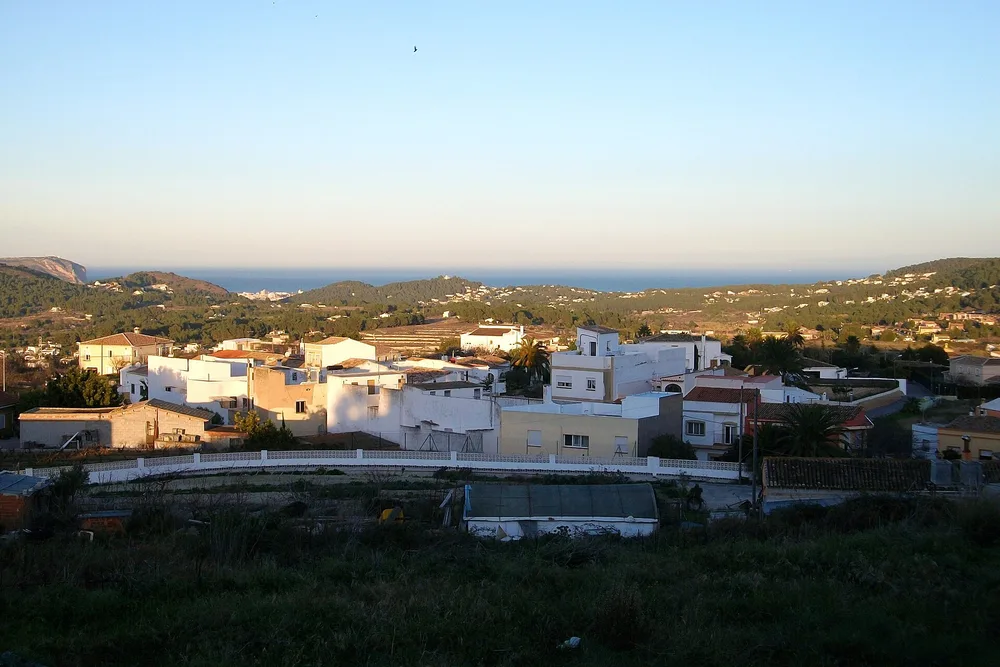
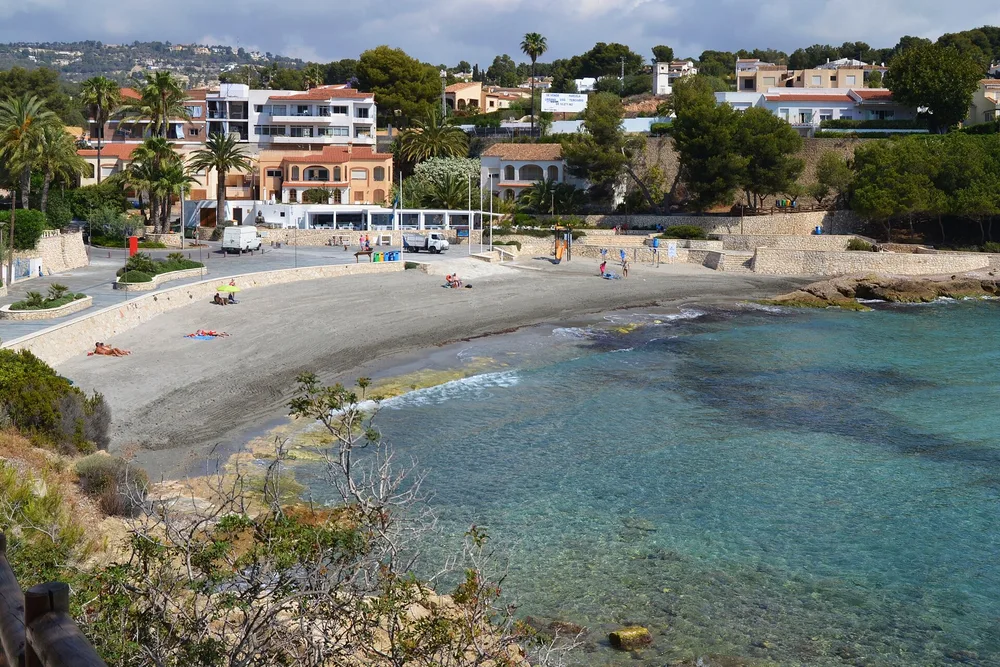
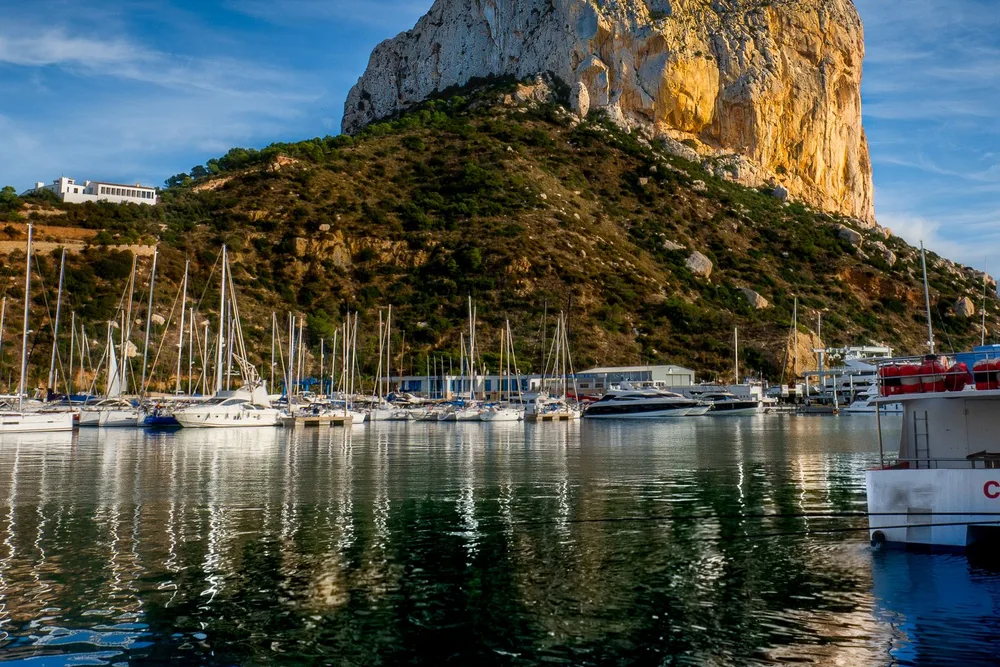
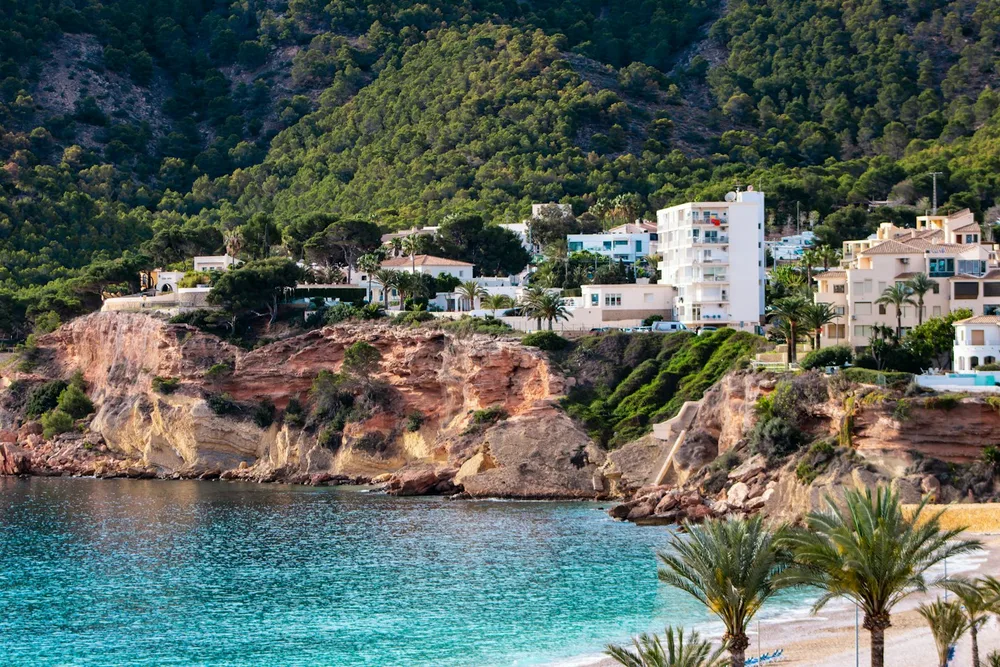
Jávea’s apartments are concentrated around the bay and town centre. The beach areas include El Arenal by the promenade and the Parador building, with the seafront Montañar as the link towards the port. The main areas for year-round living are Centro Ciudad around the historic core and the harbour quarter of Puerto/Duanes de la Mar with La Grava and the Loreto church. South of the port lies Cala Blanca, the smaller low-rise urbanisation by the cove. The outer urbanisations around Portichol–Balcón al Mar, La Granadella–Costa Nova and Tosalet are not shown on this map: they are dominated by detached houses and offer few apartments. Each area has its own photo below — select a location in the list and the photo follows.

1. El Arenal2. Centro Ciudad3. Montañar4. Puerto/Duanes de la Mar & Cala Blanca5. Outer urbanisations & planning considerations

Beach area · widest choice of coastal apartmentsBeach within walking distance · resale & new build

El Arenal

Xàbia’s tourist centre by its best-known beach: fine sand, shallow water, a promenade with restaurants and leisure facilities and the Parador building at the northern end. Around it is the municipality’s widest choice of coastal apartments: one-to three-bedroom apartments with terraces, lifts, parking and communal pools, in established coastal buildings and gated urbanisations alongside new-build developments on Calle Bruselas and Calle Cannes. Many properties serve as second homes, with a beach lifestyle, seasonal bustle and a rental market that peaks in summer.

Typical supply

Buildings of different ages sit side by side: established coastal blocks with glazed terraces, renovated apartments with modern interiors, and new low-and mid-rise developments with large terraces and shared amenities. Within Arenal, compare walking distance to the beach, orientation, building condition and the community budget — a few hundred metres away from the promenade can make a real difference to noise levels and price.

Trade-off

The beach lifestyle comes with trade-offs: the high season means traffic, terrace noise and rental pressure in the streets around the promenade — anyone planning to live here year-round should visit the exact street in July and in January. Coastal exposure also affects the building’s exterior: salt, wind and the autumn storms take a toll on façades, terrace edges and balconies; request the building’s maintenance records before making an offer.

Town centre · year-round livingHistoric core · residential & renovation

Centro Ciudad

The practical, residential counterpart of the coast: the historic core around the San Bartolomé church, the town hall and the market hall, with flats above shops, established town blocks and an active pipeline of new developments along streets such as Historiador Palau, Arquitecte Urteaga, Rei Juan Carlos I, Garcilaso de la Vega and the Avenida de Palmela with its bus station. Here you have services, shops and an established residential setting — and sometimes more space per euro than on the coast, with lift access, parking and the legal status of renovations to check in each building.

Typical supply

A mixed stock: older flats in and around the historic core, larger renovation opportunities in established blocks, and new-build and nearly new developments with lift access, parking and storage. Within the centre, compare the age of the building, lift access and parking arrangements — narrow town streets make a parking space included in the title deeds valuable for everyday life, and a home above a square lined with restaurants worth checking for seasonal noise.

Trade-off

Older properties in the centre need careful checks of their documentation: altered layouts, glazed terraces, lift replacement and the question of whether every alteration is permitted and registered. And the town centre has its own calendar: market days, festivals and outdoor dining are part of town life — walk the exact street on an ordinary day and on a festival day before making an offer.

Seafront strip · a premium for sea viewsSeafront & second-row · renovated & boutique new build

Montañar

The coastal strip between Arenal and the port — Primer and Segon Montañar along the seafront avenues — is a key area for sea-view apartments: apartment prices reflect the view, orientation, floor level and proximity to the sea. The stock runs from established urbanisations to renovated resale and boutique new build on the Carretera Cabo de la Nao, the Avenida Augusta and the Calle Florencia; new developments sit at the top of the segment, while older seafront stock may have façade damage, salt corrosion and waterproofing problems.

Typical supply

The choice varies by building: seafront and second-row blocks with open sea views, corner apartments with a dual aspect, renovated units in established urbanisations and boutique new build with three bedrooms and a roof terrace. For each building, check the actual seafront position, whether the view is protected, and the condition of waterproofing and glazing — a view described in a listing may differ from the view in person.

Trade-off

Buying a sea-view apartment also requires a close look at the building’s condition: salt, wind and storm-driven rain take a toll on façades, terrace edges, frames and balustrades, and the Montañar is exposed to the sea. Check whether planning rules protect the view, inspect the building after the autumn storms and request the maintenance history of the façade and terraces — a sea view is not always protected, and seafront upkeep can be costly.

Harbour quarter & cove · year-round livingLa Grava & the Lonja · low-rise by the cove

Puerto/Duanes de la Mar & Cala Blanca

Two smaller areas with their own character. Puerto/Duanes de la Mar is the harbour quarter: La Grava and the marina with the Club Náutico, the fish market/La Lonja, Casa del Cable and the Nuestra Señora de Loreto church — active all year, according to the municipality, with dining, shops and services outside the season. Cala Blanca, south of the port, is a low-rise urbanisation by the cove with a limited but established selection of apartments: original stock, renovated second-row units and a few new-build additions. Both offer a quieter coastal setting, with the harbour quarter particularly suited to year-round living.

Typical supply

In the port: older blocks and renovated units within walking distance of La Grava, a few contemporary additions and a strong year-round rental base. In Cala Blanca: low-rise buildings with two-and three-bedroom units, often one row back from the seafront, where exposure to the sea and communal maintenance are key considerations. Assess each area separately: walking distances in the port; the exact road, parking and the condition of the common parts in Cala Blanca.

Trade-off

In the harbour quarter the exact address makes a substantial difference: a seafront position with an open view or a second-row position with a partial view, above restaurant terraces or in a quiet side street — the quarter is small and the differences are large. In Cala Blanca access and the finances of a small owners’ association are key considerations: a special levy can cost each owner more, and the daily route to shops and services may involve a drive you should test on an ordinary day.

Outside the map · planning considerationsOutside the map · Portichol–Balcón al Mar, Granadella, Tosalet · planning considerations

Outer urbanisations & planning considerations

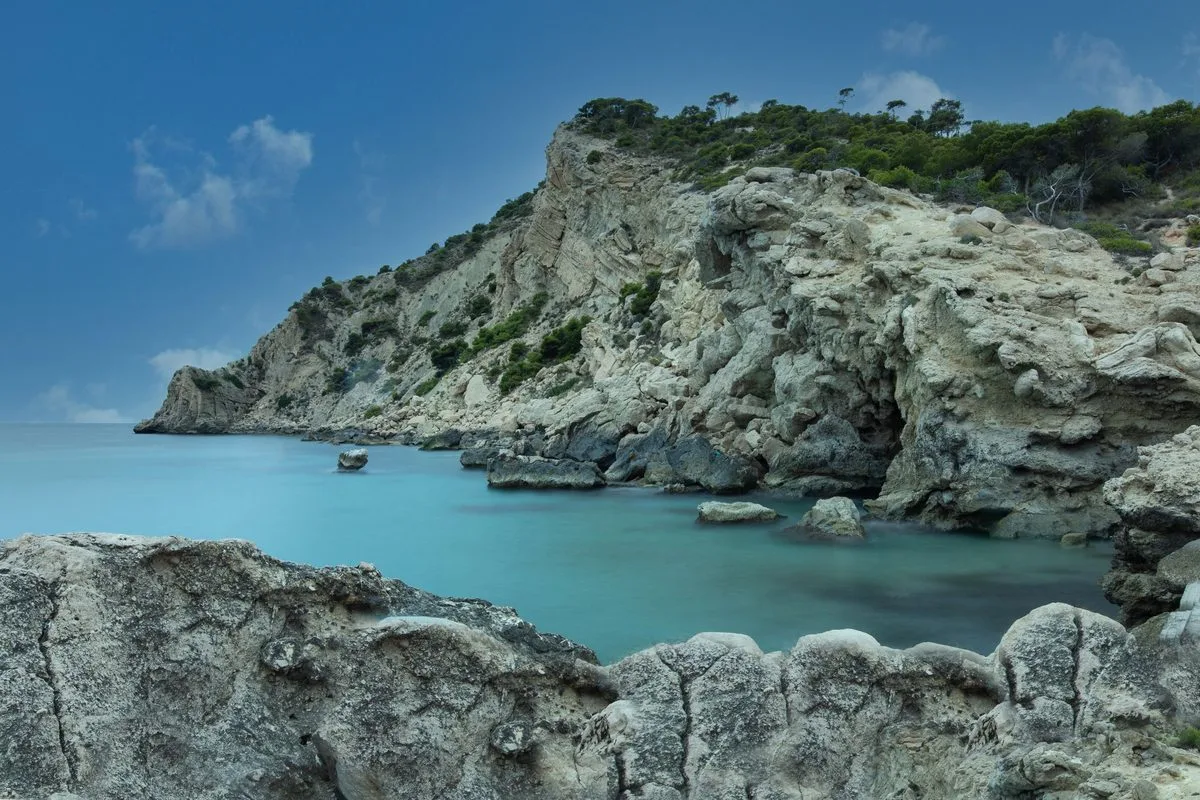
The areas outside the map also matter. The outer urbanisations — Portichol–Balcón al Mar, La Granadella–Costa Nova, Tosalet and parts of Cap Martí — are dominated by detached houses: their high overall property values are not a useful benchmark for apartments, and the choice of apartments is limited. Planning considerations also affect the whole market: according to a local report of 6 June 2026, the council meeting on 28 May 2026 gave initial approval to PGOU Modification 41, with a proposed temporary suspension of new tourist licences for multi-family apartments once published in the BOP, a proposed municipal ceiling of 4,584 tourist-use homes against 4,226 registered in January 2026, and indicative zone caps of 6% (historic centre), 12% (Port), 15% (interior), 20% (Montañar), 20% (Montgó) and 25% (Tosalet). These measures were reported as proposals. Confirm their current legal status in the official BOP/DOGV publications and obtain written confirmation from Xàbia Urbanismo before relying on them.

What it means

These are planning considerations rather than a list of available properties: check which planning rules apply to the exact cadastral parcel, whether a suspension or ceiling on tourist use applies to this address, and what further development may be permitted around your building. The PGOU and its modifications can be checked for each address with Xàbia Urbanismo — a map on a development website does not establish a property’s legal status.

Trade-off

For each address, request confirmation of the planning position and permission to let: the applicable planning instrument, the occupancy authorisation, the current status of the suspension of compatibility reports and the status of Modification 41. If the view or rental potential is central to your purchase, check both against the planning documentation before making an offer rather than relying on the listing.

Market data

Jávea Property Market Data

Price variation

How apartment prices vary in Jávea

A municipal average for Jávea tells you little about an individual apartment: the price is shaped less by broad figures than by a combination of walking distance to beach or harbour, open sea view, floor level and orientation, usable terrace, lift, parking and storage, the communal pool and the condition of the building — plus community charges and the permission for tourist letting at the exact address. The broad price hierarchy is clear: the centre forms the practical base with the lowest entry prices, the harbour quarter commands a premium for year-round walkability, particularly for renovated and contemporary apartments, Arenal trades on beach proximity and complex quality, and seafront apartments on the Montañar plus boutique new build and the penthouse segment sit at the top of the market, reflecting views and scarcity. And the asking price is a starting point for negotiation: compare like with like, and base your offer on a valuation or completed sales rather than average asking prices on property websites.

White apartment building behind a communal pool and garden

Explore a price band

01/ 04

Band 01Jávea

±€200,000–300,000

Band 02Jávea

±€300,000–450,000

Band 03Jávea

±€450,000–600,000

Band 04Jávea

€600,000 and up

What drives the price per square metre in Jávea

Two apartments with the same asking price per m² can offer very different value. Seven factors determine a property’s price within its area, while the area itself sets the starting level: the centre at the lower end, the harbour quarter and Arenal above it, and seafront properties, boutique new build and penthouses at the top.

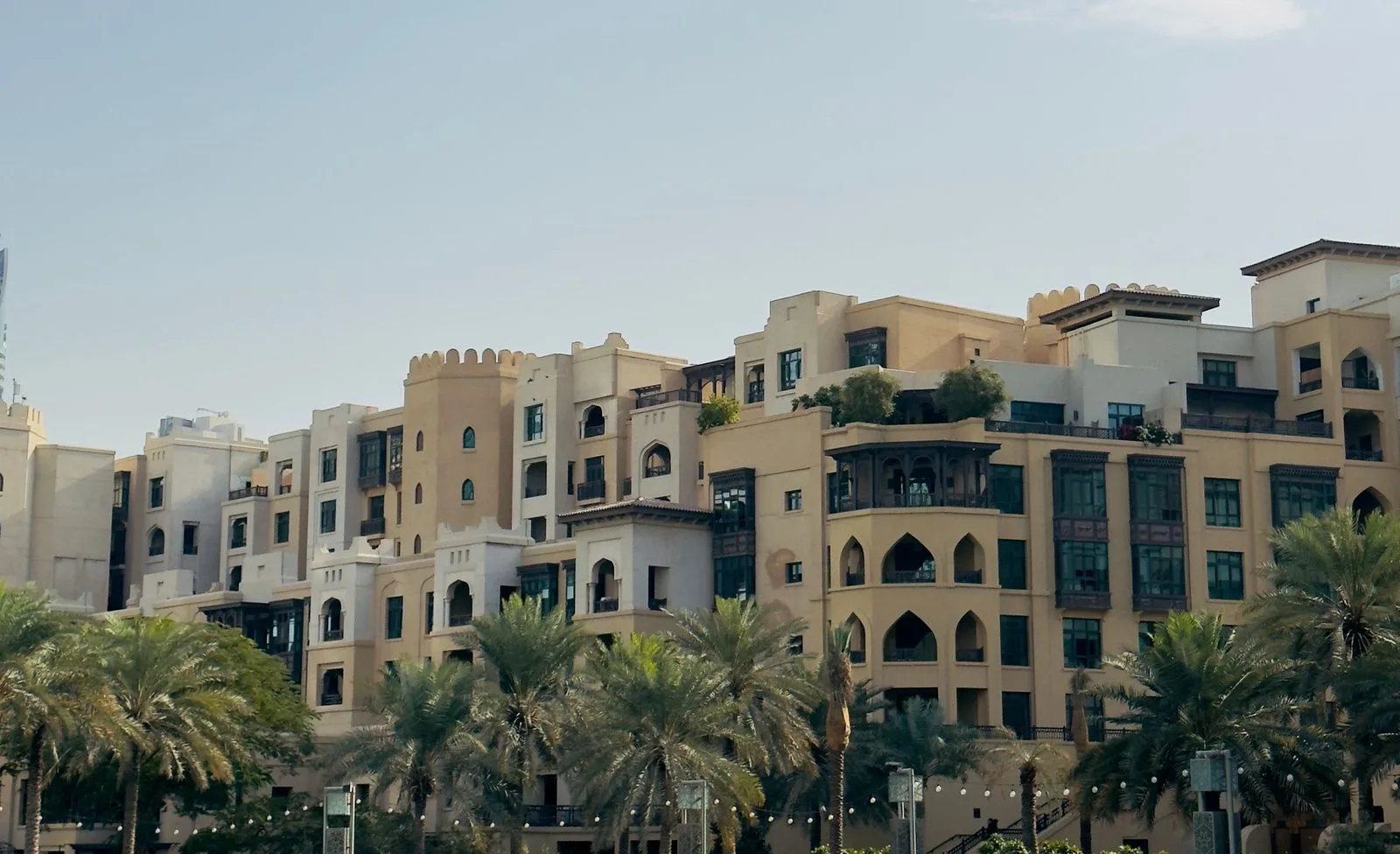
Authentic apartment building facades on the Costa Blanca

Budget levels

Which apartment does each budget buy in Jávea?

The bands below are a guide rather than a price list: they reflect the main choices available by size, condition and location. The market opens with older resale in the centre and the port and compact beach units, the mid-range covers two-and three-bedroom apartments with a pool, lift and parking in Arenal, on the Montañar and in convenient town-centre locations, and above that are seafront properties, boutique new build and penthouses.

Up to ±€300,000

Compact entry-level apartments in the centre, port & beach areas

Entry-level options are found in the older stock of Centro Ciudad and Puerto/Duanes and in the smaller apartments in Arenal: one-and two-bedroom units, flats in and around the historic core, apartments in established blocks from earlier decades. At this price, you are paying mainly for location and size rather than finish: allow a renovation budget, confirm the actual floor area using the title deeds, Land Registry, Cadastre and an independent measured survey, and read the complex’s owners’ association records before treating the asking price as the total cost — work on lifts and façades in older blocks may be funded through the annual budget or a special levy.

±€300,000–450,000

Two or three bedrooms with pool, lift & parking

The core of the market: two-and three-bedroom apartments with a terrace, communal pool, lift and parking in Arenal and on the Montañar, renovated apartments within walking distance of the port or centre, and new-build apartments in convenient town-centre locations. This budget also presents a key choice: the same mid-range budget can buy a beach apartment with a seasonal rhythm or a year-round town or harbour home. Compare within the same area — the age of the building, the amenity package and the community budget matter more here than a few metres of terrace.

±€450,000 and up

Seafront apartments, boutique new build & penthouses

At the upper end, prices reflect views, specification and scarcity: seafront and second-row apartments on the Montañar with open sea views, boutique three-bedroom schemes on the Carretera Cabo de la Nao and the Avenida Augusta, and penthouses with roof terraces and duplex penthouses in the newest schemes. These purchases need a full cost assessment: the location and specification also affect maintenance, insurance and community charges, and off-plan purchases require checks of licences and completion arrangements from the outset — above all if tourist use is part of the plan.

Search assistance

Finding the right apartment in Jávea

We shortlist from the Jávea market — with clear notes on each building’s owners’ association, permission for tourist letting at the address, the status of Modification 41, parking and storage.

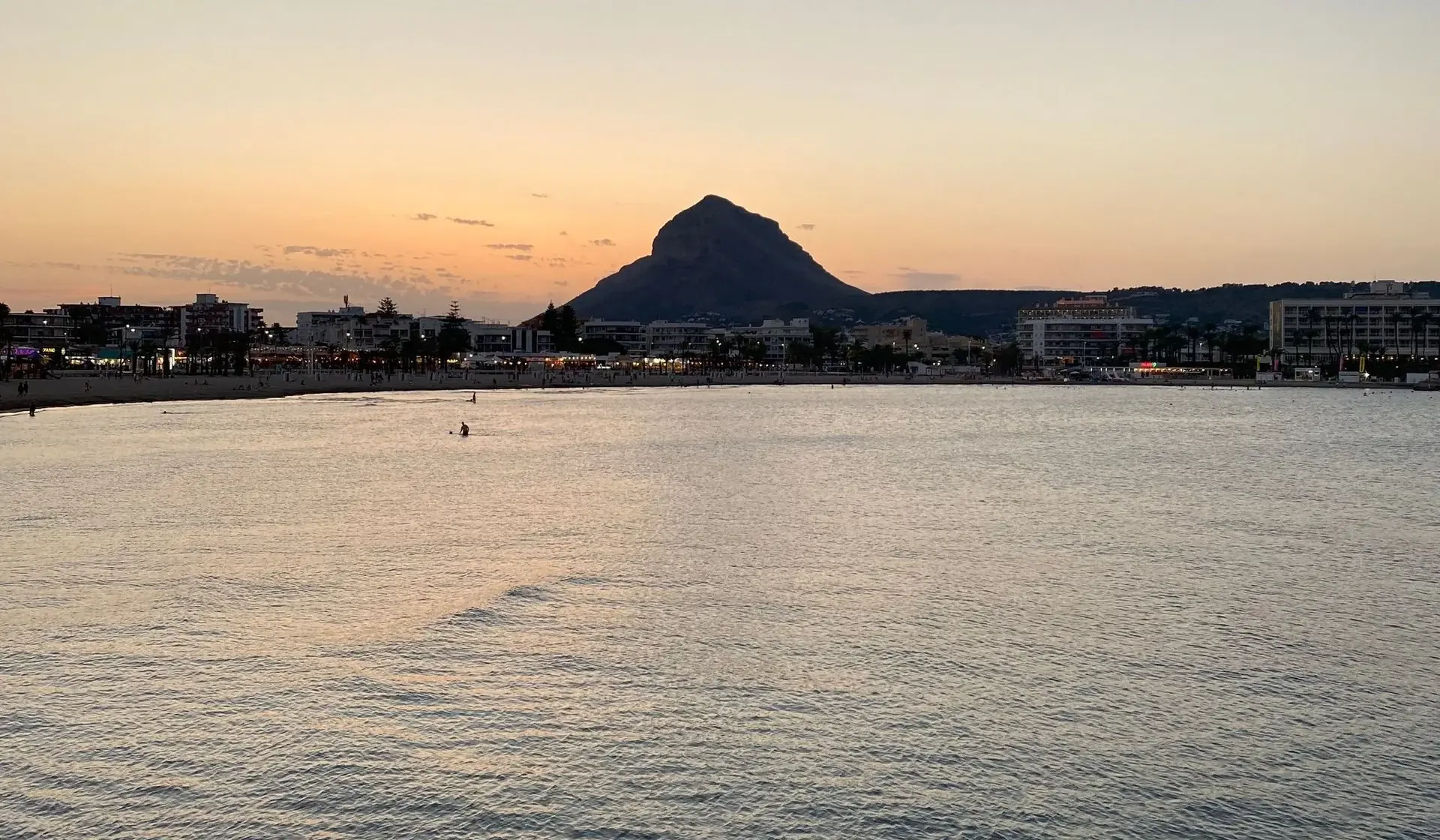
Sunset above the bay of Arenal with the silhouette of Montgó

Checks

Jávea-specific apartment checks

Six areas need particular attention in Jávea — from community, statutes and fees to tourist letting: the Valencian tourist-use rules of Decree-Law 9/2024, the proposed extension of the suspension of urban-compatibility reports for multi-family homes recommended by the municipal committee on 19 September 2025, and the status of PGOU Modification 41; then floor area, terraces and registration; planning, occupancy and the IEEV.CV building report; coastal exposure, salt, storms and flood risk, using the PATRICOVA flood maps; and access, transport and year-round living. Confirm the relevant details with the owners’ association, municipality and Land Registry before making an offer.

Owners’ association, statutes & fees

  • Read the documents establishing the owners’ association and its statutes, not only the latest community certificate, and request the minutes of recent meetings, the budgets, the accounts, the reserve fund balance, insurance claims, planned works and any approved or pending special levies. Check lift, façade, roof, pool, parking levels, waterproofing, accessibility and energy projects: who pays, what amount has been approved, and which contractor and timetable have been agreed — and whether litigation or an insurance claim is pending.
  • Request a certificate of community debts and verify the seller’s payment status before signing: horizontal-property law can attach community debts to the property within statutory limits — do not waive that certificate casually. On the coast this matters particularly: façades, terraces, pools and parking levels exposed to salt, wind and autumn storms can leave you paying for major maintenance deferred by previous owners.
  • For an apartment intended for letting: since 3 April 2025, a new tourist-letting activity in a building subject to the horizontal property regime generally requires prior express approval from three-fifths of owners representing three-fifths of the ownership shares, and the community may limit, condition or prohibit the activity — the statutes may already contain such restrictions. Ask the community explicitly for its position in writing: a community that restricts tourist use affects what you can do with your apartment, whatever the listing promises.

Narrowing the search

How to narrow your apartment search in Jávea

Searching for an apartment in Jávea involves a series of trade-offs: every area, building and apartment offers benefits and compromises. The seven considerations below help you narrow the search — and one applies to every apartment purchase: you share the building with a community whose statutes, fees and decisions also govern your home. Weigh them carefully to narrow your shortlist to a handful of buildings.

Beach lifestyle or year-round practicality

Beach lifestyle or year-round practicality

Start by choosing the lifestyle you want: El Arenal and the Montañar offer beach access, promenade life and seasonal energy — with bustle, traffic and rental pressure in summer as the trade-off; Centro Ciudad and Puerto/Duanes offer year-round services, residential calm and walkable practicality; and Cala Blanca offers coastal quiet, but fewer apartments and greater reliance on a car. Choose the lifestyle first, then compare buildings that suit it.

The building is also a community

The building is also a community

The lift, the façade, the roof, the pool and the parking levels are shared assets: their upkeep sits in the community budget, and decisions are made at owners’ association meetings. Since 3 April 2025 a new tourist-letting activity can additionally require approval from three-fifths of owners representing three-fifths of the ownership shares, and the statutes can restrict use and letting. Assess the building from two perspectives: what does it cost per year in fees, reserve fund and pending levies, and how do the community’s decisions affect the way you use your home? An abnormally low fee in an amenity-rich complex is a red flag, not a bargain.

Sea views or everyday convenience on foot

Sea views or everyday convenience on foot

Sea views command a premium on the Montañar and the seafront, but ask what protects the view and what upkeep will cost. Salt, wind and autumn storms take a toll on exposed buildings, and planning rules determine what may still be built opposite and above your building. Walkability, meanwhile, is building-specific: around La Grava and in the centre you walk to shops, dining and services; in the coves, many journeys require a car. Properties combining sea views with everyday convenience on foot are scarce and command a premium.

Letting: check the legal position

Letting: check the legal position

Permission for tourist letting depends on the exact address, and Jávea’s local rules are changing: the Valencian rules of Decree-Law 9/2024 require a complete property, ten continuous days or fewer per tenant, a unique cadastral reference, occupancy authorisation, a favourable municipal report confirming compatibility with planning rules and registration; the committee proposed extending the suspension for multi-family buildings on 19 September 2025, and a suspension and caps were proposed under PGOU Modification 41. The community’s three-fifths approval requirement is an additional consideration. Verify whether letting is permitted for the exact cadastral reference under the rules in force at the time.

Resale, renovated or new build

Resale, renovated or new build

Three options in one bay: resale offers established locations and a broad choice — in the centre, the port, Arenal and Cala Blanca; renovated property offers a modern interior inside an older building — but still requires checks of the façade, roof, lift and registration; and new build offers energy efficiency, lifts and the convenience of a finished home, concentrated in specific developments within each area — names such as Jávea Garden, Unic, Marina Bay Sunset and Blue Gardens are common search terms. Choose the option that fits how you use the apartment, and remember: “renovated” is a condition label, not a guarantee, and an off-plan purchase requires a completion timetable you can accommodate.

Low community fees or adequate maintenance funding

Low community fees or adequate maintenance funding

Your building’s community budget helps you understand future major maintenance costs: lifts, façades, roofs, pools, gardens and energy works are shared assets. Amenity-rich complexes in Arenal and on the Montañar have running costs that reflect their amenities from day one; older blocks in the centre and the port may require special levies to address deferred maintenance; and small cove complexes may leave each owner paying more towards a large bill than in a big building. Request the budgets, the reserve fund, the minutes and the seller’s payment status — and be wary of an abnormally low fee.

The map or the route — car, parking & access

The map or the route — car, parking & access

Xàbia has no railway station, and the areas differ widely in how easy it is to live without a car: around the centre, the port and Arenal many daily journeys can be made on foot, but the cove urbanisations and the outskirts often require a drive to shops, beach and services. A parking space, meanwhile, is a legal question: a separate title, a communal space with an exclusive right of use, or simply an informal arrangement — and in the narrow in-town streets a space included in the title deeds can make daily life easier. Drive your routes on an ordinary day, with luggage, before making an offer.

A good fitLifestyle

A lock-up-and-leave second home with easy access to the beach or pool

A well-managed apartment in Arenal, on the Montañar or in a cove urbanisation offers a terrace, pool and beach access without the maintenance load of a detached house. You can lock up and leave — the pool gets cleaned, façade maintenance remains the community’s responsibility. Check the complex’s winter arrangements, the community charges for its amenities and the seller’s payment status to avoid unexpected costs.

Lock up and leaveCommunal maintenancePool maintenance included
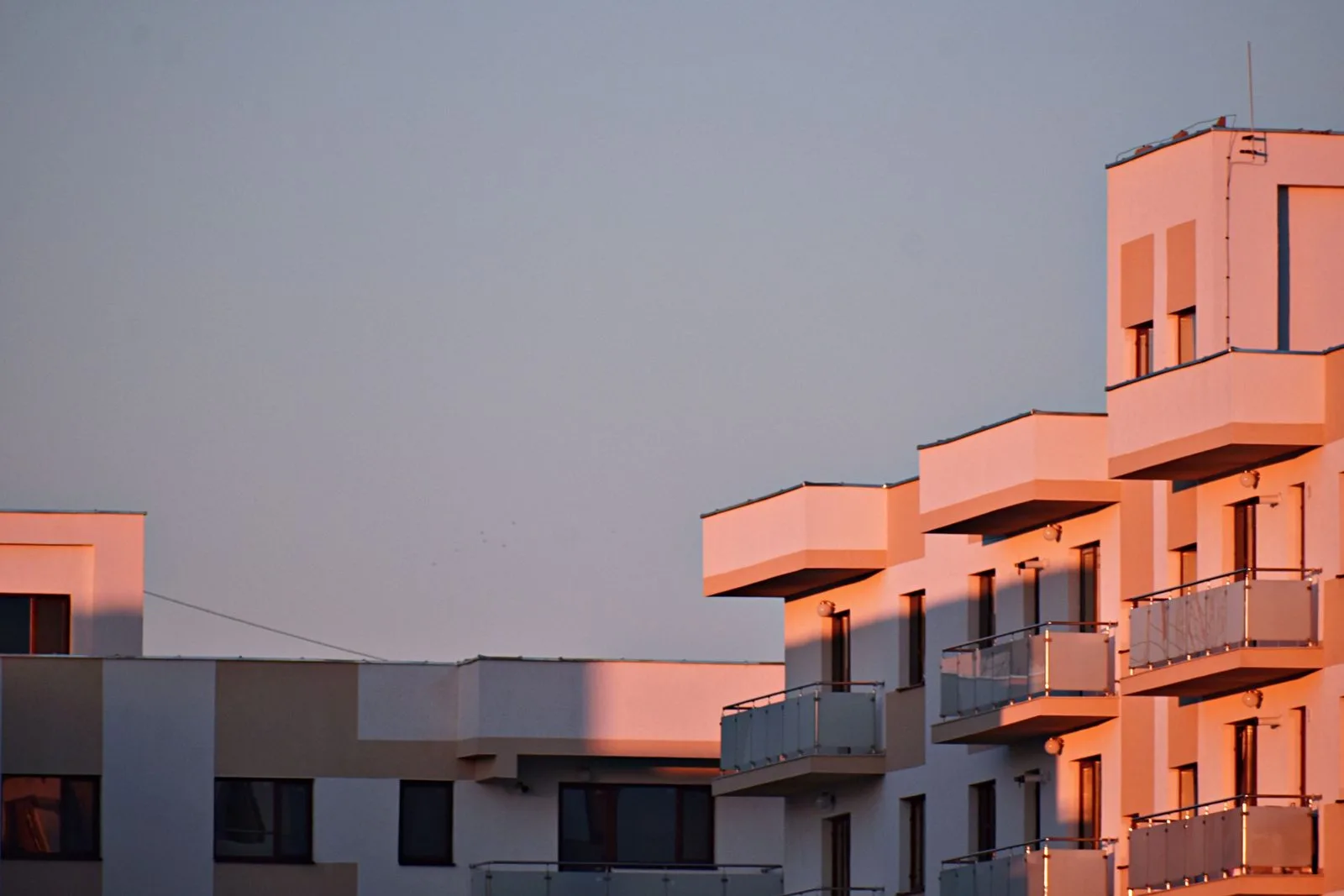
Apartment buildings in warm evening light on the Costa Blanca coast
Lock up and leave; the community manages shared maintenance.
Jávea in winter
Test the apartment in winter, not only in August
  • Where does the afternoon sun fall on your terrace in January? Floor level and orientation decide how comfortable the apartment is outside summer: return at midday in winter and see how much sun the terrace and living room actually receive between the buildings — on the Montañar seafront, sea winds also matter; in the town centre, narrow streets create shade.
  • How do seaward-facing windows, frames and balustrades hold up against salt air and storms from September to November? Check for damp, salt and draughts at glazing and shutters, the state of the metalwork on terrace edges, and the joints and waterproofing of the terrace itself — coastal weather can expose poor-quality finishes within a few seasons, and seafront buildings are particularly exposed.
  • How is the building heated? Ask about the heating of the unit and of the stairwell, and test them in January rather than relying on specifications — older systems in coastal blocks can use more energy than a summer visit might suggest, and heating performance in January matters as much as cooling in August. In new build, ask how the building is ventilated and heated outside the holiday season.
  • Is the pool maintained throughout winter? Ask about filtration and dosing in the colder months and who pays for it — a pool left without adequate maintenance can lead to extra costs in spring. Around Arenal and on the Montañar the same goes for gardens and seasonal services: shared amenities also need a winter maintenance plan.
  • Drive your routes in January: to the supermarket and doctor that are open then, and to the bus station on the Avenida de Palmela — Xàbia has no railway station; public transport runs via local lines, the ALSA Alicante–Xàbia–Valencia route, the connection to Dénia with the TRAM towards Alicante, and rail access from Gandía. Also test the final stretch to your front door with luggage and check that it suits your mobility needs.
  • Are the garage and storeroom dry after the autumn rains? Inspect the parking level and storeroom for damp and puddles — Xàbia’s intense rainfall is concentrated between September and November, and ground-floor areas, ramps and low points should be checked against PATRICOVA and the flood maps. Check the building after a real rainy spell, not at midday on a sunny day.
  • What is your part of Jávea like in February? Which restaurants and services are open around the promenade, La Grava and the centre, what is your area like outside the holiday season, and who maintains the building and its common parts when most owners are away? These details determine whether the outdoor lifestyle you want is seasonal or available year-round.

Frequently asked questions

Questions about buying an apartment in Jávea

Where are most of Jávea’s apartments?
The stock is concentrated in five areas: El Arenal with the Montañar as its beach belt, Centro Ciudad as the historic and year-round heart, the harbour quarter of Duanes de la Mar, and Cala Blanca with the coves south of the port. Beyond them the municipality is dominated by detached houses in the outer urbanisations — around Portichol–Balcón al Mar, La Granadella–Costa Nova, Tosalet and the slopes of the Montgó — where apartments are scarce. Within each area, the exact building matters: its age, condition, amenities and community budget determine what you are buying.
Resale, renovated or new build — which is the smarter buy in Jávea?
Each option requires different checks. Resale offers established locations and a broad choice in the centre, the port, Arenal and Cala Blanca, but requires a particularly thorough building survey: altered layouts, glazed terraces, lift, façade and community finances. Renovated property offers a modern interior inside an older building — check each altered element to establish whether the works are permitted and registered. New build offers energy efficiency, lifts and the convenience of a finished home, concentrated in specific developments within each area, and requires checks of licences, specifications and completion arrangements from the outset. “Renovated” is a condition label, not a guarantee — the supporting documentation matters.
Which area is best for year-round living?
Centro Ciudad and Puerto/Duanes de la Mar are the municipality’s main areas for year-round living: shops, the market hall, medical services, dining and the bus station on the Avenida de Palmela within walking distance, in areas the municipality describes as active outside the holiday season. The harbour quarter adds sea views and harbour life; the centre offers a compact town setting. El Arenal is livelier and more seasonal — suitable for year-round living, but test your exact street in both seasons. The cove urbanisations are quiet but more dependent on a car for everyday journeys.
What drives the price of an apartment in Jávea?
Location within the bay sets the base level — the centre at the lower end, the harbour quarter and Arenal above it, seafront apartments on the Montañar, boutique new build and penthouses at the top. Within that, key factors include: walking distance to beach or harbour, open sea view, floor level and orientation, usable terrace, parking and storage included in the title deeds, the communal pool and amenities, and the condition of the building with its community charges. Two apartments at the same asking price per m² can offer very different value: compare like with like, and base your offer on a valuation or completed sales rather than average asking prices on property websites.
Can I buy an apartment in Jávea and let it to tourists?
Only if tourist letting is permitted at the exact address, and Jávea’s local rules are changing. The Valencian rules of Decree-Law 9/2024 define a tourist-use home as a whole dwelling: a complete property let to the same tenant for no more than ten continuous days, with a unique cadastral reference, occupancy authorisation, a favourable municipal report confirming compatibility with planning rules and registration with the Generalitat valid for five years. On 19 September 2025 the municipal committee proposed extending the suspension of compatibility reports for multi-family homes, and according to a local report of 6 June 2026, PGOU Modification 41 received initial approval on 28 May 2026 — with a proposed suspension of new tourist licences for multi-family apartments and ceilings per zone. Confirm the current legal status in the official BOP/DOGV publications and obtain written confirmation from Xàbia Urbanismo before making an offer.
Does the tourist registration transfer automatically with the purchase?
No. The Valencian registration is linked to the dwelling’s unique cadastral reference, not to the owner, but the five-year registration period of Decree-Law 9/2024 comes with renewal and updating requirements and a duty to show the registration number in all advertising — and any relevant change has to be processed. So verify the registration yourself with the Generalitat and the municipality, using the address and cadastral reference, and then check the statutes and the community’s position: since 3 April 2025, a new tourist-letting activity in a building subject to the horizontal property regime can require the express approval of three-fifths of owners representing three-fifths of the ownership shares. An existing number is a starting point for verification, not a guarantee.
What is the biggest risk in an older coastal apartment building?
The condition of the building and the finances of the owners’ association. Salt, wind and the storm rains of September to November take a toll on façades, terrace edges, balustrades and frames — and those parts are common property: their upkeep is funded through the community budget, with special levies possible if maintenance has been deferred. Request the budgets, the reserve fund balance, the minutes and the seller’s payment status, and check whether an IEEV.CV is required or available and what it says about the state of the common building elements — the report is valid for ten years from electronic filing and does not replace a private survey of your unit. An abnormally low community fee in an amenity-rich complex is a red flag, not a bargain.
Do I need a car in Jávea?
In the centre, port and Arenal, you can often manage without one: shops, beach, dining and services sit within walking distance, and the bus station on the Avenida de Palmela serves the town with local lines and the long-distance ALSA Alicante–Xàbia–Valencia route; there is also a connection to Dénia linking to the TRAM towards Alicante, and rail access from Gandía. Xàbia itself has no railway station. But outside those areas a car is often essential for daily life: the cove urbanisations and outskirts have fewer services within walking distance, and steep gradients can make walking difficult. Test your real route — door to door, with luggage, in both seasons — before making an offer; the distance on the map says little about your everyday journeys.
Is Jávea the same place as Xàbia?
Yes — it is one municipality with two names: Jávea is the Spanish name, Xàbia the Valencian one. Both appear side by side in daily use, on signs, in documents and in property listings: the development plan is formally the PGOU of Xàbia, tourism information uses Jávea. For your purchase, check that the title deeds, Land Registry and Cadastre records, and municipal correspondence consistently point to the same municipality and the same cadastral reference, whichever name they use. The name used does not change the location or the applicable rules.
What affects community fees in practice?
The amount depends on the building, not the municipality: the amenity package (pool, gardens, lifts, parking levels), the age of the building, the number of units sharing the costs and the maintenance history shape the budget. Amenity-rich complexes in Arenal and on the Montañar have substantial running costs from day one; older blocks in the centre and the port may require special levies to address deferred maintenance; small cove complexes can leave each owner paying more towards a large bill. Request the latest budgets, the reserve fund balance, the minutes, planned works and a certificate of community debts — and be wary of an abnormally low fee: deferred maintenance still has to be paid for.

On the map

Apartments for sale in Jávea on the map

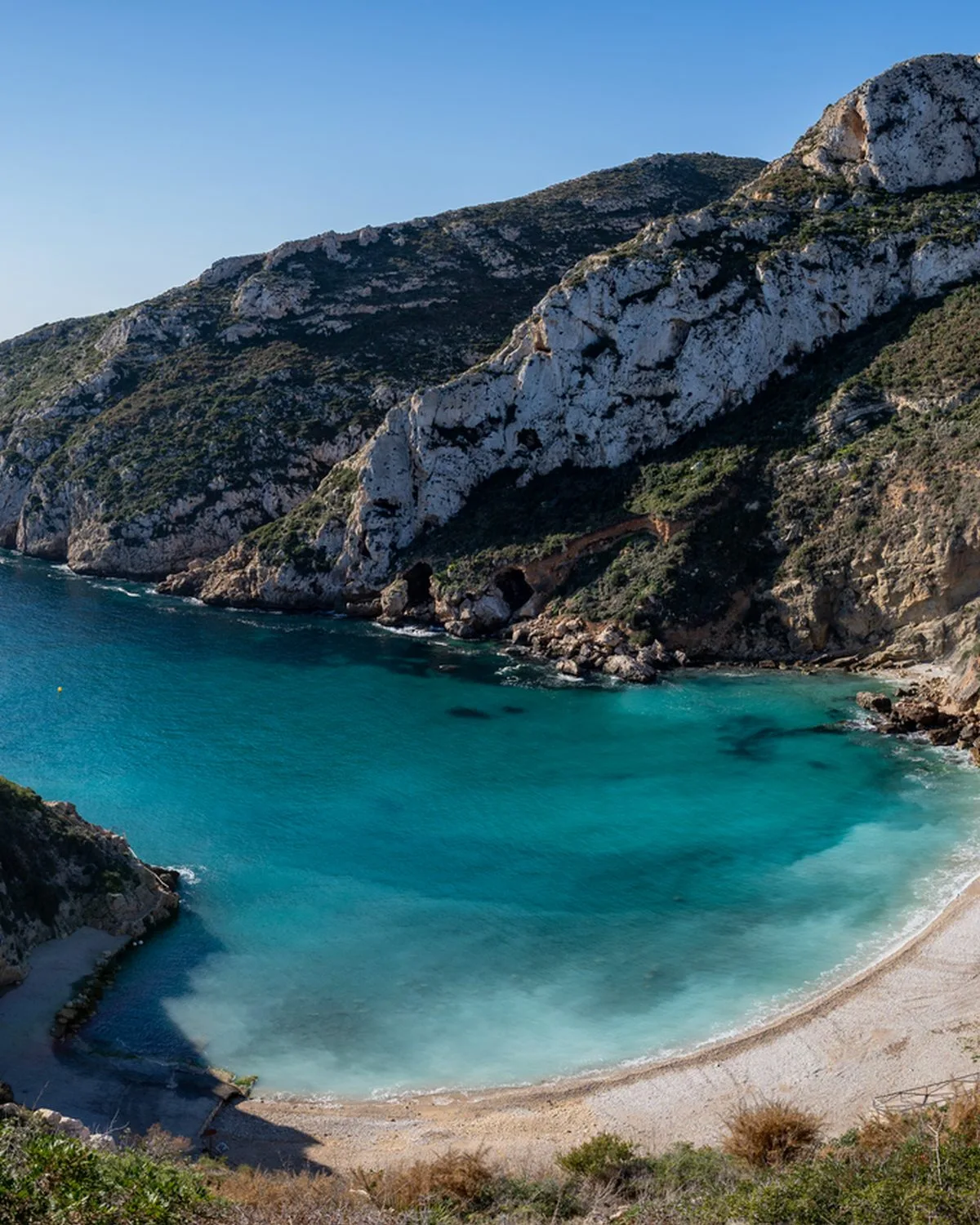
Jávea (Xàbia) lies on the Costa Blanca in the province of Alicante, at the foot of the Montgó, between Cap de Sant Antoni and Cap de la Nau.

Browse by Property types

Other property types in Jávea, Spain

Compare apartments with the alternatives in the same municipality — each with its own trade-offs.

Browse by location

Where to Buy Apartment in Spain in other locations?

Jávea sits in the north-east of the Costa Blanca: nearby are Dénia, Moraira, Benitachell and Benissa, with other markets further along the coast and inland including Calpe, L’Alfàs del Pi, Altea, Benidorm, La Nucía, Polop, Finestrat and Villajoyosa. Each place has its own apartment market, prices and rules, so compare them as distinct markets.

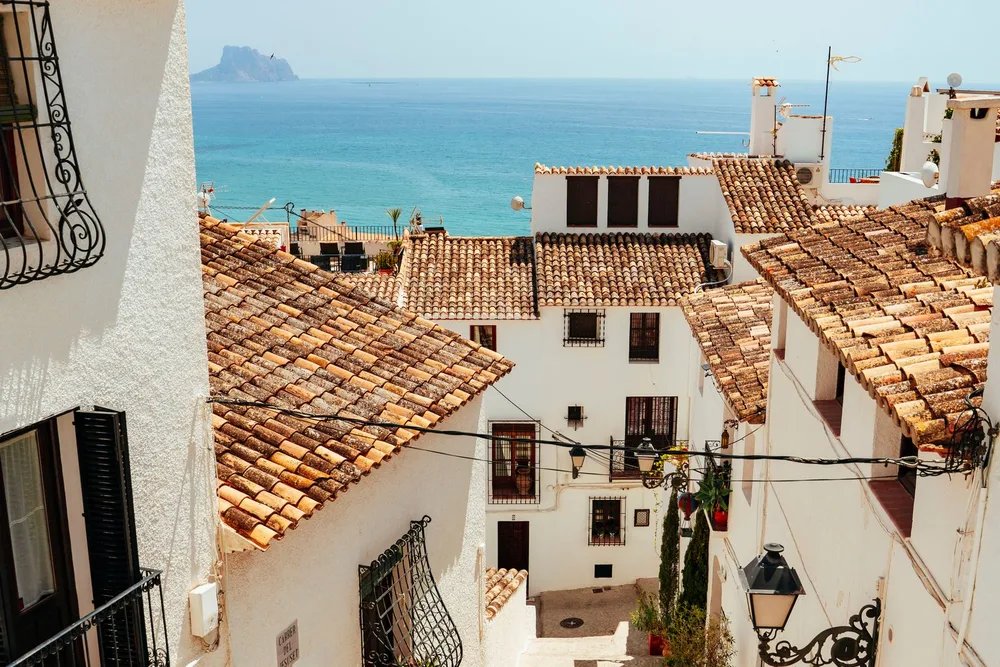
View of Dénia with Montgó and the seaCoast · Dénia

Apartments in Dénia

The nearby coastal town of Dénia has apartments across the beach belt of Les Marines, the centre with its castle hill and the port, with year-round town life and a strong food culture.

View of Moraira and its bay on the Costa BlancaCoast · Moraira and Teulada

Apartments in Moraira

A smaller nearby coastal town: Moraira offers compact apartments around its bay and marina, with green zones and predominantly low-rise development.

Coastal landscape of Benitachell with sea viewsNeighbouring municipality · Cumbre del Sol

Apartments in Benitachell

Above the sea cliffs between Jávea and Moraira: Benitachell concentrates its apartments in Cumbre del Sol, a resort urbanisation with sea views and services available within the development throughout the year.
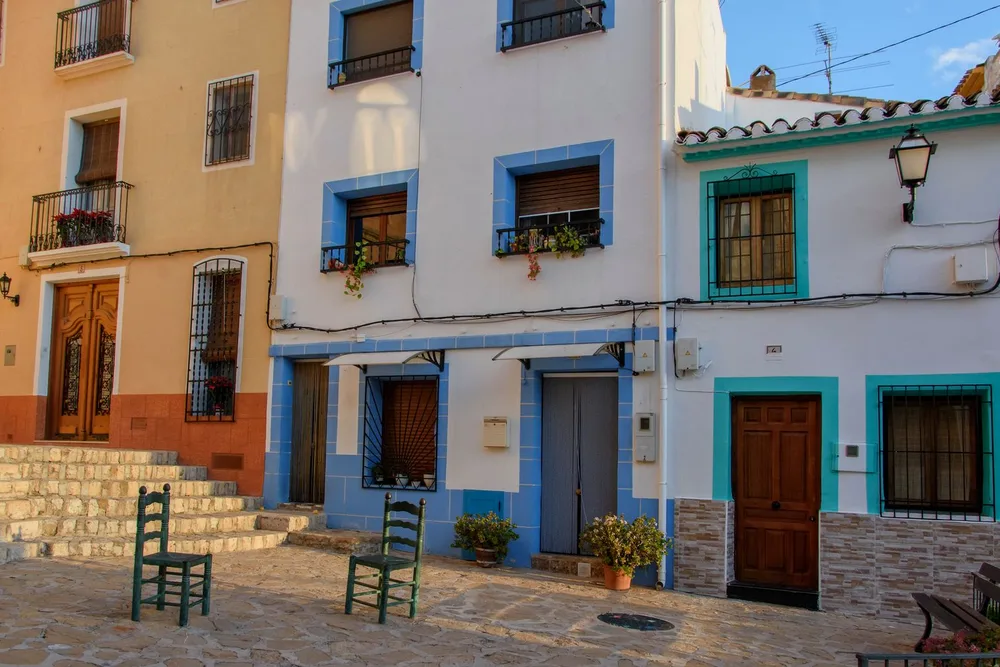
Historic core of Benissa in the inlandInland · Benissa

Apartments in Benissa

Inland from the coastal hills: Benissa has a compact centre around its historic core, with apartments generally at lower prices than in the coastal areas.
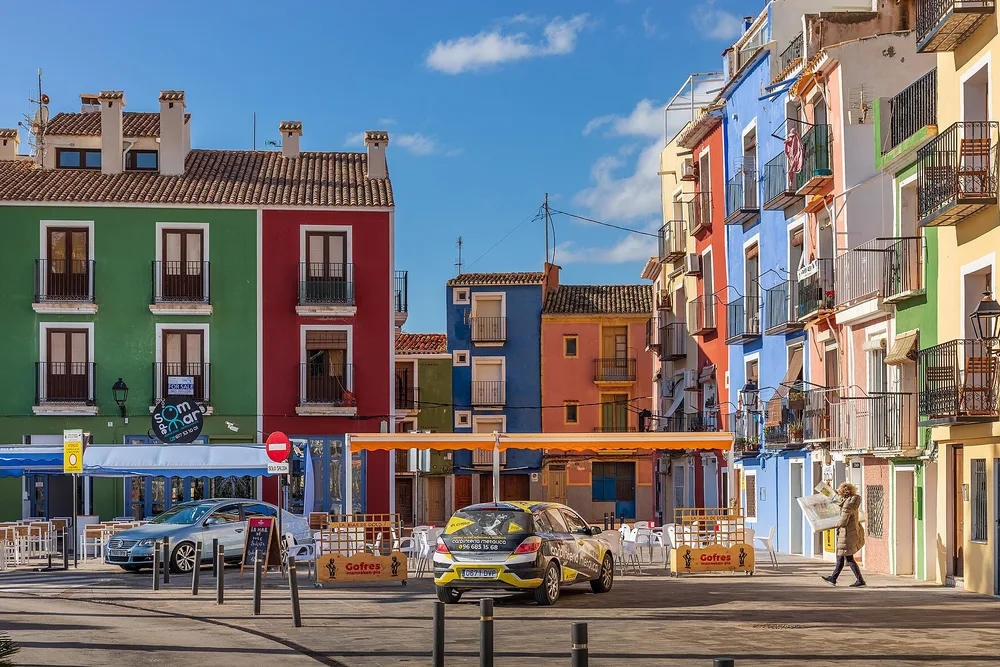
The bay of Calpe with the Peñón de IfacCoast · south-west below the Peñón

Apartments in Calpe

The first large market to the south-west: Calpe’s apartments are concentrated around two urban beaches, the old town and the port, with the Peñón de Ifac as a landmark and one of the most densely developed seafronts on the Costa Blanca.

Coastal view of Albir in L’Alfàs del PiCoast · south-westwards towards Albir

Apartments in L’Alfàs del Pi

South-westwards along the coast: L’Alfàs del Pi combines its hillside town centre with Albir on the bay, where apartments and low-rise complexes shape the supply beneath the Sierra Gelada.

Whitewashed old town of Altea on the coastCoast · to the south-west

Apartments in Altea

The whitewashed town to the south-west: Altea offers apartments from the hilltop old town to Altea Hills, with a strong arts and food scene and prices that reflect views and elevation.

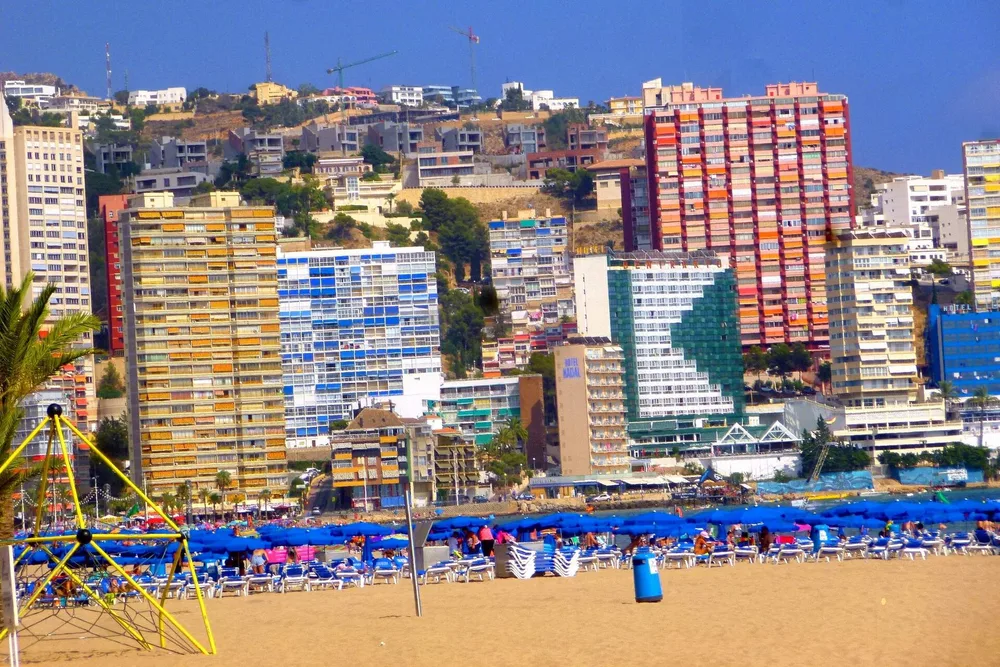
Skyline of Benidorm and its two baysCoast · to the south-west

Apartments in Benidorm

The coast’s largest market to the south-west: Benidorm has the Costa Blanca’s densest concentration of high-rise buildings, with apartments at every price point around two bays and year-round activity that contrasts with Jávea’s lower-rise bay.

View of La Nucía in the inlandInland · above the coast

Apartments in La Nucía

Above the coastline north of Benidorm: La Nucía offers apartments around sports facilities and its town centre, with elevated locations, cooler temperatures and open views.

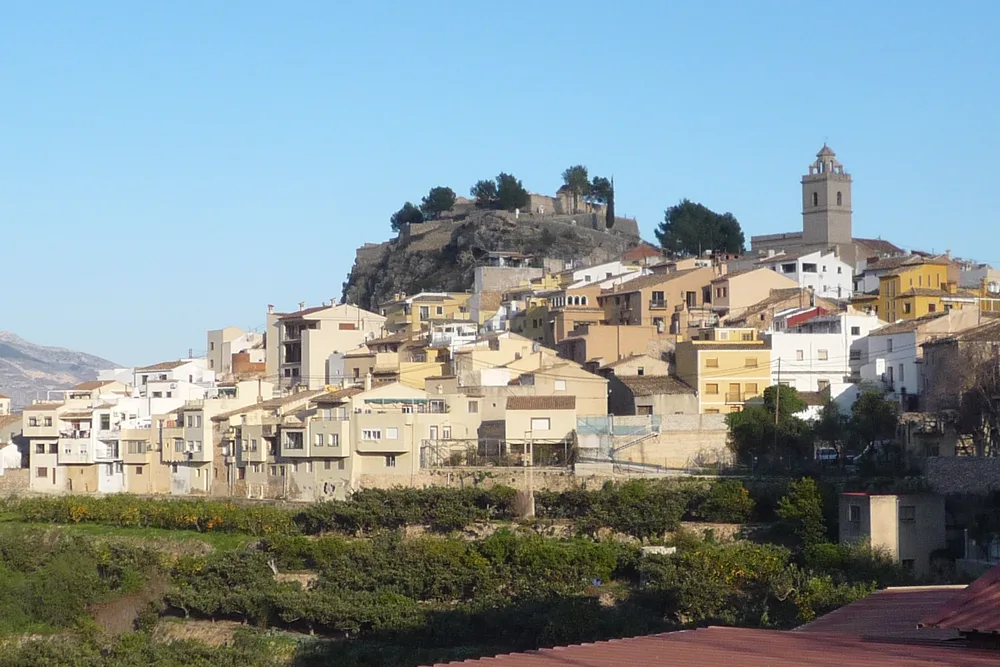
View of Polop and its castle hillInland · behind La Nucía

Apartments in Polop

Behind La Nucía, towards the inland hills: Polop offers compact apartments around its castle hill and newer properties on the town’s edge — calmer, more affordable and with short drives to the coast.

View of Finestrat with the Puig CampanaCoast · south-west beyond Benidorm

Apartments in Finestrat

South-west, beyond Benidorm: Finestrat combines the historic village below Puig Campana with the coastal area of La Cala — with the residential areas of Balcón, Terra Marina and Golf Bahía/Sierra Cortina as the heart of its apartment supply.

Coloured façades of Villajoyosa along the harbourCoast · south-west along the bay

Apartments in Villajoyosa

South-west, beyond Benidorm: Villajoyosa combines colourful waterfront façades with apartments between town and beach, plus a year-round centre with its own industry and local identity — a coastal town with life beyond the holiday season.

Area guide

Explore Jávea with our guide

The Jávea guide takes you around the bay: from the historic core around the San Bartolomé church to the harbour with La Grava, the Lonja and the Loreto church, along the Arenal promenade and the coastal strip of the Montañar — with the Montgó and Cap de Sant Antoni as landmarks. It covers beaches, neighbourhoods, routes and year-round life in each part of the municipality.

Coastal view of Jávea on the Costa Blanca

Contact Altea Casas

Looking for a property on the Costa Blanca? Tell us what you’re looking for, and our team will get back to you shortly.

Send Us a Message

Data protection information under the General Data Protection Regulation (EU) 2016/679 (GDPR) — read more.