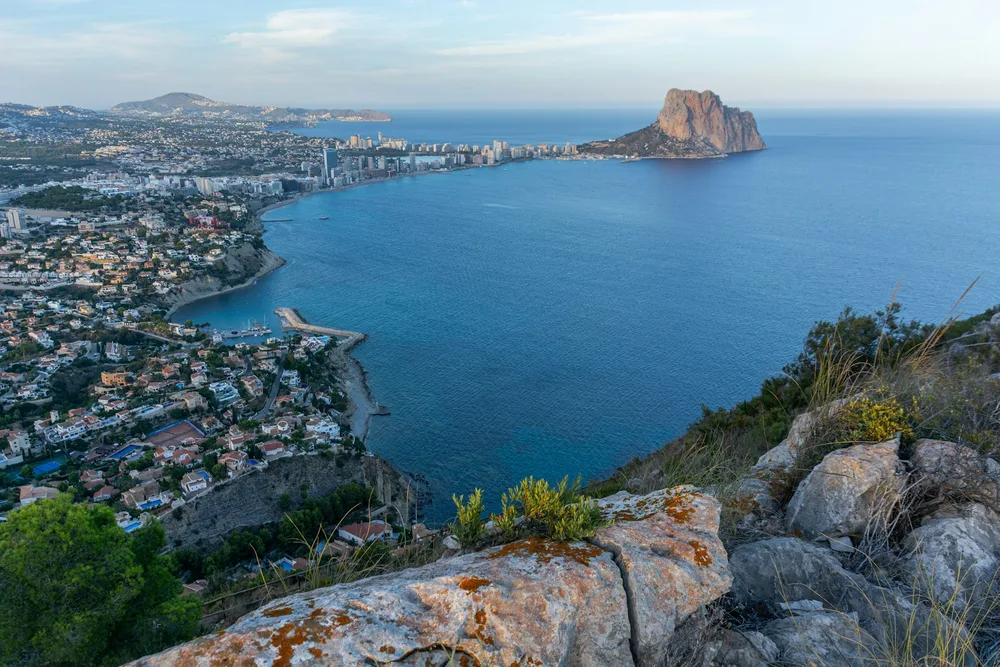
Altea
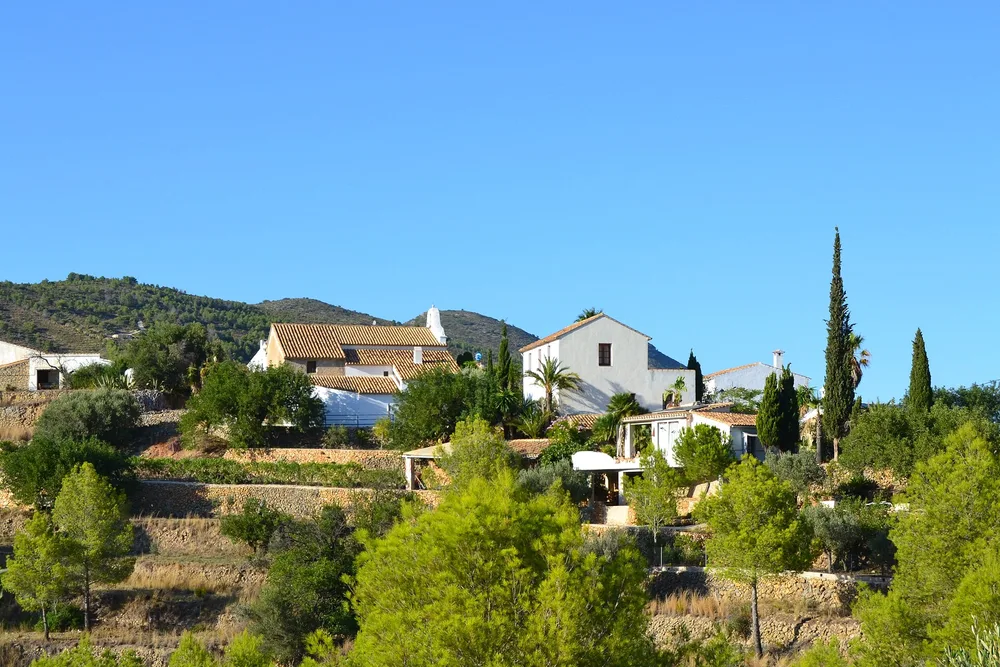
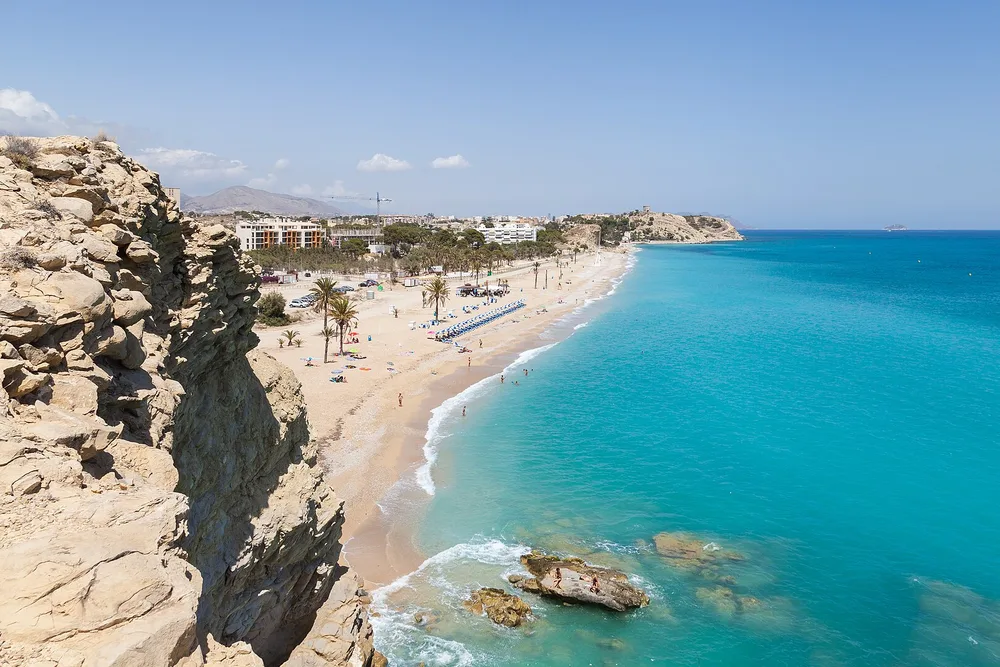
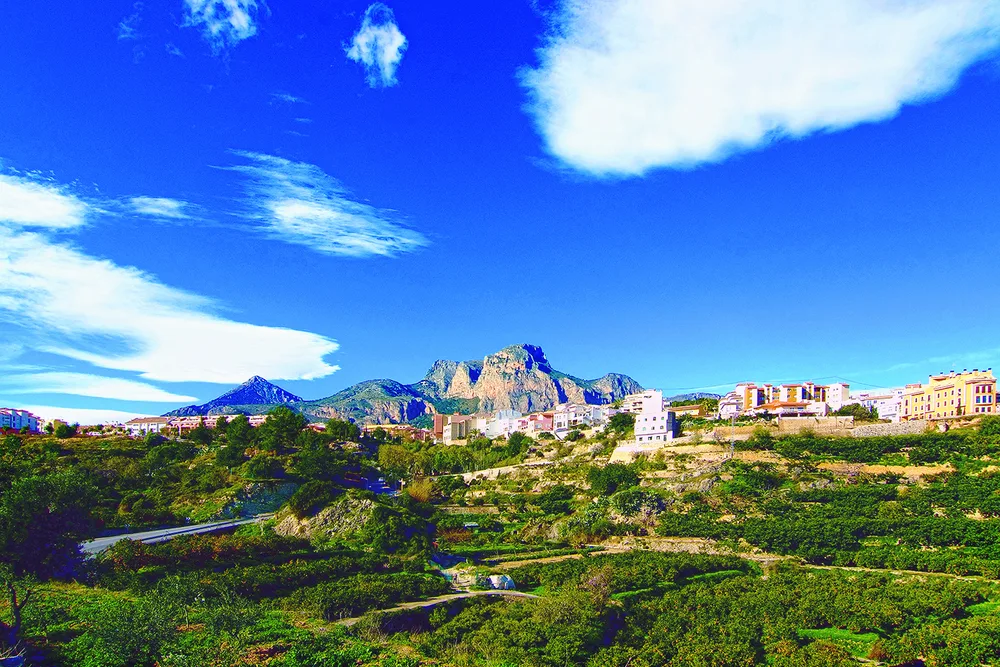
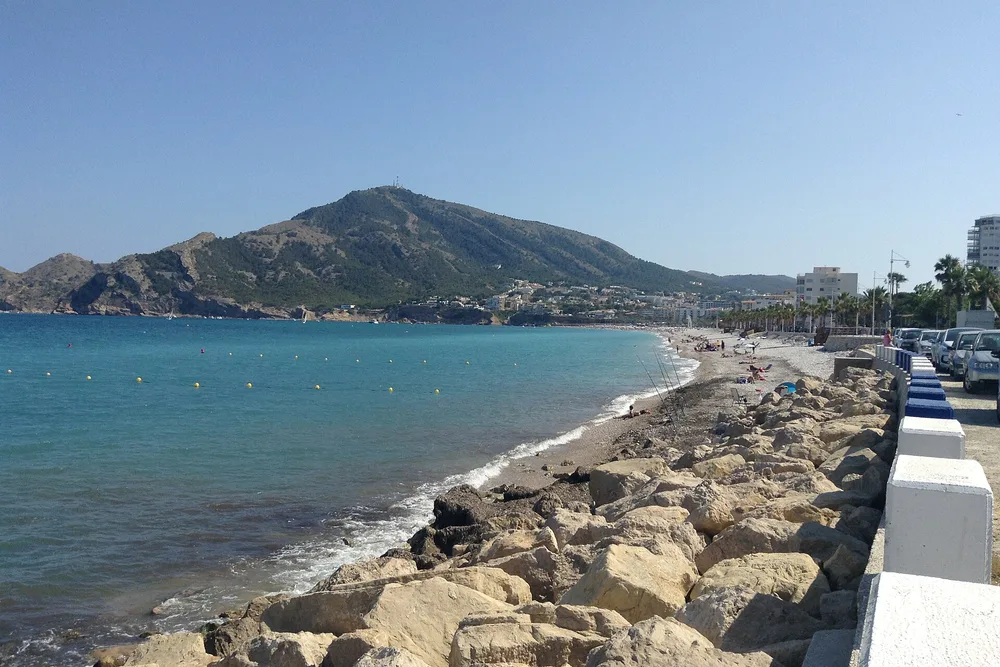
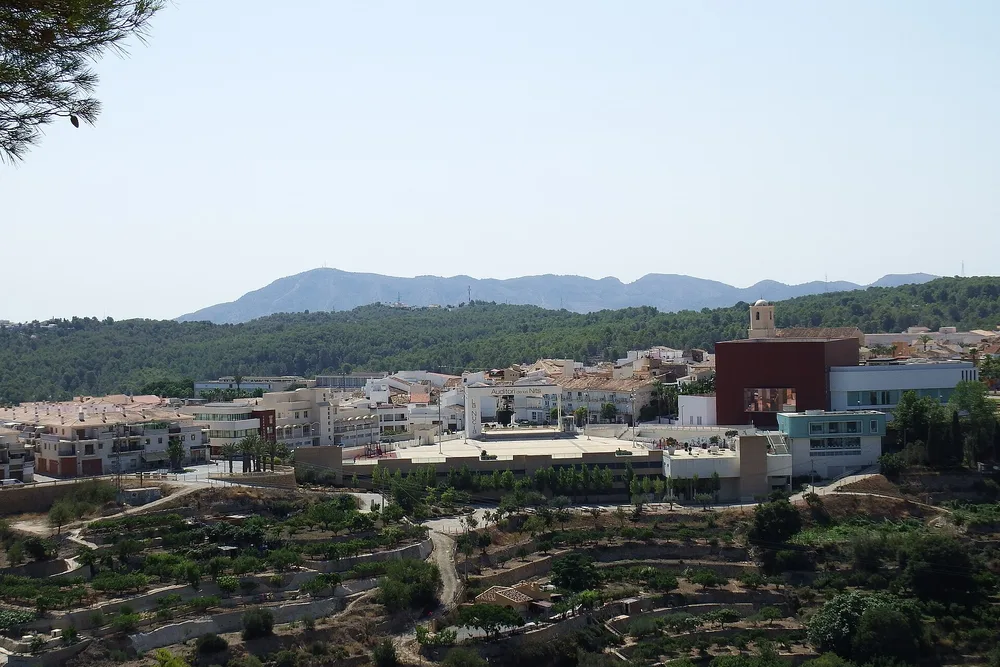
Premium, cultural and calm — the white old town, the church plaza and a slow seafront paseo set the tone.

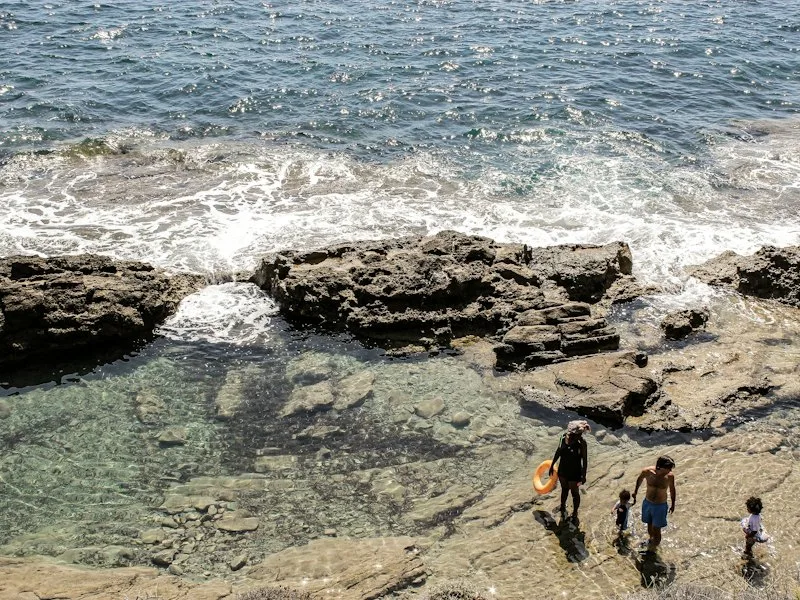
Denia · Area guide
A real town with a port, castle and year-round services, a broad beach belt to the north and rocky coast under Montgó to the south — Denia is not a resort but a handful of distinct markets.
Geographic scope
Denia sits at the northern end of the Costa Blanca, where Montgó (753 m) and its natural park — over 2,100 hectares shared with Xàbia — rise close to the coast. The municipality has more than 20 km of coastline: the broad sand of Las Marines and Les Deveses to the north, the rocky coves of Les Rotes to the south towards Cabo de Sant Antoni. The official name is Dénia, the spelling you will also see on road signs. By car, Denia is reached via the AP-7 (exit 608) and the CV-725; Alicante airport sits ±100 km away (a little over an hour), Valencia ±113 km (±1 h 15). TRAM Line 9 links the town with Teulada, Calpe, Altea and Benidorm, and ferries sail from the port to Ibiza, Formentera and Mallorca.
The terrain creates four living patterns: the beach belt from Las Marines to Les Deveses with gated complexes and strong second-home use; the low rocky coast of Les Rotes with villas on generous plots; the hillsides of El Montgó and La Pedrera, where view, plot and car use set the price; and the walkable town around the castle, port, Baix la Mar and Les Roques — with the agricultural inland of La Xara, Jesús Pobre and Torrecarrals on top. Buyers looking for a beach apartment look at Las Marines; buyers who want a villa with a view drive; buyers who want year-round town life look at the centre and around the port.
Municipal profile
Verified indicators behind this guide — the asking-price index, the composition of the housing stock and the tourist-rental position Denia moves on.
All prices are asking prices, not completed transactions. Municipal averages hide the spread between micro areas: in August 2026, Las Marines stood at €3,844/m² and El Montgó at €3,600/m². The 2021 census counts all dwellings; the VUT estimate comes from the council’s June 2026 announcement. For context: of the housing transactions between September 2024 and August 2025, 48.06% went to foreign buyers, with the Netherlands the largest (16.76%).
Where to buy
You buy Denia by environment, not by municipality. Pick an environment to see what it suits, what asking prices do there and what to verify.
Complexes on the sand
The municipality’s broadest apartment market: gated complexes with communal pools, gardens and parking, stretching from Les Bassetes–El Marjal to L’Almadrava–L’Estanyò, with Les Deveses as the open northern end. This is a market of second homes and holiday use; out of season, errands and transport ask for a car or bike. On this low-lying strip, drainage and flood mapping belong in every check.
Slopes under the natural park
Denia’s clearest villa concentration: hillside homes with sea, castle and mountain views, mixing Mediterranean resale from the 1970s–1990s, thoroughly renovated houses and contemporary new build. The view pays off in car use, slopes, retaining walls and drainage — and the natural-park edge makes the planning status of each parcel a fixed part of the check.
Rocky coast and coves
The low, rocky southern shore (also written as Las Rotas) towards Cabo de Sant Antoni: villas on generous plots, coves and a nature-led coastline rather than broad sand — apartments are rare here. The premium buys privacy and nature; the bill is salt and wind, limited comparable stock and seasonal parking pressure. Project adverts saying “licence granted” are a claim to verify in the municipal file, not proof.
Walkable year-round town
The year-round town: dense blocks around the castle, Les Roques, Baix la Mar, Marqués de Campo and the Cervantes Esplanade, with the port, marina and ferry around the corner. Around El Puerto, views, the lift and the position drive prices; in older blocks, renovated stock is the middle segment. Parts of Les Roques and Baix la Mar gained expanded compatibility under the 2026 VUT ordinance — a street-level check remains necessary.
The value edge of town
Denia’s practical side: urban resale where entry sits below the coast and year-round living makes sense. Condition varies block by block — build year, parking, lift and planned façade or roof works weigh heavier than the district name. For buyers letting space and price decide instead of the view, this is where the search starts.
Green living near the centre
The established residential slope between town and Montgó: Mediterranean villas on larger plots, renovated resale and also modern apartment schemes close to services. For buyers who want villa space without the distance of the upper hillsides, this is the middle way — with the same checks: slope, access, drainage and the planning status of the parcel.
Land, quiet and fincas
The agricultural inland: country houses and fincas on large plots, with more privacy and traditional character than the coast — and tougher demands on the file. Portals group La Xara, La Sella and Jesús Pobre together, so the exact municipality must be confirmed property by property. In the core of Jesús Pobre, the 2026 VUT rules no longer allow renewals or new registrations after expiry; dispersed areas carry a different profile. Land classification under the PGE, water, access and occupancy documents weigh heavier here than the kitchen.
Market & buyer fit
Second-home buyers who value beach, complex living and a manageable apartment over a garden.
Buyers who want a genuine year-round town — port, castle, restaurants and a food identity — rather than a seasonal resort.
Families looking for a villa with pool, garden and several bedrooms who accept a car and upkeep.
Buyers with a specific landscape in mind: Montgó views, the Les Rotes rocky coast or an inland finca.
Retired or semi-retired buyers and remote workers who want to live within walking distance in the centre or around the port.
Buyers who want rental optionality but have the rules verified at address level before they do the maths.
Buyers who want to walk to shops and beach every day — Las Marines, the hillsides and the inland do not work without a car.
Buyers counting on guaranteed, year-round rental income — the high season is short and registration is not transferable.
Buyers expecting villa privacy from a beach complex — shared spaces, house rules and fees come with it.
Buyers looking for a simple building plot: wrongly classified land is a more complex purchase than a finished house.
Buyers assuming the advertised floor area is correct — enclosed terraces, underbuilds and mezzanines are common here.
Buyers wanting a quiet, permanent setting in a complex with heavy holiday use.
Snapshot
Two instruments side by side: micro-area prices where the report has rows, and the Zone A screening bands to test listings against quickly.
Average asking price per micro area, dearest first (Idealista asking-price report, August 2026).
Asking prices are not transaction prices: averages hide the spread within a micro area, and the snapshot is from August 2026. For villas, the price per m² is extra unreliable — portals count terraces, underbuilds and guest apartments differently.
| Property type | Band (asking prices) | Supply |
|---|---|---|
| Older or standard apartment | €180,000–€420,000 | Broad resale supply: the beach belt provides the complexes, the centre and port the year-round blocks, and renovated stock is the visible middle segment. |
| Renovated / prime apartment or penthouse | €400,000–€1,200,000+ | Broad resale supply: the beach belt provides the complexes, the centre and port the year-round blocks, and renovated stock is the visible middle segment. |
| Townhouse / duplex | €250,000–€700,000 | — |
| Villa, resale | €450,000–€1,800,000+ | Resale-led and concentrated in El Montgó, Les Rotes and La Pedrera; renovated villas are the important middle market. |
| New-build villa or premium apartment | €650,000–€2,500,000+ | Small and selective: individual schemes around El Puerto, the northern beach edge, El Montgó and La Pedrera; municipality-wide, new-home sales rose to 534 in 2025 (216 in 2024). |
| Building plot | €120,000–€700,000+ | Plots are parcel work: the PGE zone sheet, minimum plot size, buildable area, access and utilities decide the value, not the advert. |
| Country houses | €250,000–€1,000,000+ | Country houses and fincas sit in La Xara, Jesús Pobre, Torrecarrals and parts of La Pedrera — more land and character, but tougher checks on legality, water and occupancy. |
Screening bands (Sep 2026) exist to test listings quickly — they are not an appraisal. The exact location, legal floor area, condition and access can put a specific home well above or below its band.
Local conditions
Three conditions decide what you actually buy in Denia: the coast and the mountain, the year-round character of the town, and the rental framework reset in 2026.
Montgó (753 m) and the natural park Denia shares with Xàbia shape the hillsides; more than 20 km of coast runs from the sand of Las Marines and Les Deveses to the rocks of Les Rotes. Car access runs via the AP-7 (exit 608) and the CV-725; Alicante-Elche airport sits ±100 km away, Valencia ±113 km. TRAM Line 9 links the town with Teulada, Calpe, Altea and Benidorm, and Baleària sails to Ibiza, Formentera and Mallorca.
Denia is a town of ±50,000 residents with its castle, Les Roques, Baix la Mar, museums and a food identity recognised as a UNESCO Creative City of Gastronomy since 2015. Of the 45,237 dwellings at the 2021 census, 61% were not primary residences — a large permanent community beside a large second-home share. Test any home in winter: heating, damp, internet, and whether the services around you stay open out of season.
The definitive VUT ordinance (approved 17 August 2026) works with address-specific ceilings: up to 25% new registrations in the area between the Camí del Llavador and the beach, an existing cap with no new registrations in the named central and historic zones, and a 1% ceiling in the remaining urban areas. Regionally, Decree-Law 9/2024 applies: a complete dwelling, letting for up to ten consecutive days, an individual cadastral reference and a registration valid for five years. In a homeowners’ association, allowing, limiting or banning tourist use takes a three-fifths decision of owners (by quota). Non-urban land additionally requires an occupation licence, and the PGE zone sheet (2023) decides what may stand where.
Buyer issues
These issues recur in Denia — each can be checked at address level before signing, not after.
Enclosed terraces, underbuilds, storage rooms, guest apartments and mezzanines are normal in this mixed stock — and rarely appear one-to-one in the Registry, Cadastre and planning file. This affects price comparison, finance, insurance and tourist registration; have an architect measure and reconcile against the title and the Cadastre.
Outdoor living is the product, so much has been added over time. Confirm that pool, terraces, pergolas, outdoor kitchen and enclosures appear in the approved project or hold later licences — permitted plot occupancy, boundary distances and height belong in the same check.
The 2026 ordinance splits the town into zones with their own ceilings (25%, existing cap, 1%) and treats the core of Jesús Pobre separately. A district name proves nothing: request the current municipal compatibility certificate for the exact address, and keep a VUT apart from seasonal or temporary letting — that is a different regime.
Salt, damp and older buildings make lifts, façades, roofs, waterproofing and pools recurring line items. A low current fee can mean works have been deferred: ask for budgets, minutes, reserves, debt certificates and planned levies, and read the statutes for tourist-use restrictions.
Official mapping (SNCZI, PATRICOVA) and local reporting point to mechanisms around the Barranc de Coll de Pous and vulnerability in Las Marines around the Barranc del Regatxo. That does not make every coastal home risky — but ground floors, basements, garages, access roads and outlets should be physically inspected.
On non-urban land, Denia requires an occupation licence — including first and second occupation — with evidence of water, electricity and sewer connection or a licensed treatment system. Read the PGE zone sheet for the cadastral parcel before valuing any assumption about extending, rebuilding or letting.
Retaining walls, driveways and drainage decide the running costs on Montgó and La Pedrera; salt, wind and growth do the same on Les Rotes and the beach strip. A building survey of the whole plot — plus realistic annual budgets for pool, garden, roof and façade — is not optional, it is the baseline.
Our advice
Do not buy on a district name: “Las Marines” covers different stretches, and portal groupings sometimes fold Els Poblets or La Sella in under “Denia”.
Do not count on tourist rental without an address-level check: zones, ceilings and the non-transferable registration decide, not the position on the photo.
Do not take advertised floor areas at face value without a measured survey reconciled against the Registry and Cadastre.
Do not value a plot, finca or annex without a current PGE zone sheet and, outside town, occupancy documents.
Do not underestimate drainage, flood mapping and winter access — the low beach zones and the hillsides are exactly where this bites.
Do not treat a July peak as an annual yield: the municipal VUT study (2023 platform data) showed ±25% occupancy across the year, with the peak in July and August.
Frequently asked questions
The questions Dutch buyers ask us about Denia — with the short, verifiable version of each answer.
On the map
Dénia lies on the Costa Blanca in the province of Alicante, at the foot of Montgó.
Browse by location
Each area has its own buyer logic: character, housing stock and entry prices differ.
Premium, cultural and calm — the white old town, the church plaza and a slow seafront paseo set the tone.
Beach, family and rental appeal — with real seasonality to plan around.
Coast, village and privacy — villa country between Calpe and Moraira.
Authentic and emerging — colourful seaside town, lower entry prices.
Residential, sport and family — inland of Altea, good value and facilities.
International, healthcare and permanent living — strong year-round community.
Inland village with mountain views — more house for the budget, a short drive to the coast.
Quiet coastal living between Moraira and Javea, with dramatic clifftop spots.
Premium and varied — port, old town and beach each with their own character.
To the listings
Few municipalities along this coast cover a spectrum as wide as Dénia’s: apartments in the old quarters beneath the castle, villas on the flanks of the Montgó, and the coastal strips towards Les Rotes and Les Deveses, each with its own price logic. Asking prices per property type make visible where your budget stretches furthest.
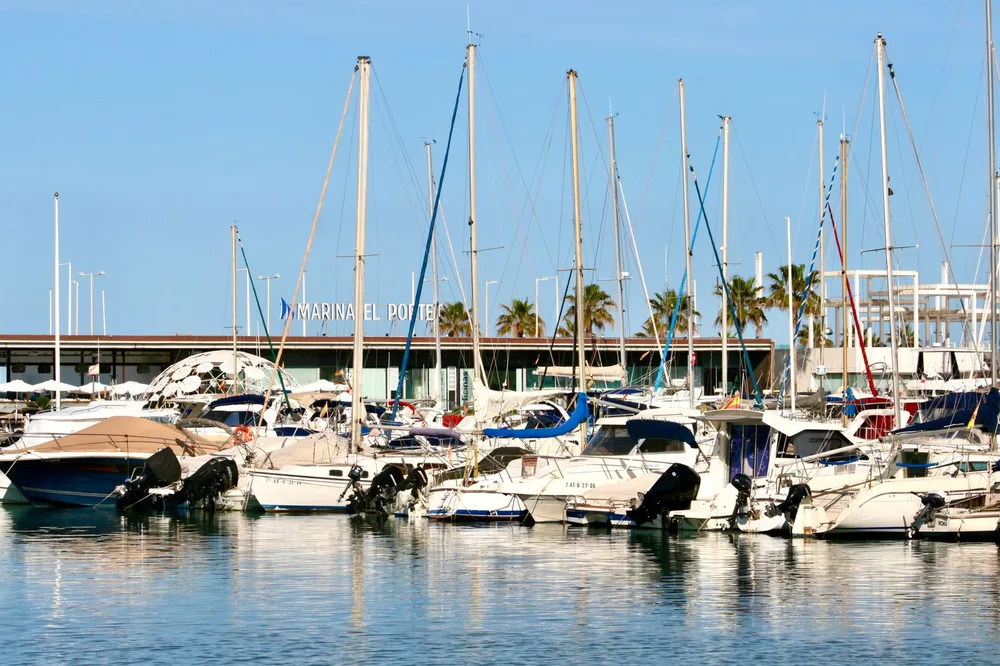
Area guide
The buyer’s guide, market data for all areas on the Costa Blanca North, the mortgage calculator and answers to common questions — everything you need to prepare your purchase, in one place.

The buying process step by step: offer, contract, taxes and due diligence.

Asking prices, trends and screening bands per town — the full market picture across the thirteen towns.
More answers about buying, taxes and ownership on the Costa Blanca.
Estimate your monthly mortgage costs before you shortlist.
Looking for a property on the Costa Blanca? Tell us what you’re looking for, and our team will get back to you shortly.