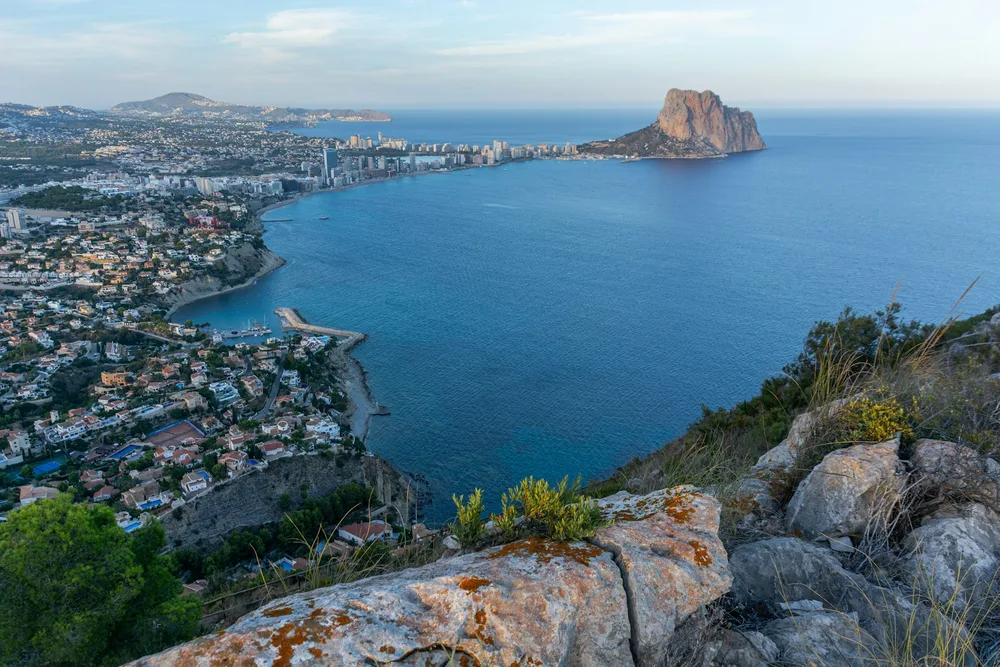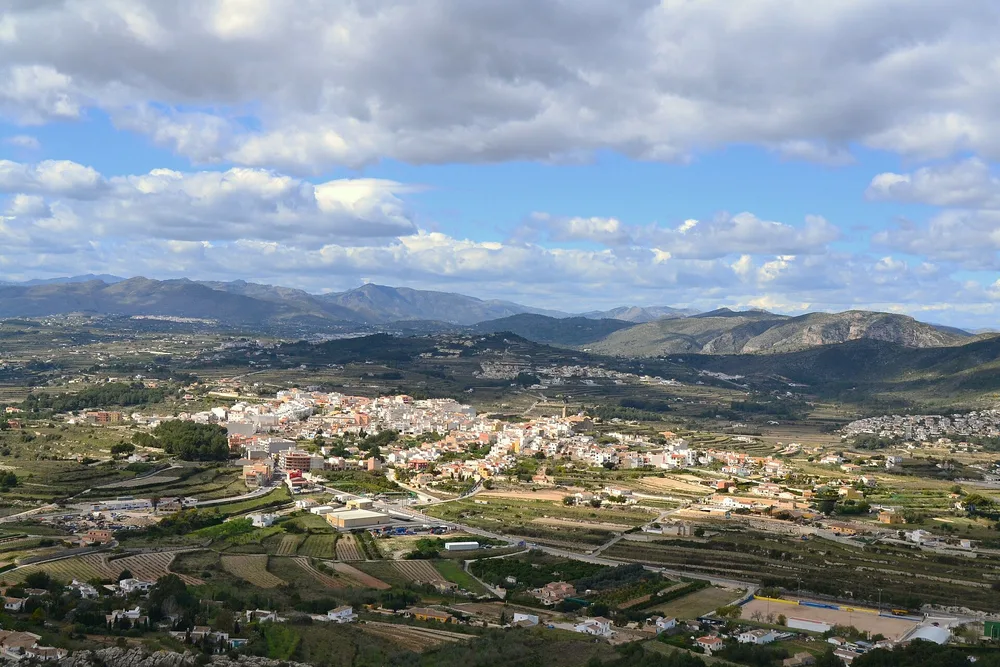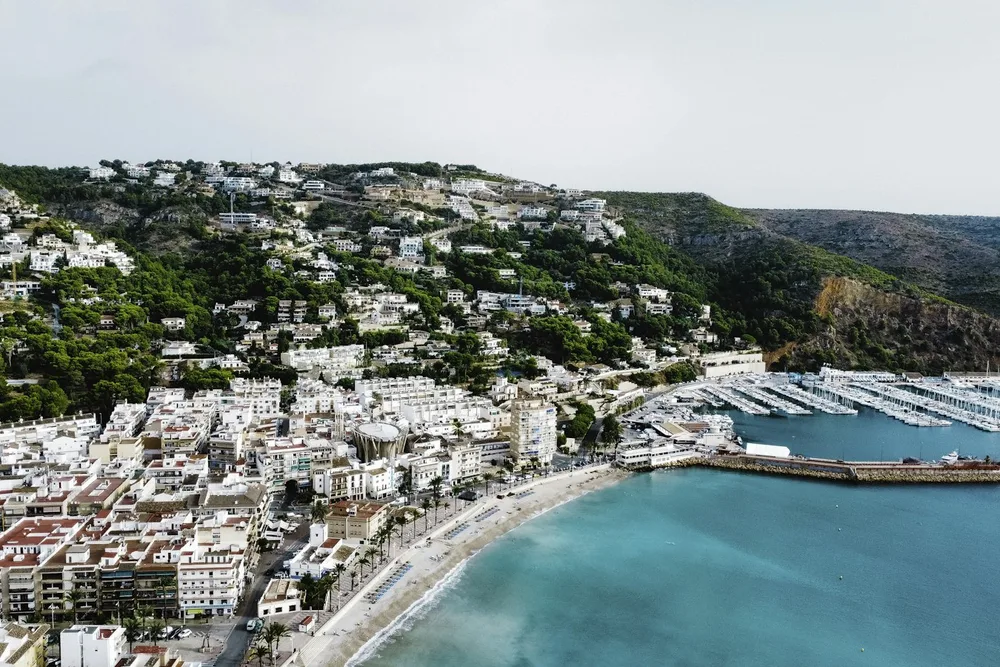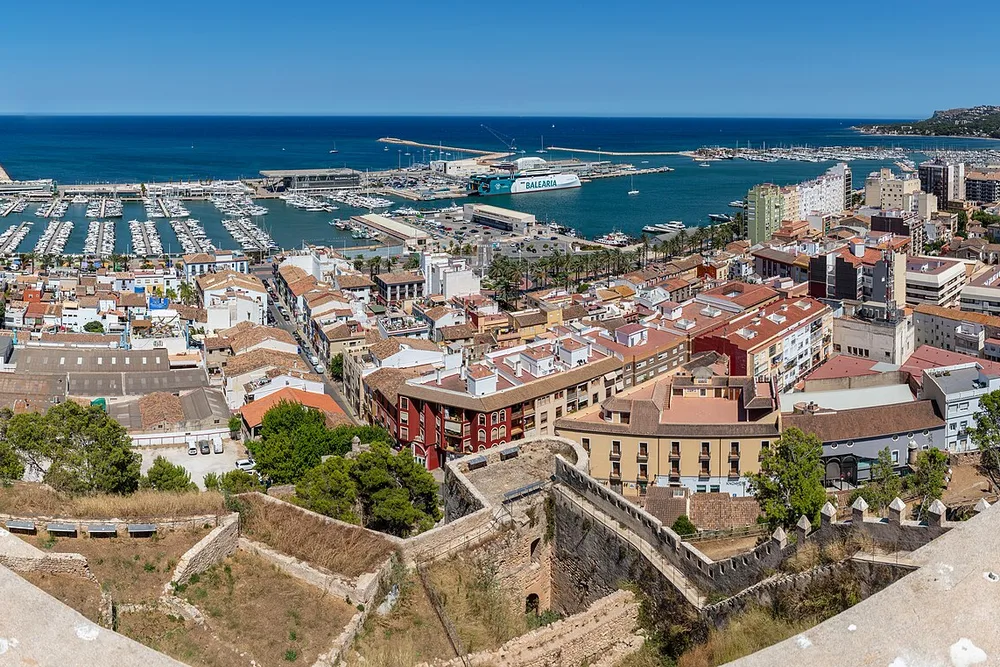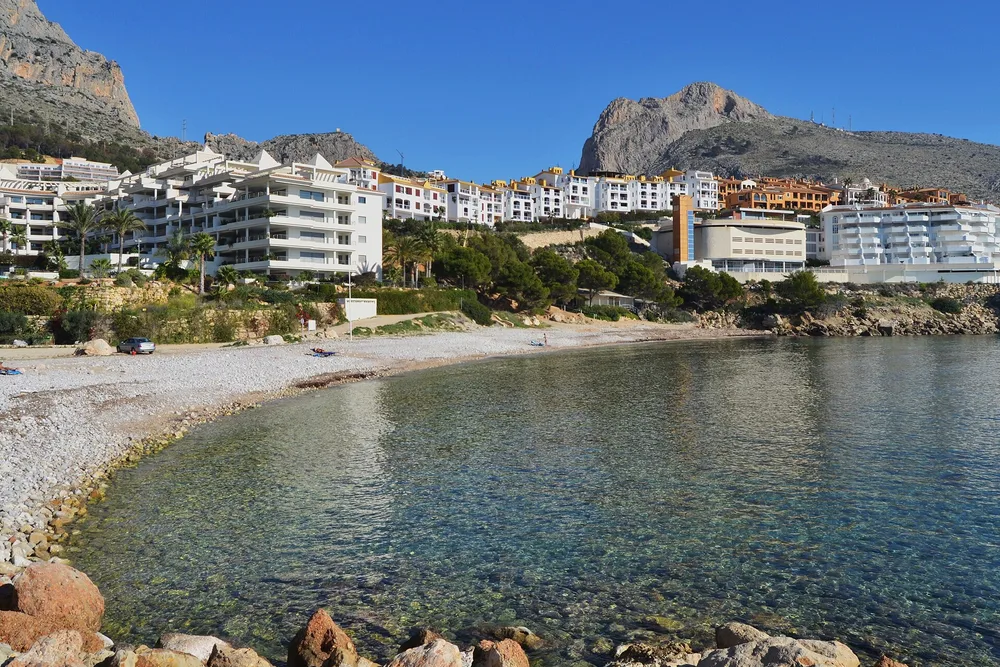
Altea
Premium, cultural and calm — the white old town, the church plaza and a slow seafront paseo set the tone.

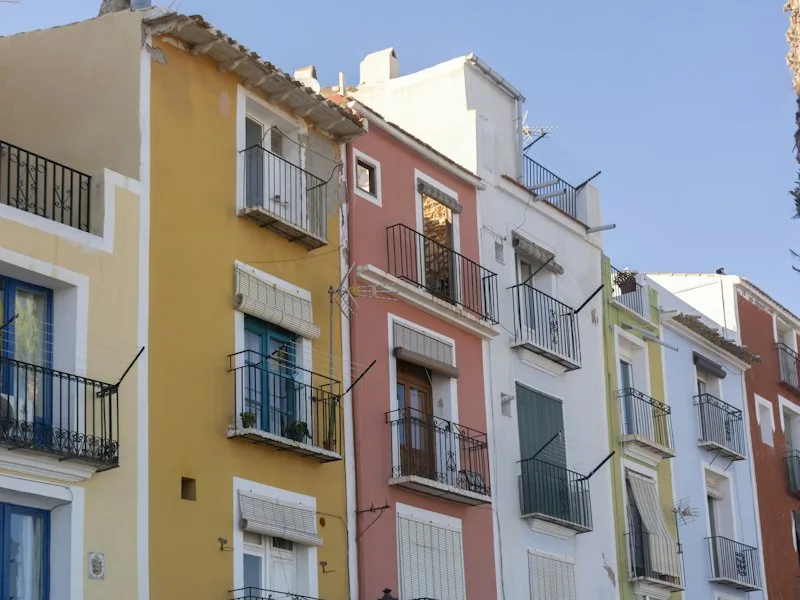
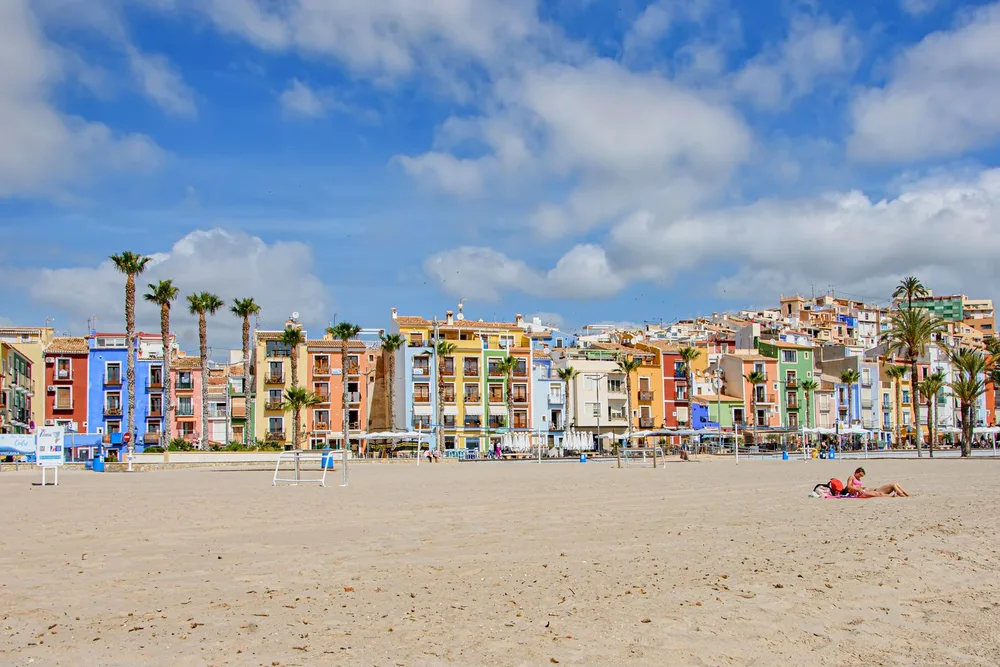
Villajoyosa · Area guide
A walled old town with coloured façades and a real year-round economy, high-rise resort living at La Cala, coastal villas towards Montiboli and quiet rural partidas — Villajoyosa is not one market but a handful of them.
Geographic scope
Villajoyosa — officially La Vila Joiosa — sits in the southern Marina Baixa, on the coast between Benidorm and Alicante. The municipality has ±15 km of coastline with 13 beaches and coves, and the Amadorio cuts the urban area in two: a walled old town with coloured houses on the waterfront, beach districts and urbanisations along the shore, and rural partidas inland. The climate is mild, with a mean annual temperature above 19°C and little rainfall; TRAM Line 1 connects the coast with Benidorm and Alicante.
The terrain and history create three living patterns: a walkable centre with older urban blocks, renovated flats and compact new build; La Cala, the clearest high-rise concentration in the municipality, with resort complexes, lifts and communal pools; and the southern coast towards Montiboli, El Charco and Paraíso, where villas, terraces and sea views set the tone. A buyer looking for a villa almost never looks in La Cala; a buyer who wants walkability finds hardly any services in the partidas — and in Plans–Gasparot and El Secanet you buy space and practicality instead of the beach.
Municipal profile
Verified indicators behind this guide — the asking-price index, the composition of the housing stock and the tourist-rental position this market moves on.
All prices are asking prices or portal estimates, not completed transactions. The municipal average is the lowest of the thirteen towns on this site, but hides the spread: the one micro area with a row, Platja de Torres, stood at €5,106/m² in August 2026. The separate house estimate from the same source sat at €2,623/m², below the general figure, because villa stock counts larger plots, older buildings and rural houses. The 2021 census counts all dwellings; the tourist register reflects June 2024.
Where to buy
You buy Villajoyosa by environment, not by municipality: the centre, La Cala, the southern beach districts and the rural partidas are different markets. Pick an environment to see what it suits and what to verify.
Walkable year-round centre
The most practical market in the municipality: older urban blocks from the 1970s and 1980s, renovated flats around Calle Colón and the harbour side, the coloured fishermen’s houses of the walled old town, and compact infill new build near the beach and centre. Walkability is the prize; the bill sits in upper floors without a lift, façade and energy maintenance, and the gap between advertised and usable floor area.
High-rise and resorts by the sea
The clearest high-rise concentration in the municipality: Cala Palmera–Atrium, Cala Alta–Veramar, Las Azaleas–Alkadir and Mirador de la Cala–Benimar — terraces, communal pools, lifts, parking and heavy second-home use, with Las Azaleas–Alkadir mostly built in 2000–2010 (75–90 m²). Asking prices diverge sharply within a single complex by floor, view, terrace and licence status; La Cala’s rental index sits above the municipal average.
Coastal villas and family homes
The clearest coastal-villa concentration: detached villas, semi-detached homes, sea-view terraces, pools and generous plots around Montiboli, El Charco and Partida Paraíso, alongside family apartments from 2000–2010 and a visible seafront premium segment. Slopes, external works and coastal exposure decide the maintenance; a Coastal Law check belongs in every purchase file for properties facing the sea.
Premium enclave by the beach
The one micro area with its own row in the price report — and at €5,106/m² far above the municipal average. The explanation is twofold: a quiet, open beach zone on the northern edge of the municipality, in the orbit of Benidorm and Finestrat, and a small stock in which detached villas are scarce while the construction pipeline delivers mostly apartments. Small, mixed samples can shift such an average heavily; use the figure as a directional signal, not an appraisal.
Practical residential district
The local, practical choice: plenty of 1980s housing, schools and daily services nearby, and a mix of detached and semi-detached homes alongside apartment-led growth. Together with the centre and Torres, this is where visible new build appears; new apartments here were advertised from ±€294,000. You buy space and practicality here, not a resort — test build year, lift and energy performance.
Mixed coast by port and beach
The mixed coastal strip between centre and port: older coastal houses, detached homes and larger villa-style properties among apartment blocks, port and beach uses. A search here is street-by-street work, property by property, because status, view and sea access differ per façade; individual homes with genuine sea access carry a strong premium.
Land, space and quiet
The countryside edge where country houses, fincas and large plots sit: El Secanet–Hacienda del Sol, Partida Torretes, Mediases and Era Soler. Several buildings, annexes and agricultural structures are normal, as is variable access and utilities. Here the purchase is a land question: classification, registered buildings, legal access, water and septic sewage weigh heavier than the kitchen.
Market & buyer fit
Families wanting outdoor space and a private pool close to the sea and the beach.
Second-home buyers who want a stronger local identity than a high-rise resort offers — old town, port, chocolate tradition.
Retired or semi-retired buyers who want to live year-round in a Spanish town and are comfortable with driving and maintenance.
Apartment buyers seeking a low-maintenance second home with terrace, lift, pool or beach access — mainly in La Cala and the centre.
Buyers prepared to renovate and actively manage the legal and technical due-diligence process.
Selective rental buyers who treat rental income as an option and have the rules verified at address level before doing the maths.
Buyers with no appetite for pool, garden, retaining-wall and roof maintenance — a villa in Villajoyosa comes with that package.
Buyers who need walkable daily services but are considering a beach urbanisation or a remote partida.
Buyers counting on a guaranteed seasonal income — tourist use is regulated and never transferable.
Buyers budgeting for a sea view without the premium for floor, orientation, terrace and parking.
Buyers who need step-free living in older central blocks without a lift.
Buyers who equate a large advertised floor area with legally usable and financeable square metres.
Snapshot
Two instruments side by side: the Platja de Torres micro area — far above the municipal average — and the Zone D screening bands to test listings against quickly.
Average asking price per micro area, dearest first (Idealista asking-price report, August 2026).
Asking prices are not transaction prices. The municipal average is the lowest of the thirteen towns on this site, while the one micro area with a row — Platja de Torres — sits far above it; small, mixed samples can shift such a figure heavily, and for villas the price per m² is extra unreliable.
| Property type | Band (asking prices) | Supply |
|---|---|---|
| Standard apartment | €130,000–€400,000 | — |
| Prime apartment / penthouse | €350,000–€1,300,000+ | Broad resale supply: older central blocks alongside La Cala’s 2000–2010 resort stock; renovated homes are the visible middle segment, with new build scattered across the centre, Torres and Plans–Gasparot. |
| Townhouses | €220,000–€650,000 | Town houses and semi-detached properties around the centre and in the resort complexes; check parking title, extensions and community rules property by property. |
| Villa, resale | €350,000–€1,500,000+ | Resale-led and small in scale: coastal villas around Montiboli, Paraíso and Torres, country houses in the partidas; new detached villas are a niche. |
| New-build apartment or villa | €300,000–€1,500,000+ | The visible pipeline is almost entirely apartment-led — La Cala, Platja de Torres, Plans–Gasparot and the centre; new apartments in Plans–Gasparot were advertised from ±€294,000. |
| Building plot | €100,000–€550,000+ | Building plots mainly in the rural partidas; value build rights only after a current check of land classification and buildability. |
Screening bands (Sep 2026) exist to test listings quickly — they are not an appraisal. The exact location, legal floor area, condition and access can put a specific home well above or below its band.
Local conditions
Three conditions decide what you actually buy in Villajoyosa: the coast with its river, the town’s year-round character and the planning framework around flooding and the shoreline.
The municipality has ±15 km of coastline with 13 beaches and coves; the Amadorio cuts through the urban fabric and its mouth is the most exposed stretch. TRAM Line 1 connects the coast with Benidorm and Alicante; urban buses run among others to Montiboli (line 23). The municipality’s mobility picture calls the car dominant and flags congestion and uneven connections — test the walk to the TRAM stop and the supermarket at the exact address.
Villajoyosa has a genuine year-round economy: tourism, fishing, chocolate production and the port, with a full calendar (Moros y Cristianos, La Vila Gastronómica, Vilamuseu). That base sits in the centre and around Playa Centro; the beach complexes of La Cala and Torres are more strongly seasonal. The climate is mild — a mean annual temperature above 19°C with little rainfall. Test the house out of season: heating, damp, internet and whether the services around you stay open.
The planning framework is the 1999 General Plan with ongoing modifications and regeneration programmes (including Triana, Pati Fosc, SICOP) — context, not a value guarantee. Flooding and coastal regression are address questions: the highest urban scenario reaches 2.82 m of water depth in the most affected area, and sensitivity to coastal regression is greatest at the mouth of the Amadorio. In August 2026 the municipality announced the €4.6 million Refoio collector, aimed at historic inundation; have flood maps, drainage and insurability checked parcel by parcel.
Buyer issues
These issues recur in Villajoyosa — each can be checked at address level before signing, not after.
Apartments count terraces, storage rooms and parking spaces in the advertised constructed area; renovated central units add enclosed balconies, attic rooms and shifted layouts. This affects price comparison, finance and tourist registration — reconcile the Registry, the Cadastre and a measured survey.
High-rise La Cala and newer gated complexes depend on lifts, façades, waterproofing, pools and parking structures. A low current fee proves nothing about reserve funds or coming works: ask for the statutes, three years of minutes, budgets and outstanding levies.
In June 2024 the municipality counted 1,782 registered tourist dwellings with 7,830 places and was studying a preventive suspension of new tourist-apartment licences in buildings with an owners’ association — a study, not a standing moratorium. A tourist home requires a favourable municipal compatibility report, its own cadastral reference and — since April 2025 — express approval of the owners’ community; a change of ownership restarts the process.
Around Montiboli, Paraíso, Torres and Varadero, the Ley de Costas can lay a protection servitude and public access over what looks like private ground; the protection zone is commonly 100 m and can be 20 m on consolidated urban land, with a 6 m transit servitude. The exact delimitation is parcel-by-parcel work — never generalise a fixed distance.
In El Secanet, Partida Torretes, Mediases and Era Soler you buy land with annexes, agricultural structures and sometimes a second dwelling registered nowhere as an independent home. Non-urban or agricultural classification can restrict use, extension and tourist rental; request classification, registered status, access rights, water source and sewerage for each parcel.
Basements, garages, ground floors, pools and terraces carry more risk than an apartment. The municipality names a highest urban scenario of up to 2.82 m of water depth and extra coastal regression at the mouth of the Amadorio; the Refoio collector (€4.6 million, Aug 2026) is a reminder that drainage remains a live municipal issue. Check flood maps, drainage routes, damp history and insurance.
The centre and older districts hold apartments on upper floors without a lift. This affects daily use, resale demand, renovation cost and how older buyers value the home — weigh it honestly in your offer.
Balconies, railings, façades, shutters, sealant joints and waterproofing wear faster in salt air; ask for maintenance history, technical reports and insurance claims, and view the property after rain where possible. In high-rise buildings, façade and lift funds belong in the file as standard.
Our advice
Do not buy on a neighbourhood name: “La Cala” or “Montiboli” covers different stock, views and legality complex by complex and street by street.
Do not count on tourist rental without an address-level check: the compatibility report, community approval and registration decide, not the position on the photo.
Do not value a country house or plot without current land classification, access rights and water documents for that parcel.
Do not take advertised floor areas at face value without a measured survey reconciled against the Registry and the Cadastre.
Do not treat the micro-area figure as an appraisal: Platja de Torres sits far above the municipal average on a small, mixed sample.
Do not underestimate flooding, drainage and insurance questions for ground floors, basements and garages around the Amadorio and the beach.
Frequently asked questions
The questions Dutch buyers ask us about Villajoyosa — with the short, verifiable version of each answer.
On the map
Villajoyosa (La Vila Joiosa) lies on the Costa Blanca in the province of Alicante, southwest of Benidorm at the mouth of the Amadorio river.
Browse by location
Each area has its own buyer logic: character, housing stock and entry prices differ.
Premium, cultural and calm — the white old town, the church plaza and a slow seafront paseo set the tone.
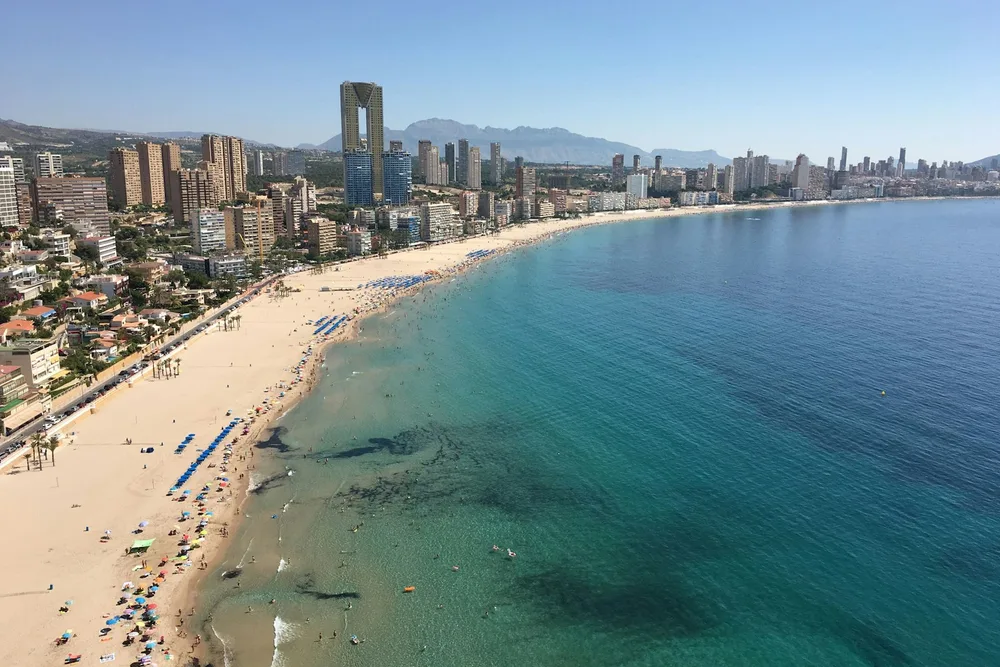
Beach, family and rental appeal — with real seasonality to plan around.
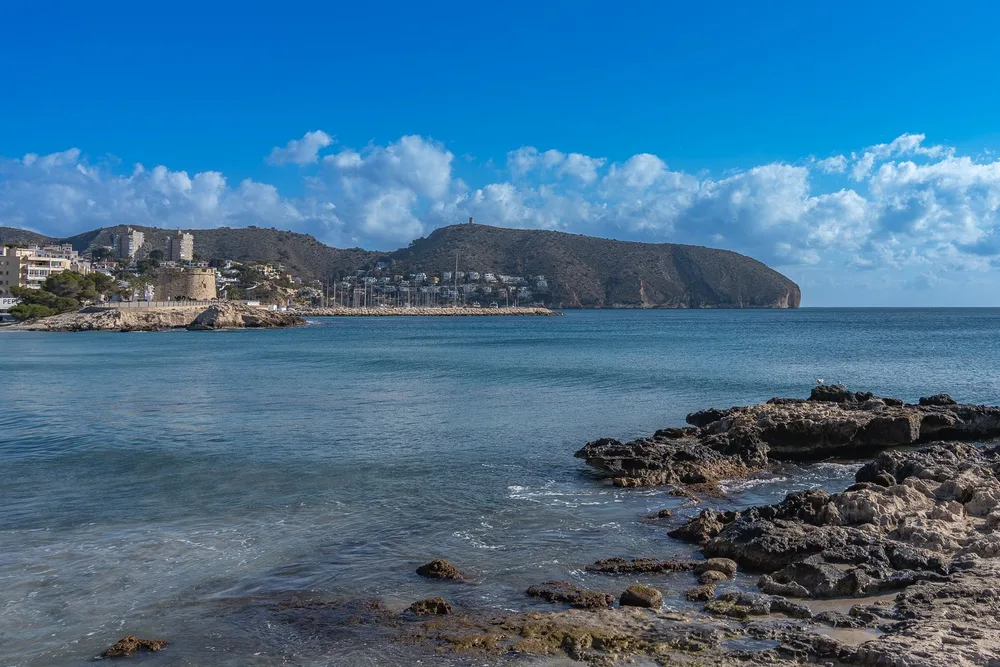
Coast, village and privacy — villa country between Calpe and Moraira.
Residential, sport and family — inland of Altea, good value and facilities.
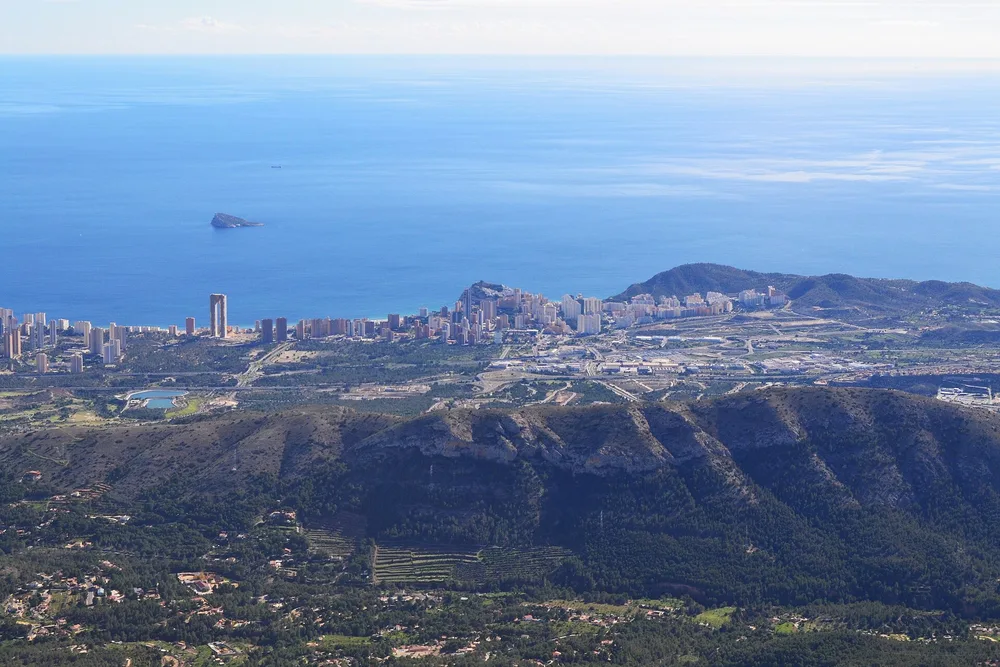
International, healthcare and permanent living — strong year-round community.
Inland village with mountain views — more house for the budget, a short drive to the coast.
Quiet coastal living between Moraira and Javea, with dramatic clifftop spots.
Premium and varied — port, old town and beach each with their own character.
Port town at the north end of the Costa Blanca, with ferry links and a real working feel.
To the listings
For those who want the coast without the coastal price tag, Villajoyosa opens the door: the region’s most affordable entry, with apartments around the colourful centre and villas towards Montiboli and the bays. Per property type, you can see where entry begins and how far your budget reaches.
Area guide
The buyer’s guide, market data for all areas on the Costa Blanca North, the mortgage calculator and answers to common questions — everything you need to prepare your purchase, in one place.

The buying process step by step: offer, contract, taxes and due diligence.

Asking prices, trends and screening bands per town — the full market picture across the thirteen towns.

More answers about buying, taxes and ownership on the Costa Blanca.
Estimate your monthly mortgage costs before you shortlist.
Looking for a property on the Costa Blanca? Tell us what you’re looking for, and our team will get back to you shortly.