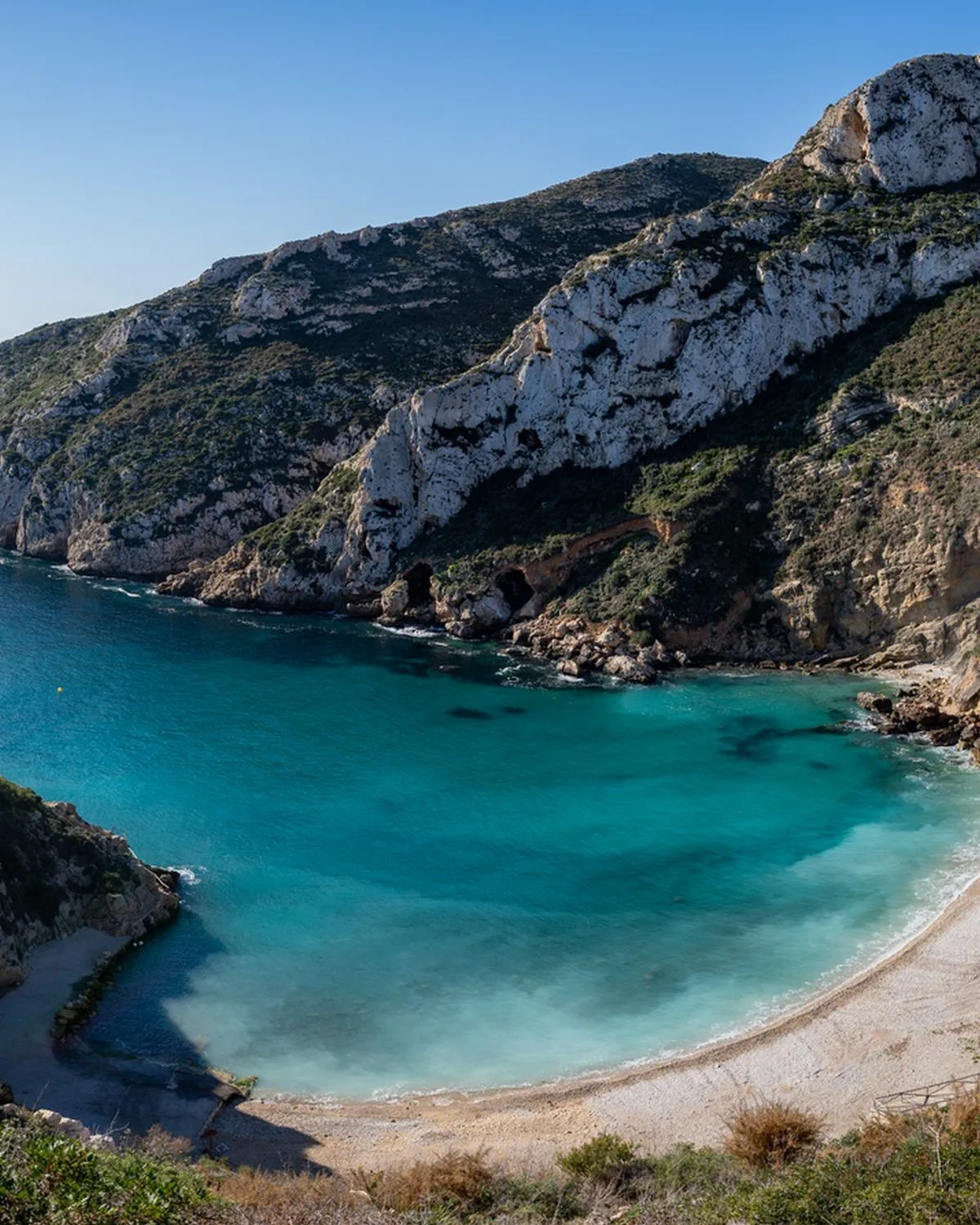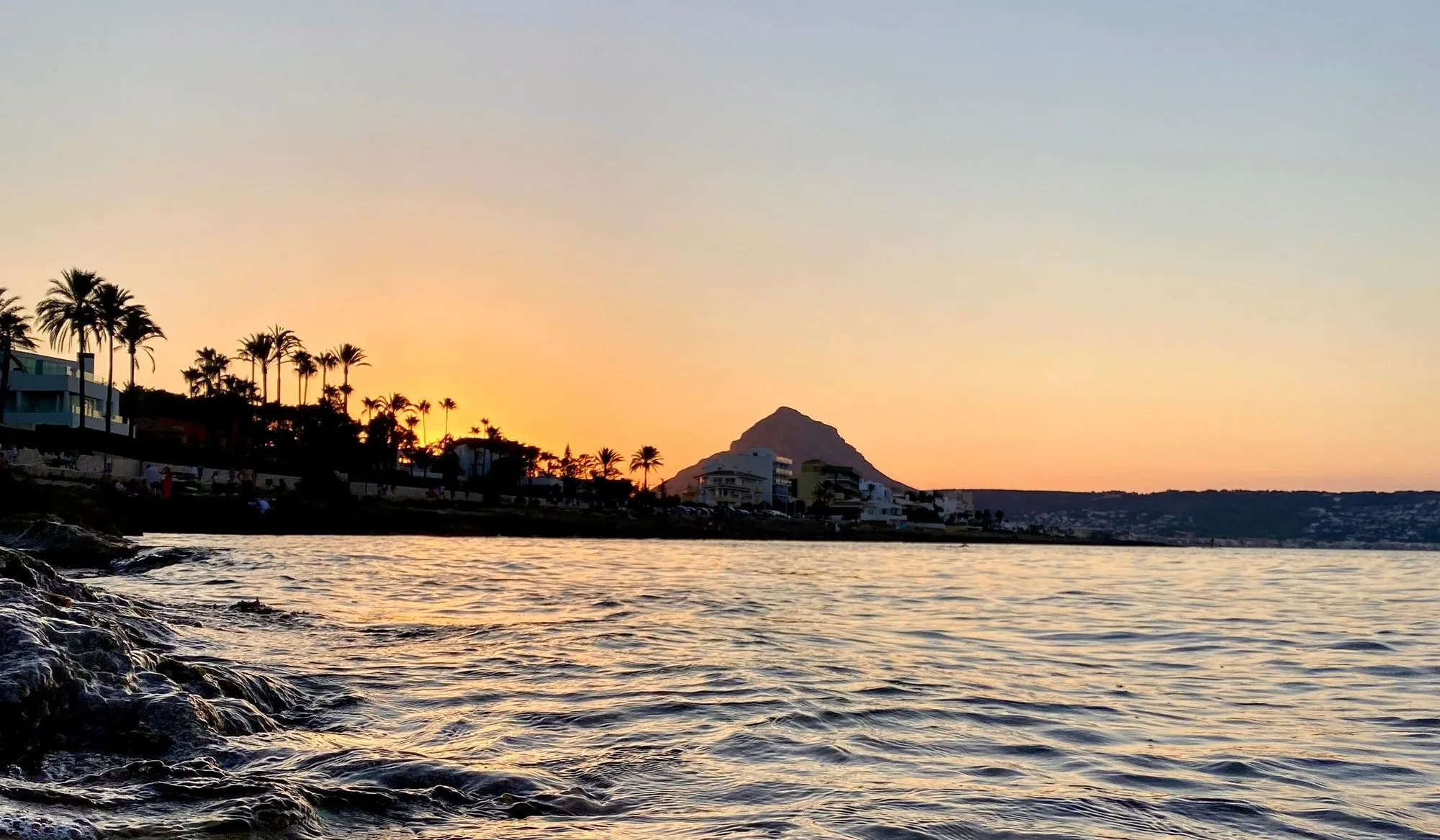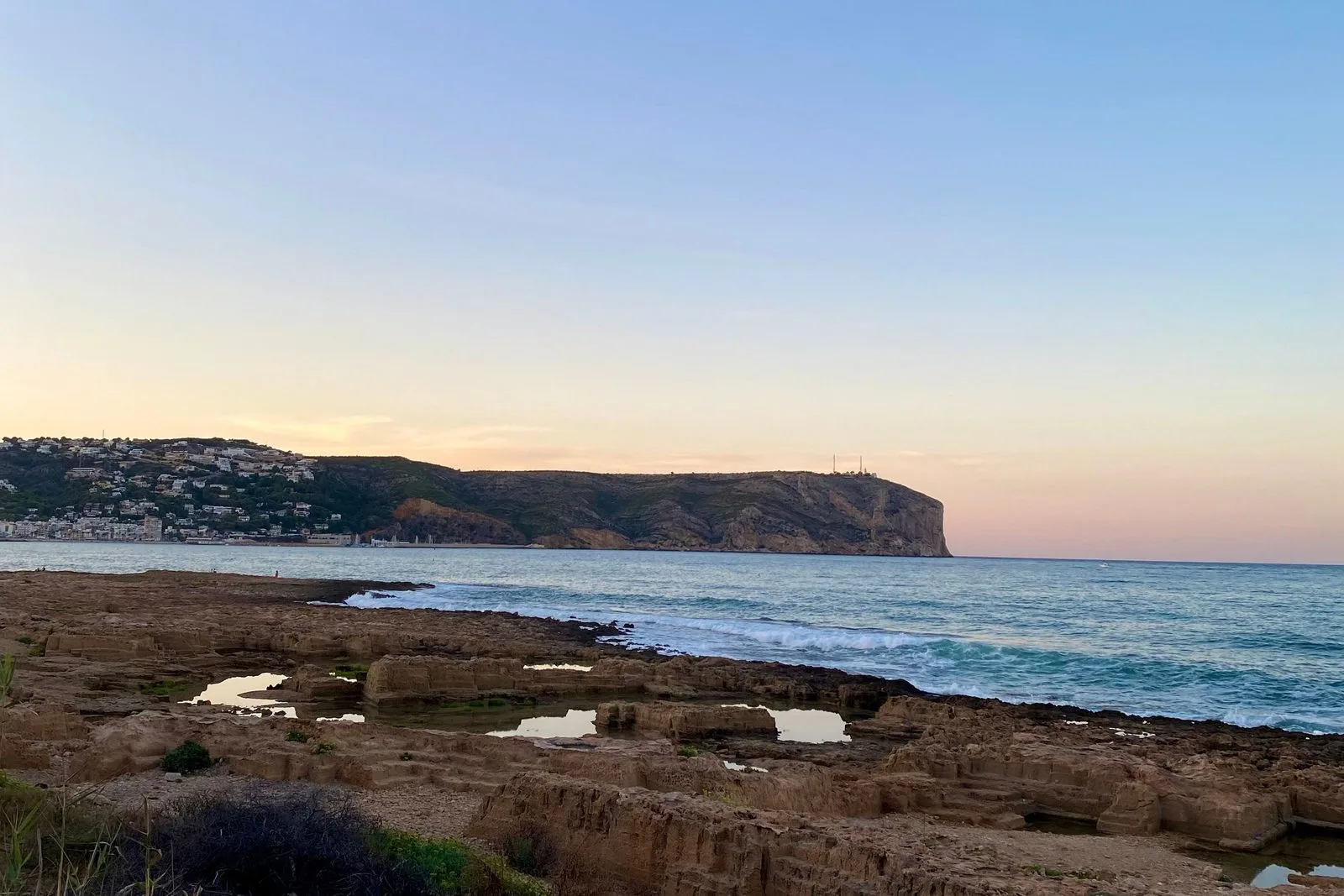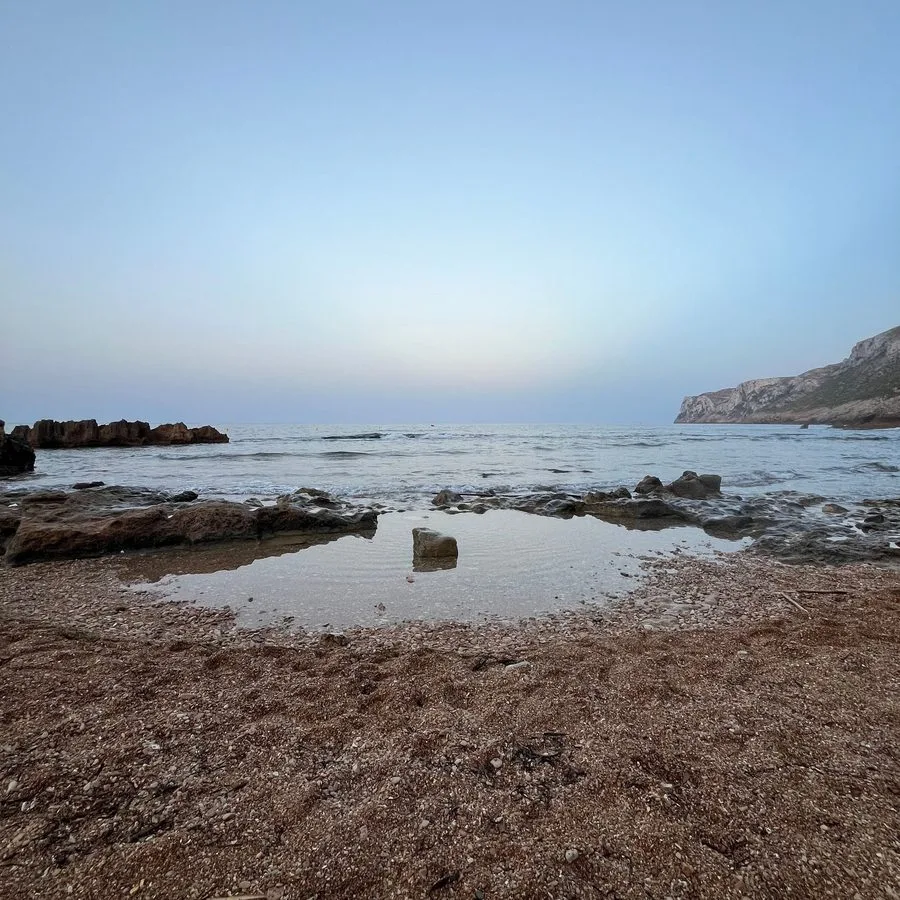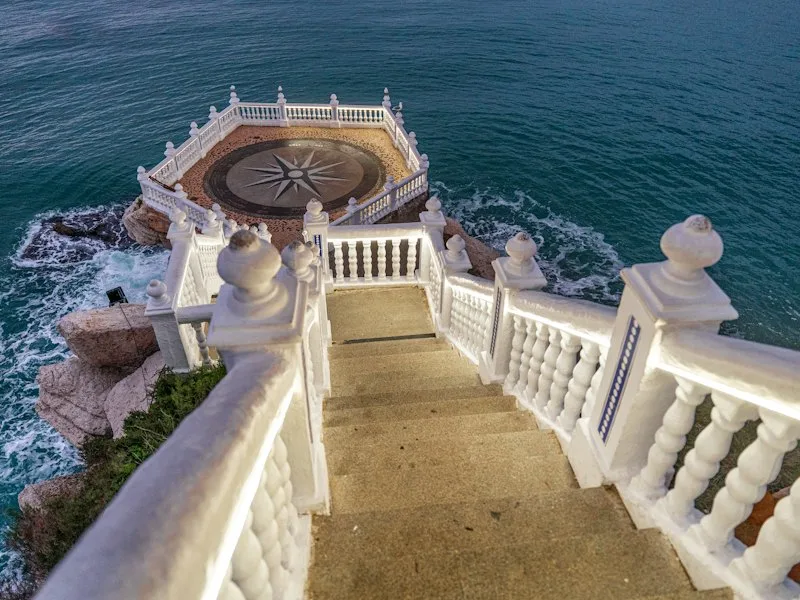
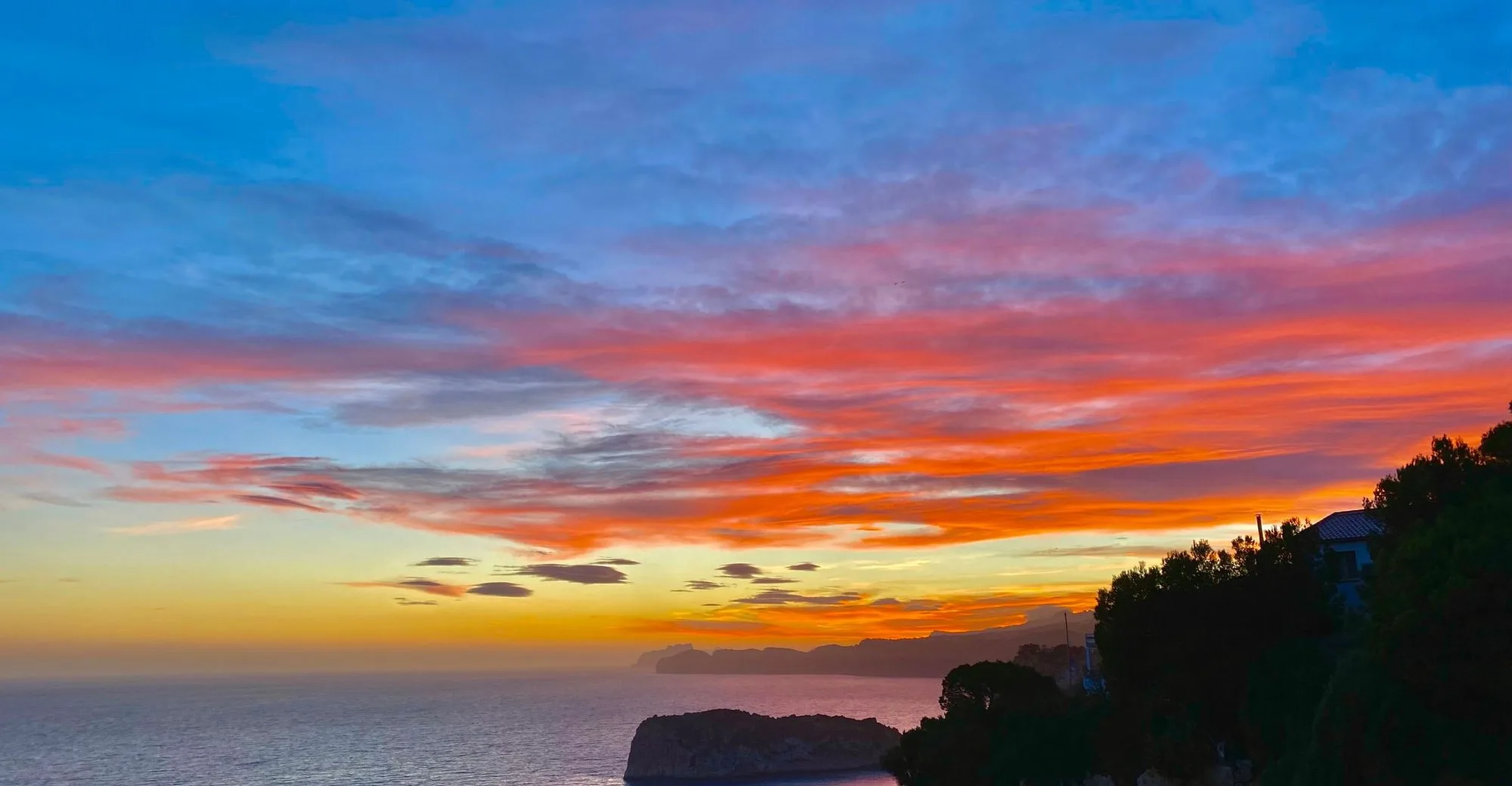
Sunset over the rocky coast of Jávea, with a rocky point in silhouette out at sea

Costa Blanca North · Jávea · Penthouses

Penthouses for Sale in Jávea

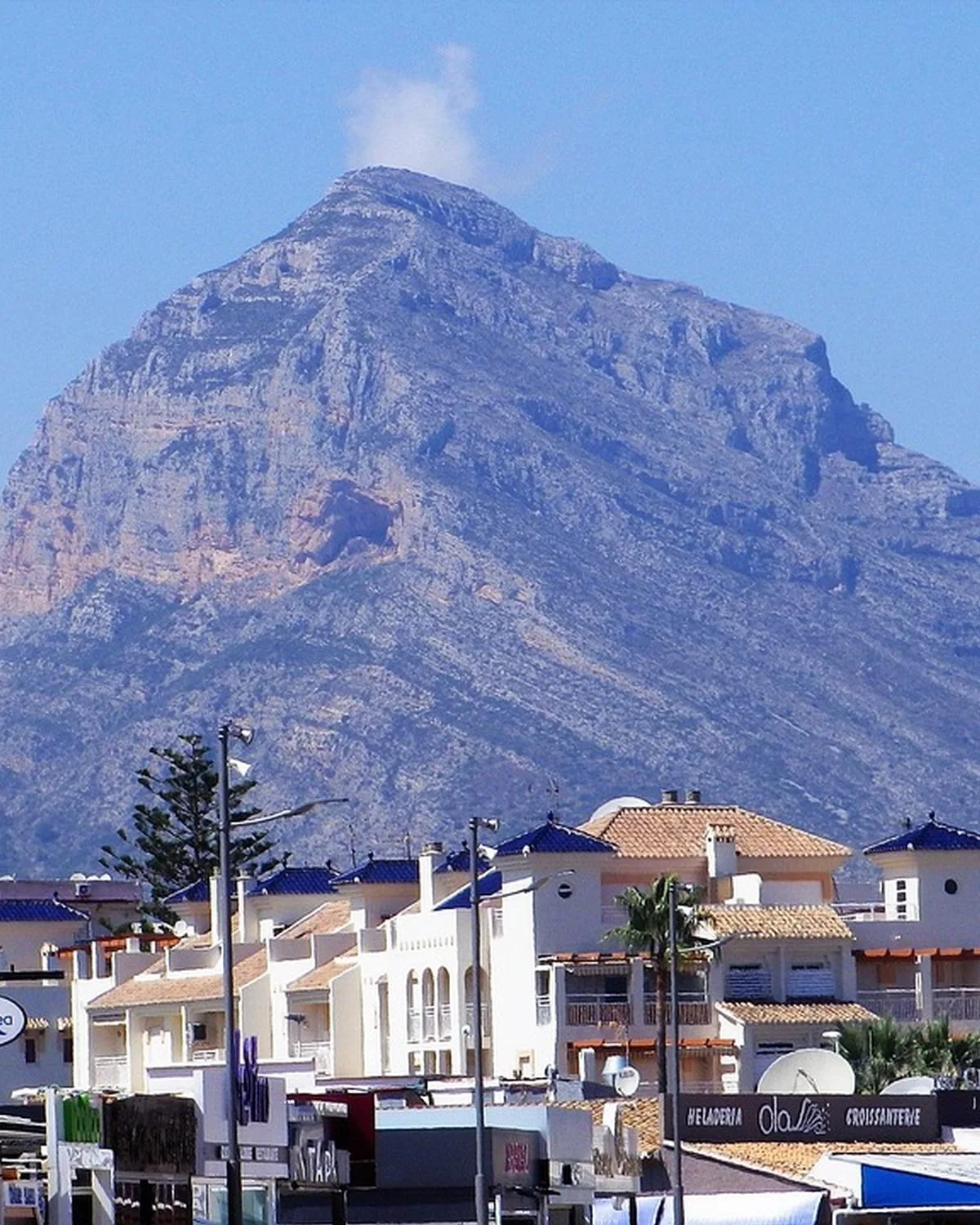
Penthouses between two landmarks: the Montgó above the town and the bay. A market centred on the port, El Arenal beach and the historic centre, with a small new-build supply near Cala Blanca and views over sea, harbour or mountain.

Prevalence

How prevalent are penthouses in Jávea?

Penthouses are a visible but small part of a market dominated by low-rise buildings: the municipality publishes no penthouse census, and the “ático” label is a listing category, not a guarantee of a top-floor home with a roof terrace. The available properties are not spread evenly over twenty kilometres of coast but concentrated around three main areas. The largest concentration is along El Arenal and the Montañar, where duplex and triplex penthouses with terraces, pools and lifts line the beachfront. The port area of Duanes de la Mar adds older seafront blocks from the 1960s and 1970s. The historic centre around the church of San Bartolomé has no comparable cluster — searches there need to focus on individual buildings — and at Cala Blanca a small group of new-build developments sits between Arenal and the southern coves. These locations also differ in character: beach and residential-complex life along the Montañar, harbour and promenade in the port, and village life and narrow streets in the centre.

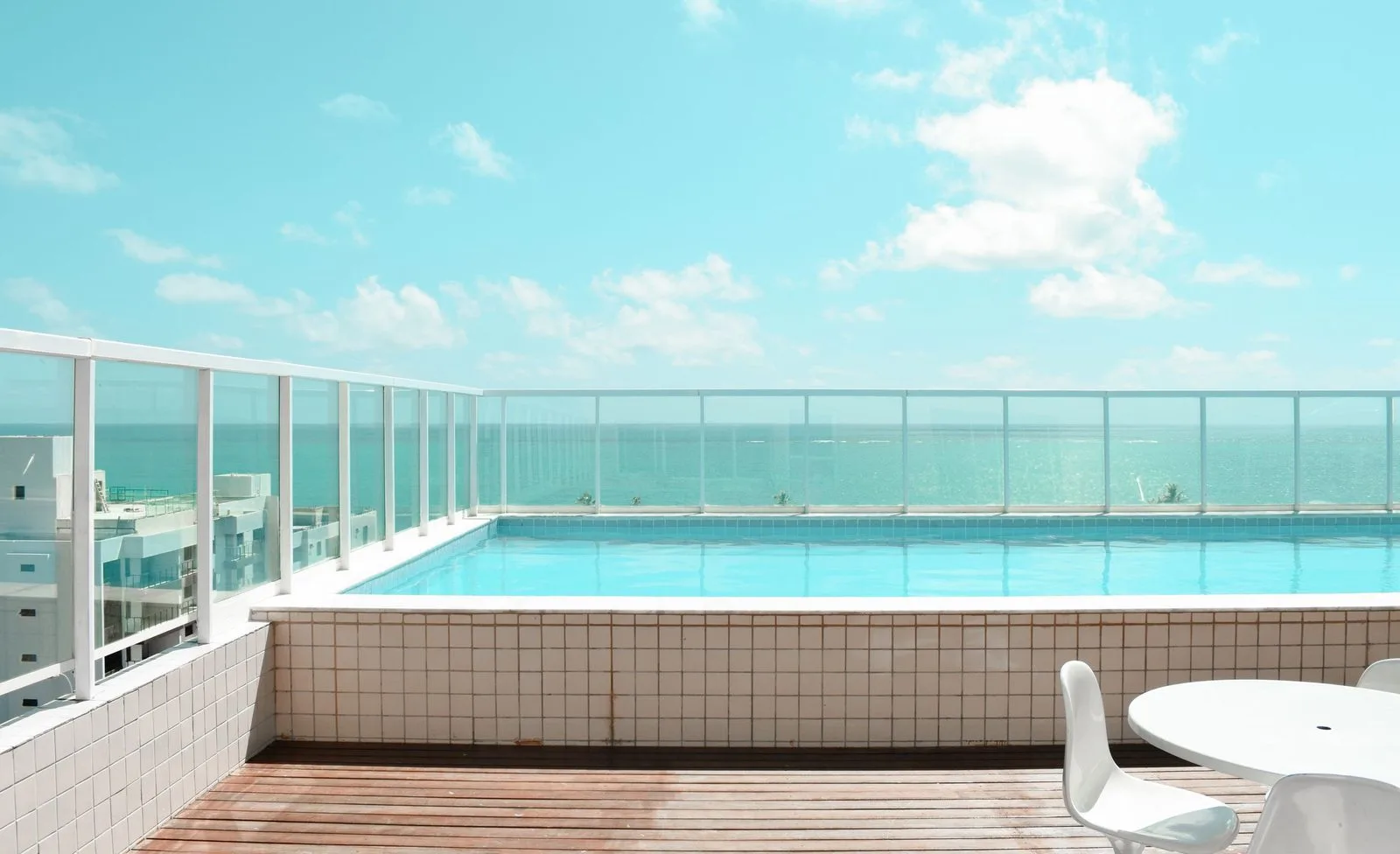
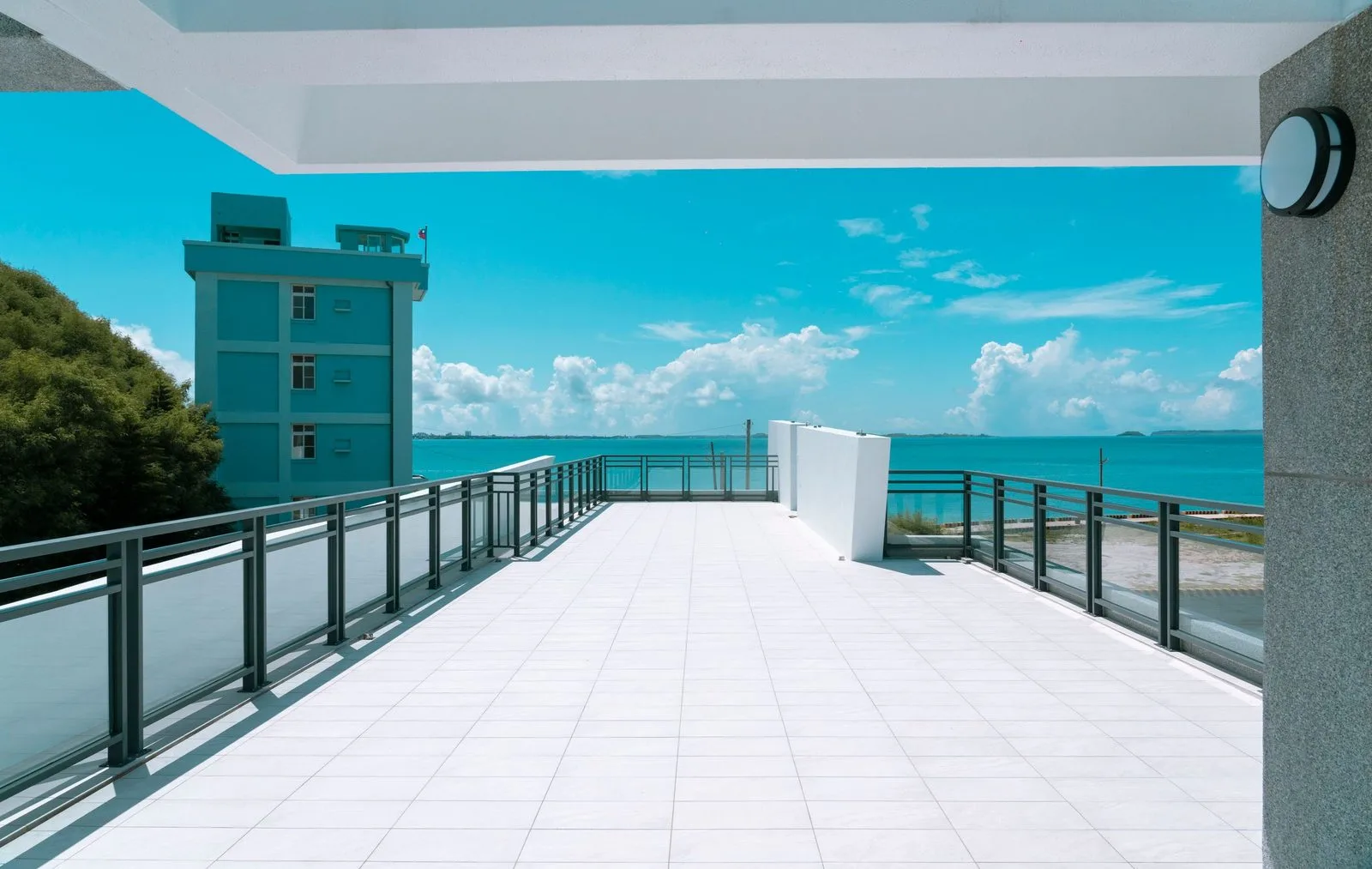
Bright roof terrace with a tiled floor and glass railing, looking out over the sea and coastal buildings

What a typical penthouse in Jávea is like

A Jávea penthouse is usually a duplex or triplex on the top floors along the Montañar beachfront, or a more compact unit in a seafront block by the port — with a terrace as the main feature and often a communal pool below. But listings labelled “ático” are not always consistently classified, so the floor level and access need to be verified building by building. The stock ranges from beachfront resale properties in buildings of different ages to older port blocks and a small number of new-build developments near Cala Blanca; in the historic centre, scattered top-floor properties appear, sometimes without a lift. The features that command a premium are clear: outdoor space with a confirmed legal status and a practical layout, an open view towards the sea or the Montgó, orientation, rooftop privacy, a lift, parking and walking distance to the beach, harbour or centre. With this property type, the roof terrace is living space exposed to sun and wind, while the owners’ association manages shared parts of the building through fees, collective decisions and a reserve fund.

Where penthouses in Jávea are usually found

El Arenal & Montañar: the largest cluster — duplexes with a terrace, pool and liftPort & Duanes de la Mar: seafront blocks from the 1960s–70sCala Blanca: a small new-build pocket between the Arenal and the southern covesCentro Histórico: narrow stone streets — individual top-floor properties, sometimes without a lift
Most visible
El Arenal & El Montañar
The heart of the Jávea market: the sandy beach at El Arenal and the adjoining rocky Montañar coastline, where top-floor flats and duplexes are grouped in blocks with a lift, communal pool, gardens and parking — properties priced on the complete package rather than the interior alone. The stock ranges from compact two-bedroom units to spacious duplexes and triplexes with terraces across several levels, with older blocks alongside more recent developments. Views towards the sea, across the bay or back to the Montgó can create a substantial price difference between two otherwise similar penthouses. This is also the busiest part of the municipality in summer — its only sandy beach draws visitors from across Jávea — so seasonal activity should be considered when viewing.
Request a breakdown of the floor area before making an offer: interior, covered terrace and open roof terrace listed separately. Check how the complex is managed: the owners’ association, fees, reserve fund, and whether the lift serves both the penthouse level and the parking area. A visit in the peak month will show how busy the beach area feels from your terrace.
Locations and featuresEl ArenalThe MontañarDuplex & triplex top floorsPool, lift & garageSea & Montgó views
The port area
Port & Duanes de la Mar
The seafront part of the market: around the harbour of Duanes de la Mar, the small beach of La Grava and the marina are older blocks with top-floor homes, dating mostly from the 1960s and 1970s, with more recent additions here and there. The supply is more limited and the properties generally smaller than at Arenal: compact top-floor flats alongside the occasional duplex, lift provision that varies by building, and roof terraces exposed to salt air. The port gives the area its own character: fishing, the promenade, restaurants and the church of Mare de Déu de Loreto within walking distance. Lift access and parking differ block by block, making checks on each property particularly important here.
Checks for coastal wear are especially important here: the building’s condition, any salt damage, the roof’s history of leaks, and the legal status of the roof terrace or solarium in the title deed. Verify lift access and parking building by building — in these older blocks, properties without a lift or their own parking are not unusual.
Locations and featuresDuanes de la MarLa GravaFishing harbour & marinaBlocks from the 1960s–70sPromenade & dining
Watch list
Centro, Cala Blanca & the capes
The smaller part of the market covers three areas. The historic centre around the church of San Bartolomé, the Mercat Municipal and the streets by Thiviers has no penthouse cluster — buildings are small in scale and top-floor flats are scattered, sometimes without a lift in older buildings. At Cala Blanca, between Arenal and the southern coves, a small group of new-build developments offers duplex penthouses within walking distance of the sea, released in individual phases. Along the capes — Cabo de San Antonio in the north, Portitxol and La Granadella in the south — low-rise buildings and villas predominate, and properties labelled ático appear only occasionally. All three areas call for ongoing monitoring: a suitable unit may appear infrequently, sell quickly and have few comparable properties in the same street.
In a market with limited supply, the documentation matters even more: floor level, lift access, roof status and the owners’ association need closer checks unit by unit, and the “ático” label itself is the first claim to verify. With new builds, the building licence, phase and completion documentation must be checked before the offer; in the centre, the question is whether a lift exists at all.
Locations and featuresCentro Histórico & ThiviersCala Blanca new buildCabo de San AntonioPortitxol & GranadellaOccasional listings

Current supply

The current penthouse supply in Jávea

Jávea’s penthouse supply is visible in listings but has no official count: the picture differs by platform and can include duplicate or differently classified adverts. Listings are not a census, and the municipality publishes no penthouse statistics. The available properties fall into three broad categories. Resale forms the core: duplex and triplex penthouses along the Montañar beachfront, compact units in the port blocks of Duanes de la Mar and scattered top-floor flats in the centre, each requiring checks on the individual building. Renovated resale properties appear regularly, but “renovated” describes an individual property rather than a separately measured market segment. New builds are available in a small group of developments at Cala Blanca and individual schemes elsewhere. Coastal exposure also matters: salt, wind and sun affect waterproofing membranes, frames and metalwork, so maintenance records should be reviewed at every viewing.

Resale

The core of the market

Resale forms the core of Jávea’s listed penthouse supply: duplex and triplex penthouses at El Arenal and along the Montañar, compact units in the port blocks around Duanes de la Mar and La Grava, scattered top-floor flats in the historic centre and occasional properties on the capes. Online availability changes: counts differ by portal, adverts may be duplicated or differently classified, and a property listed today can be gone tomorrow. For buyers, that means comparing individual properties and their documentation, and searching across the municipality — from the Montañar to the centre and the capes — rather than relying on one portal. Resale buildings offer an established record: historic fees, minutes recording roof and lift decisions, and management arrangements that can be checked.

Renovated

A description of the property, not a measured market share

There is no reliable breakdown of renovated penthouses in Jávea, so a percentage for the “renovated share” would be speculative. “Renovated” also usually refers to the private unit: kitchen, bathroom, glazing, air conditioning and terrace tiling. It says nothing about the condition of the building — roof membrane, drainage, lift or structure — or the legal status of rooftop alterations such as glazing, pergolas or rooftop rooms. Renovation and access are separate questions: a refurbished unit in a 1970s port block may still have no lift, or be on a floor the lift does not reach. Ask what was renewed or built, under which permit, and whether invoices, plans and technical reports are available — the fact that an alteration has been there for years does not prove it is lawful.

New build

A small number of individual developments

Jávea’s new-build penthouse supply is concentrated in a small number of developments at Cala Blanca — duplex penthouses within walking distance of the sea, between Arenal and the southern coves — supplemented by individual schemes and phases elsewhere. This is a qualitative assessment of the available properties, not a percentage: no reliable split between new-build and resale penthouses is available. Outside these schemes, new-build penthouses are scarce, and the phase, communal budget and property layout differ between developments. Development names can help your search, but do not establish a property’s status. Check the documentation for your exact unit: building licence, phase, completion certificate and first-occupancy documentation. New builds also require a review of the owners’ association formed at handover, whose actual fees and reserve-fund needs become clearer once the building is in use.

What “new” and “renovated” do and do not tell you about a Jávea penthouse
  1. The interior is not the building

    A new kitchen and new bathrooms answer none of the questions about the roof membrane, drainage, lift or structure — yet these can make the difference between a sound purchase and a costly one on a coastal top floor. Sun, salt and wind affect membranes, frames, metalwork, sealant and air-conditioning equipment. Ask what was renewed inside the private unit and in the common parts, under which permit, and whether invoices and technical reports are available.

  2. New-build status by development

    In a market with a small concentration of new builds and individual phases elsewhere, “new” needs to be supported by documents: the unit you see may be in a phase that does not yet have final completion documentation, while the neighbouring development has been occupied for years. Building licence, approved plans, phase breakdown, completion certificate, first-occupancy documentation, energy certificate and warranties — the full set must relate to the exact unit, not just the development advertised in the brochure.

  3. The owners’ association and shared costs

    Buildings along the beachfront and in the port area depend on lifts, façades, pools and shared systems, all of which affect costs: fees fund their upkeep, major decisions require votes, and the reserve fund affects any additional contribution towards façade or lift renovation. Request recent minutes, the budget, details of the reserve fund and a certificate of outstanding community fees. Read the statutes for rules on use and letting, including roof terraces and tourist accommodation.

  4. Built area, usable area & terrace area

    Spanish adverts may combine the interior, covered terrace and open roof terrace in the headline area, distorting €/m² comparisons and making the interior appear larger than it is. List the interior, covered terrace, open terrace/solarium, storage and parking separately, and reconcile the figures with the nota simple, title deed, cadastral records and approved plans. Never add terrace square metres to the interior area without explaining the basis of calculation.

  5. Renovated is not new build

    A refurbished resale property does not automatically have the same legal and technical status as a new build: the scope of any remaining construction warranties, building approvals and completion records needs checking, and the structure is older. This affects pricing: assess the renovated penthouse against its building’s age and maintenance records, and compare it with current new-build developments on that basis. A renovated unit may still have no lift, so verify access building by building.

Concentration

Where is the penthouse supply in Jávea concentrated?

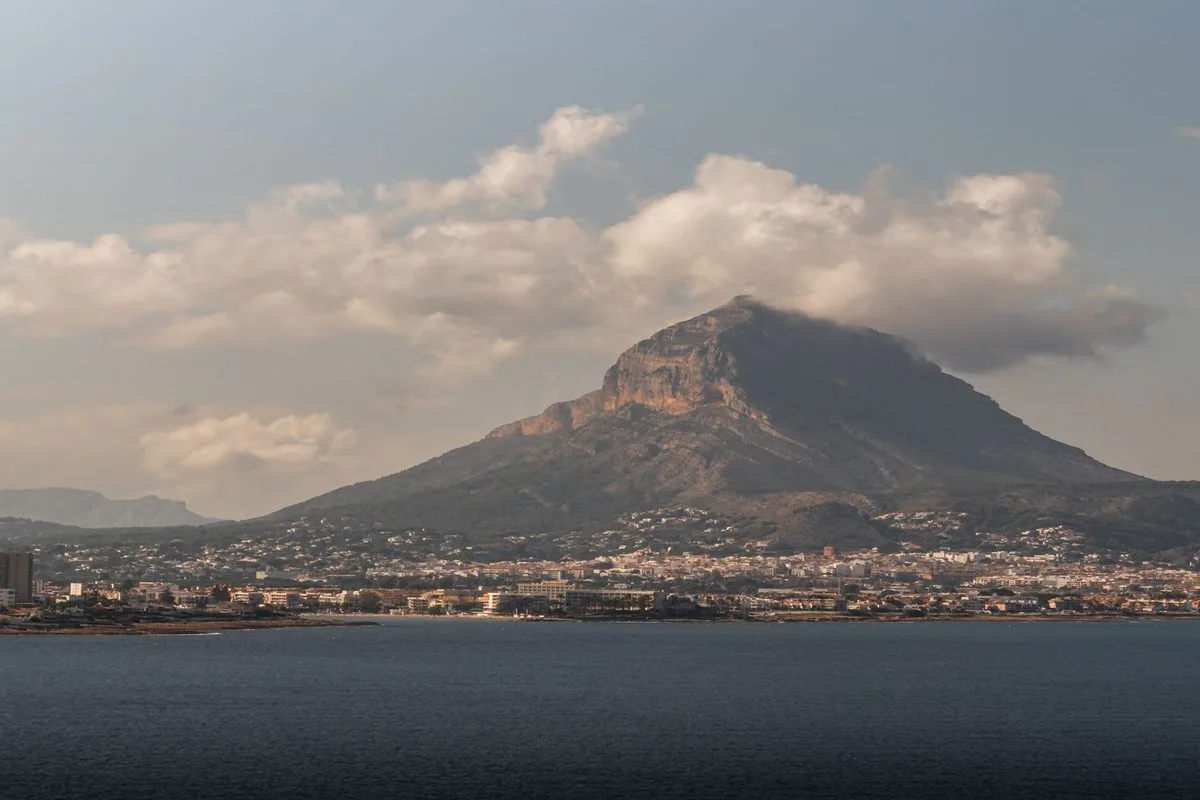
Jávea combines a mountain and a bay: the Montgó defines the town’s backdrop, Cabo de San Antonio marks the northern end of the bay, and the Montañar coastline links the port with the municipality’s only sandy beach at El Arenal. The listed penthouse supply is concentrated in five areas: Arenal and Montañar, the port area of Duanes de la Mar, the Cala Blanca new-build developments, the historic centre, and the capes with their coves. Each area has its own photo below — select a location in the list and the photo follows.

1. El Arenal & El Montañar2. Port & Duanes de la Mar3. Cala Blanca & the southern edge4. Centro Histórico & Thiviers5. Cabo de San Antonio, Portitxol & Granadella6. Montgó & the inland area

The main concentration · the largest selectionBeachfront area · duplexes with communal facilities

El Arenal & El Montañar

The main concentration of Jávea’s penthouse market: the sandy beach at El Arenal and the adjoining Montañar form the largest connected cluster of top-floor homes. Duplex and triplex penthouses are found in blocks with a lift, communal pool, gardens and parking — properties priced on the complete package of facilities, management and views across the bay or back to the Montgó. The buildings vary in age, and the position within a single block can make the difference between a terrace with an open horizon and one overlooking the lift shaft. This is also the municipality’s only sandy beach area and its busiest spot in summer, with restaurants and beach facilities within walking distance and the flat Montañar coastal route linking the port and beach.

Typical supply

Duplex and triplex penthouses in blocks with a lift, pool and parking. Compare properties within the beachfront area by building age, position in the block, openness of the sea or Montgó views, roof and terrace rights in the title deed, and the breakdown of the interior, covered terrace and open roof terrace. Consider day-to-day access too: the exact location on the Montañar determines the walking route to the beach, restaurants and shops.

Trade-off

The beachfront offers facilities with a seasonal rhythm: in August, beach tourism affects the atmosphere on the terrace, parking pressure and noise. Walk around the area yourself at the peak and in a quiet month, and check the statutes and the minutes before treating the facilities as an advantage.

The port area · a smaller selectionHarbour & marina · older seafront blocks

Port & Duanes de la Mar

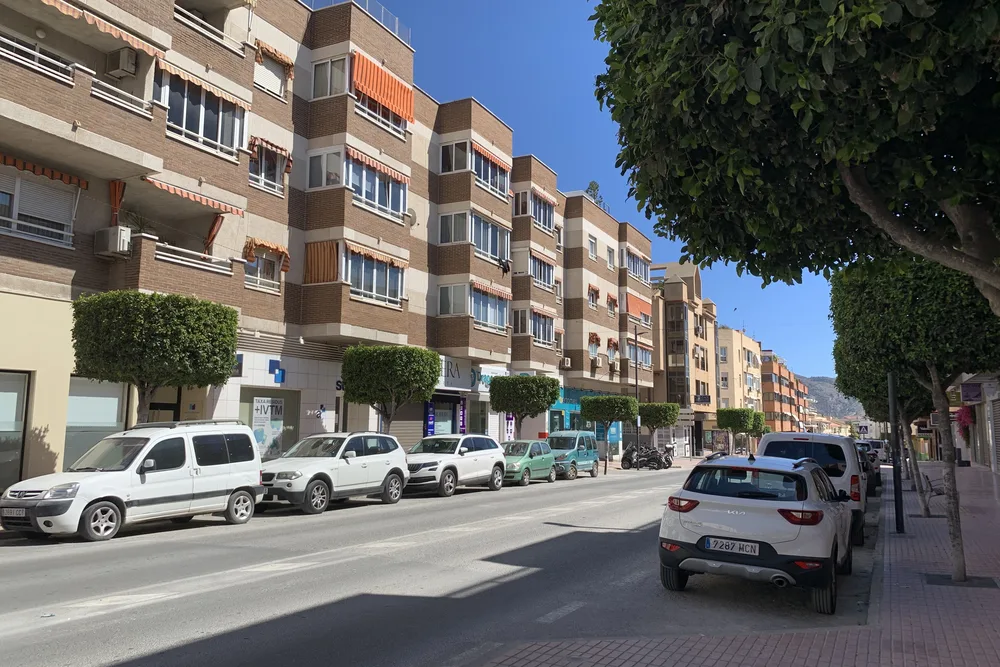
The port area is the second main location: around the fishing harbour, the small beach of La Grava and the marina are older blocks with top-floor homes, dating mostly from the 1960s and 1970s, with more recent additions here and there. Properties are generally smaller than along the beachfront, with promenades and restaurants on the doorstep and the church of Mare de Déu de Loreto overlooking the square. Conditions vary by building: whether the lift reaches the top floor, whether parking is included in the title deed, and the condition of roof terraces exposed to salt air. The coastal location also means that plans and any purchase need to be checked against the applicable coastal regulations.

Typical supply

Compact top-floor flats and occasional duplexes in older seafront blocks, often without a pool or garage. Lift access, roof condition and the owners’ association vary by building and need individual checks. Compare the roof and terrace rights in the title deed, the building’s condition and any salt damage, the management of the specific block, and the walking route to the harbour, beach and shops.

Trade-off

The port area offers marina life with coastal maintenance needs: salt, wind and sun affect the building, and deferred roof or lift repairs in older blocks can lead to additional charges. View in both high and low season, and have the roof inspected before making an offer.

New-build properties · individual developmentsNew build · duplex penthouses

Cala Blanca & the southern edge

Between Arenal and the southern coves lies Cala Blanca: a small, recognisable cluster of new-build developments where duplex penthouses appear within walking distance of the sea — in individual schemes and phases. Use the development’s name to guide your search. The supply is recent and limited: buyers here need to check each phase and its documents, as there is little resale history or record of fees and minutes. The location offers quiet compared with the beachfront, with the coves of the southern coast around the corner — but also means driving into the centre and the port, as Cala Blanca lies beyond easy walking distance of them.

Typical supply

Duplex penthouses in individual developments and phases, mostly with a pool and parking. Broaden the comparison beyond Cala Blanca — often only one phase is active — to the beachfront and port areas. Check the licence, phase and completion documentation for each unit, roof and terrace rights in the title deed, and the owners’ association formed at handover.

Trade-off

New-build properties here come with a limited operating history: the owners’ association is newly formed, actual fees and reserve-fund needs become clearer once the building is in use, and handover takes place phase by phase. Check the building licence, phase breakdown and first-occupancy documentation before making an offer.

The centre · scattered propertiesHistoric centre · searching building by building

Centro Histórico & Thiviers

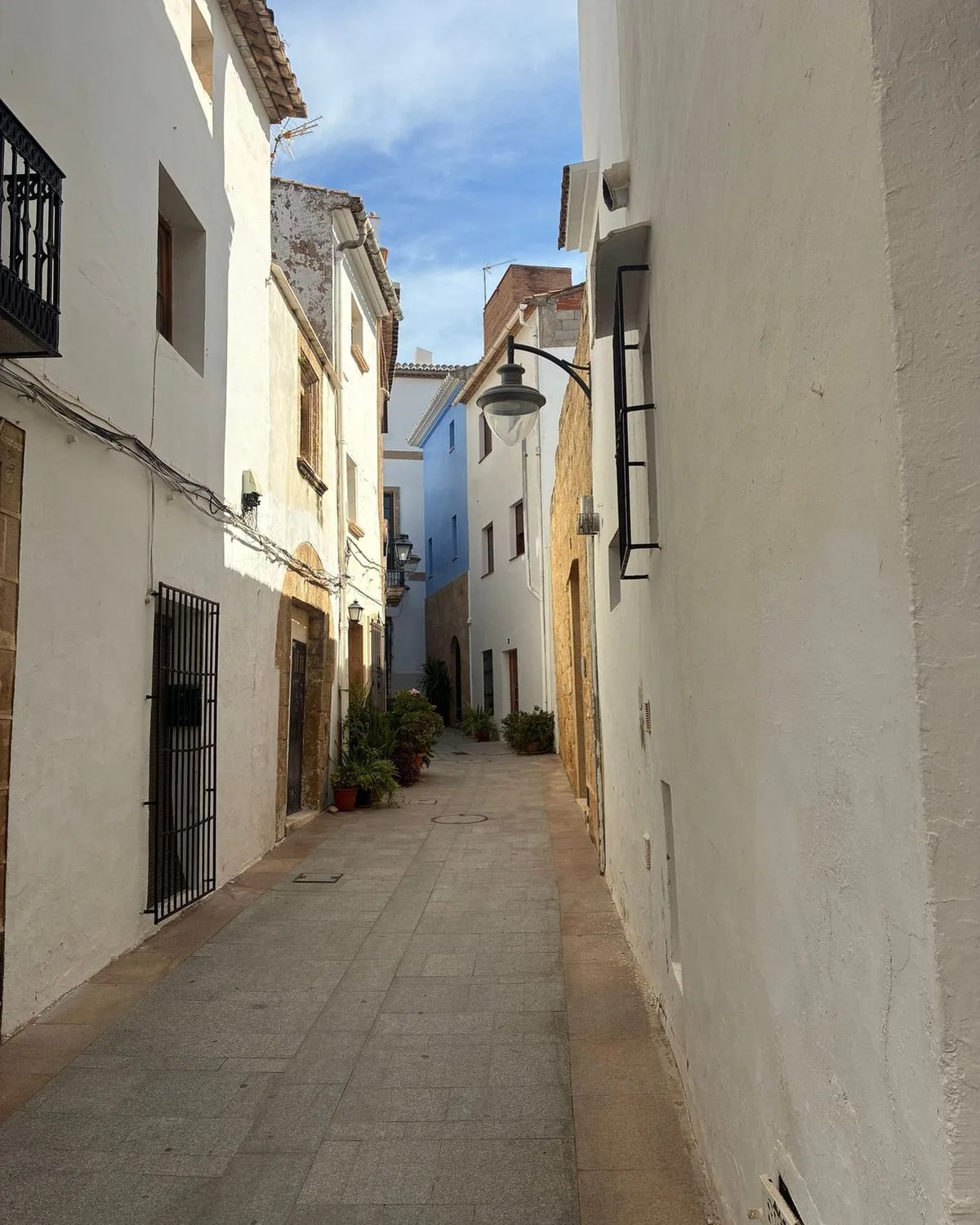
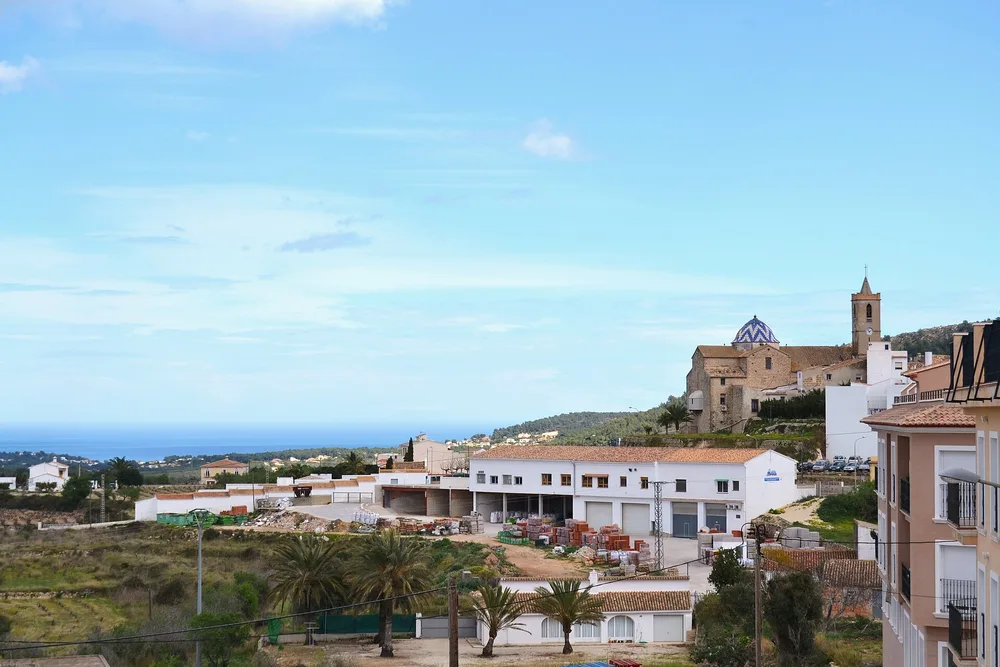
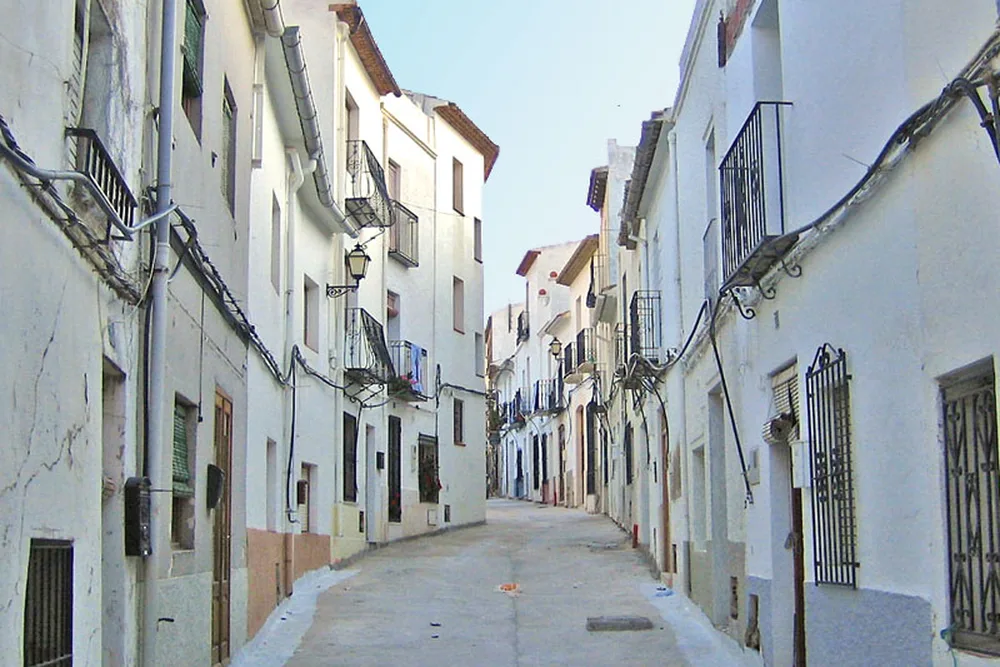
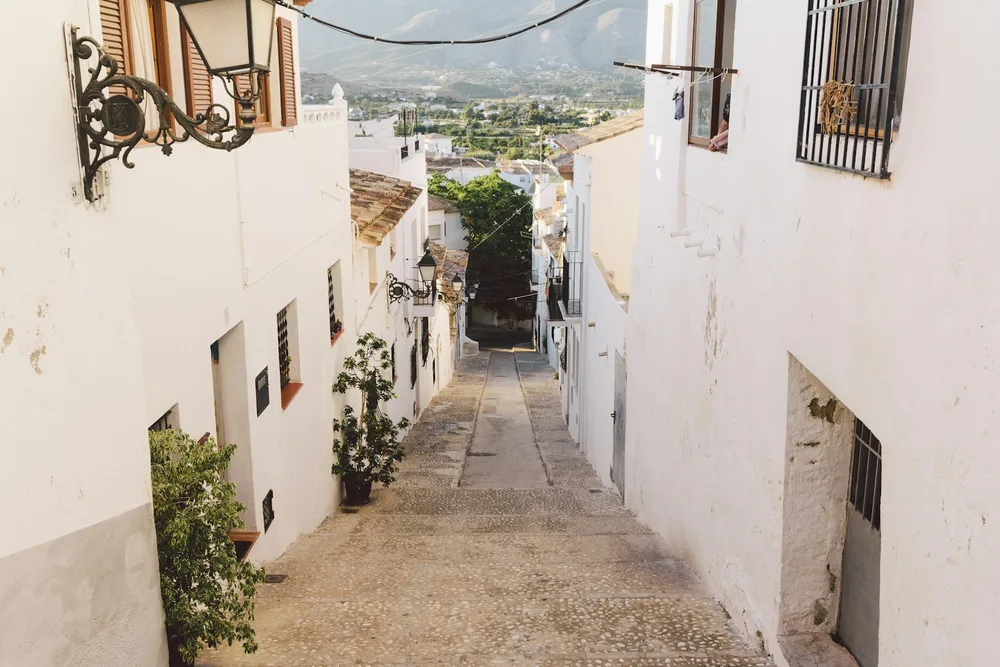
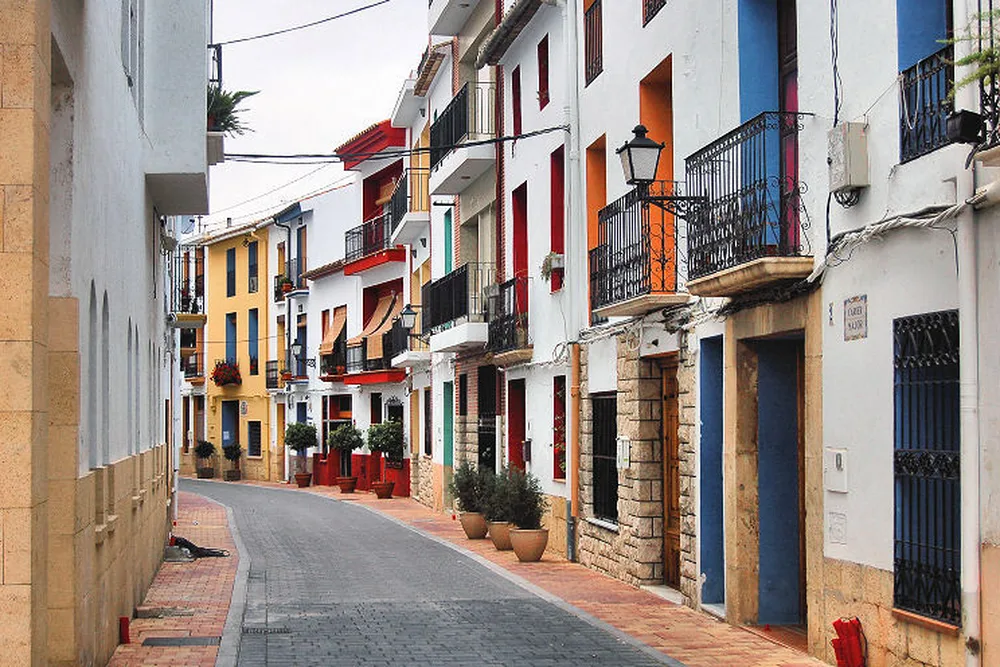
The historic centre around the church of San Bartolomé, the Mercat Municipal and the narrow streets towards Thiviers is another distinct area. There is no penthouse cluster here: buildings are small in scale, with small apartment blocks among the historic properties. Top-floor homes appear occasionally, often as an individual unit in a smaller building, and older buildings do not always have a lift. The attraction is village life — the market square, cafés, churches and museums within walking distance, with the Montgó as the backdrop. But supply is limited: searching for a penthouse here takes patience, building by building and listing by listing.

Typical supply

Scattered top-floor homes in smaller buildings, without a cluster or comparable properties in the same street. Compare against the beachfront and the port area rather than within the centre: roof and terrace rights in the title deed, lift access or its absence, the building’s condition, and the practicalities of driving to the beach and port.

Trade-off

The centre offers character with practical trade-offs: the beach and some services may be beyond easy walking distance, and buildings without lifts mean using the stairs. Try your daily routes yourself — on a weekday in January and a Saturday in August — before choosing the centre for its quiet.

The capes & coves · mainly low-rise homesCapes & coves · occasional supply

Cabo de San Antonio, Portitxol & Granadella

The edges of the bay are mainly low-rise: Cabo de San Antonio in the north with its viewpoint and the marine reserve offshore, Portitxol with its coves and fishermen’s houses, and La Granadella in the south — each an area for villas and small complexes rather than apartment towers. Where the ático label does appear here, it is usually a top-floor flat in a small complex without the beachfront’s full range of communal facilities. The capes offer distinctive views — cliffs, marine reserve, coves — but the supply is limited, changeable and without nearby comparisons. Searching here requires patience and checks on each property.

Typical supply

Occasional top-floor flats in small complexes, often without a communal pool and with no guarantee of lift access. Compare with the beachfront area: roof and terrace rights in the title deed, the full access route and lift provision, the management of the specific complex, and the need for a car — the coves are some distance from everyday services.

Trade-off

The capes offer views at the cost of distance: the supermarket, GP surgery and school may be beyond walking distance, and in summer the road to the coves fills up. Check the routes in both seasons and verify the description against the building before treating an occasional ático listing as a penthouse.

The mountain & the hinterland · mainly villasHinterland · detached housing

Montgó & the inland area

Behind the town, the Montgó defines both Jávea’s backdrop and the limit of its penthouse market: the natural park and adjoining slopes are mainly an area of detached housing — villas, fincas and plots on the mountainside, where top-floor flats are rare. Buyers searching here are usually considering a different property type: their own land, garden and quiet rather than a flat in a shared building. The mountain is also a reference point for views across the bay: walking routes to the summit start at the town’s edge, and the panorama from the top offers a useful perspective when assessing the views from a penthouse.

Typical supply

Next to no penthouse supply: the hinterland offers villas and country houses — useful as a comparison when choosing between a top-floor home and a property with land. If you are hesitating between the two, consider the ongoing costs: a private garden needs its own maintenance, and an owners’ association charges fees; both require a budget.

Trade-off

Be clear about the trade-off before you make an offer: buyers who want a garden and privacy on their own land are better served on the slopes than on a roof terrace, while those who want a penthouse must accept the absence of a private plot. Switching afterwards means a second move; the choice between a penthouse and a property with land is the first decision in this search.

Market data

Jávea Property Market Data

Price logic

How penthouse prices vary in Jávea

In this market, a single average is of limited use: the supply ranges from the Montañar beachfront to the older port blocks, the centre and the Cala Blanca new-build developments, and each penthouse is priced individually — floor level, views and building age can put two apparently equal units in different price brackets. A penthouse adds a complication of its own: the headline area in listings can merge the interior, covered terrace and open solarium, so €/m² comparisons can mislead. The bands below are an approximate guide, derived from our own assessment of this market, because every unit ultimately needs individual appraisal — not a price list or a snapshot of current listings.

Rooftop pool behind a glass fence, with the sea beyond

Explore a price band

01/ 04

Band 01Jávea

Up to ±€400,000

Band 02Jávea

±€400,000–600,000

Band 03Jávea

±€600,000–800,000

Band 04Jávea

€800,000 and up

What influences the price per m² of a penthouse in Jávea

This market calls for individual comparisons rather than an average: within one municipality, asking prices diverge with floor level, views and building age, while the beachfront, port, centre and capes each have different characteristics. The seven factors below help explain the price gap between two apparently equal top-floor homes — which is why we compare unit by unit and check the documentation for each, rather than relying on a town average.

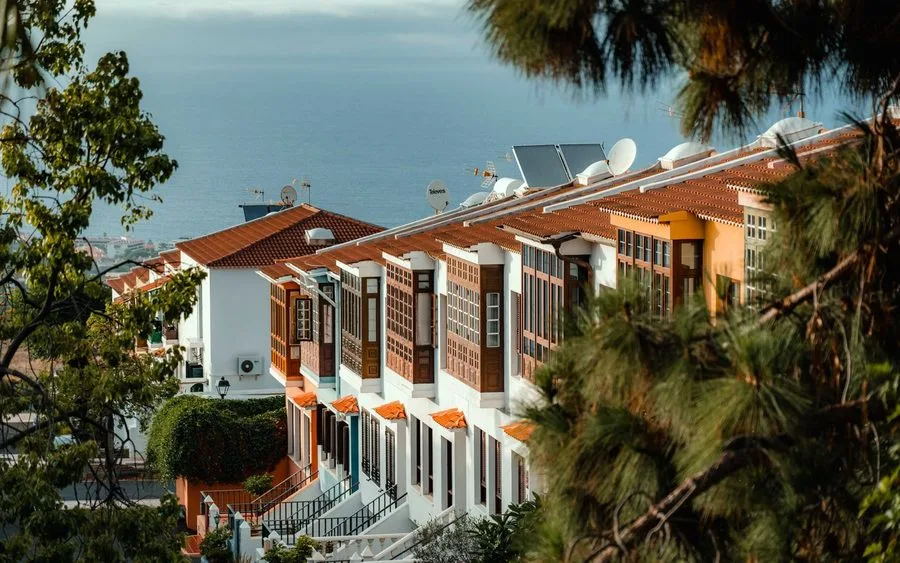
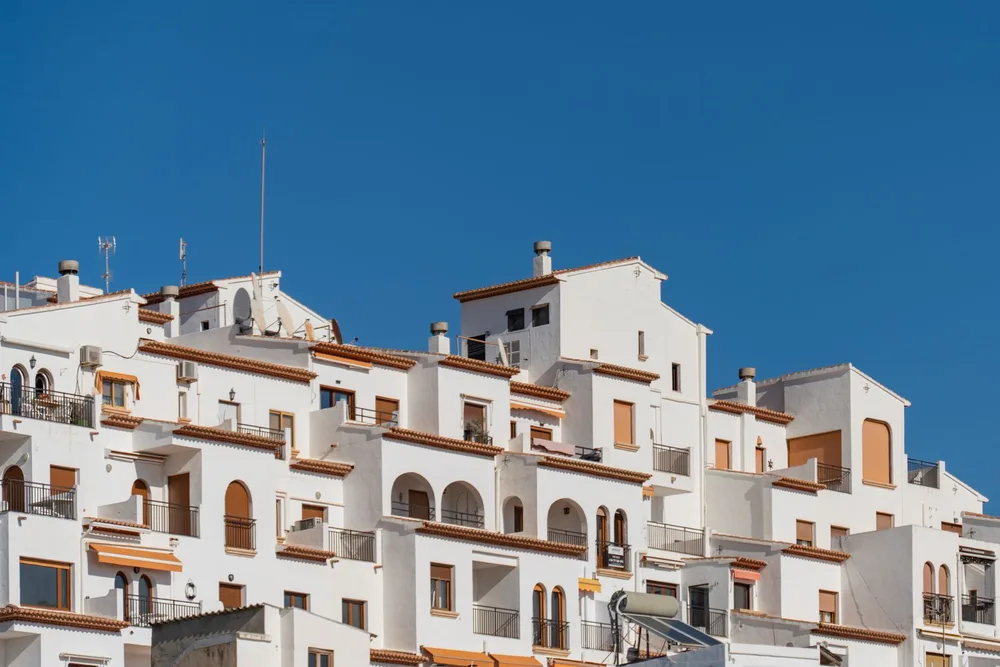
Authentic residential building facades on the Costa Blanca

Budget levels

What penthouse can you buy at which budget in Jávea?

Three budget bands, three different parts of the market — in a municipality with several distinct areas: beachfront, port, centre, new-build developments and capes. The boundaries are deliberately approximate: within every band, the price varies with floor level, views, building age and the exact address. The bands are a guide to focus your search, not a guarantee of today’s supply.

Up to ±€400,000

Entry-level properties in older buildings

In this band you will find Jávea’s more affordable properties: compact top-floor flats in older port blocks around Duanes de la Mar, properties set back from the beachfront and scattered units in the centre — often without a pool or parking, and in the oldest buildings sometimes without a lift. Older buildings may need work, so allow for electrical upgrades, kitchen refurbishment or roof maintenance. A port-area flat with an open view and a realistic renovation budget may offer better value than a newer penthouse bought without assessing the costs.

±€400,000–600,000

The main beachfront segment

Here is the heart of the Jávea market: duplex and triplex penthouses at El Arenal and along the Montañar, with a pool, lift and parking, and larger units on the harbour side of Duanes de la Mar. Buyers looking for a terrace have the most options here, with genuinely open sea or Montgó views generally found towards the upper end of the band.
±€600,000 and up

Larger penthouses, roof terraces & open views
From approximately €600,000, the upper end of the market opens up: roomy duplexes and larger penthouses in the best-positioned blocks of Arenal and Montañar, with large terraces, a lift and views over the sea and Montgó, alongside the new-build duplexes at Cala Blanca, where the exact development phase needs checking. The supply is limited and appears scattered: here you assess each property individually, with roof rights, the owners’ association and the view as the deciding factors. A regional comparison with Moraira and Benitachell helps put your offer in context.
A personal search

Finding the right penthouse in Jávea, together

A penthouse search needs to go beyond a list of properties, especially in a municipality where the Arenal and Montañar beachfront, the port area of Duanes de la Mar, the historic centre, the Cala Blanca new-build developments and the capes each require different checks. Send us your requirements — beach or harbour, terrace or nearby services, budget, year-round or seasonal use, and whether you plan to let — and we will send you suitable penthouses, with the questions to ask at each viewing.

Dusk light over the sea with palms in the foreground and the silhouette of the Montgó on the horizon

Checks

Jávea-specific checks when buying a penthouse

Every coastal town requires its own checks, and Jávea adds three considerations: a tourist-use framework in which Xàbia announced a one-year suspension of new tourist-use compatibility reports for multi-family buildings in June 2026; a coastal position where roof-terrace rights and shoreline restrictions need checking plot by plot; and buildings of different ages with varying roof rights and lift access. These are six checks we run on every penthouse purchase in Jávea, for the exact unit, building and cadastral reference.

Tourist-letting requirements

  • The regional framework is the Valencian tourism law (Law 15/2018): tourist-use dwellings (VUTs) are whole properties let for tourism purposes for up to ten consecutive days to the same tenant; stays of eleven days or more fall outside that definition. A favourable municipal planning compatibility report or an accepted equivalent, together with tourism registration, is required. Municipal rules also determine what is possible at the specific address.
  • The DOGV of 11 June 2026 (number 10382) published the initial approval of amendment XLI to Xàbia’s PGOU and a one-year suspension of new planning compatibility reports for tourist-use dwellings in multi-family buildings throughout the municipality. The suspension is time-limited: ask the Town Hall in writing at the time of purchase for its current status and how it applies to the exact property. A neighbourhood name or an old advert does not establish eligibility.
  • Read the owners’ association’s statutes and resolutions on letting and use, and verify the assumption behind the plan: buyers may price a penthouse on rental income before establishing whether letting is lawful. A letting plan here requires legal checks — regional definition, municipal restrictions, community rules and registration requirements — rather than brochure promises. Without those checks, paying a premium for a property advertised as suitable for investment is a gamble.

Narrowing down

How to narrow your penthouse search in Jávea

Jávea is large enough to get lost in and varied enough to make a search difficult: a beachfront area, a port, a centre, a small cluster of new-build developments, capes with coves — and adverts that present terrace space as living area. Seven steps help narrow the selection of penthouses to the few that fit and turn viewings into informed decisions.

Choose your Jávea first

Choose your Jávea first

The El Arenal and Montañar beachfront, with residential complexes and the municipality’s only sandy beach; the port area of Duanes de la Mar, with its promenade and marina; the historic centre, with its market square and narrow streets; the Cala Blanca new-build developments; or the capes with their coves. These are five distinct options, each with its own stock, pricing and daily rhythm. Searching them all under “sea-view apartment” can obscure those differences. Choose the setting that suits you first, then focus your search.

Check the floor area carefully

Check the floor area carefully

Interior, covered terrace, open roof terrace, storage and parking are often combined into a single headline figure in listings for this property type. Request a breakdown from the title deed, nota simple and cadastral records, compare it with on-site measurements, and calculate price per square metre on a consistent basis. Using the headline area alone can mean valuing a roof terrace as indoor living space.

Roof ownership & use rights

Roof ownership & use rights

For a penthouse, roof rights are an early priority: is the space owned or for exclusive use, who pays for the structure, membranes and drainage, and were glazing, pergolas or rooftop rooms built with the required permits and community approval? Under the Horizontal Property Act (Ley 49/1960), roofs and terraces can be common elements. Resolve any inconsistency in the title documents before treating the terrace as private space.

Review the owners’ association

Review the owners’ association

Fees, budget, reserve fund, outstanding community fees and planned works all matter. Beachfront buildings depend on lifts, façade systems, pools and gardens, and major decisions require votes. Request meeting minutes and a certificate of outstanding community fees, and read the statutes and resolutions on use and letting, including roof terraces and tourist accommodation. A low fee with an empty reserve fund may mean higher contributions later.

Check the legal basis of your letting plan

Check the legal basis of your letting plan

If you plan tourist letting, check the legal position before arranging viewings. Valencian tourism law (Law 15/2018) defines VUT stays as up to ten consecutive days for the same tenant; stays of eleven days or more fall outside that definition. The notice published in the DOGV of 11 June 2026 (number 10382), alongside initial approval of amendment XLI to Xàbia’s PGOU, announced a one-year suspension of new compatibility reports for tourist-use dwellings in multi-family buildings. Ask the Town Hall in writing how the current rules apply to the exact address, and check community statutes and approvals. The seller’s existing listing does not establish your right to let.

Check the lift, the floor & the route

Check the lift, the floor & the route

The “ático” label does not automatically mean “top floor with a lift”: listings may be inconsistently classified, and older port blocks and historic-centre buildings may have no lift or one that stops below the top floor. Confirm the floor level, lift access and full route from parking to terrace, in both directions, before making an offer.

Check the view & seasonal conditions

Check the view & seasonal conditions

The Montgó is a landmark that helps frame the view, but planning rules determine what may be built around it. Check with Urbanismo what could still be built between your terrace and the horizon, and view shortlisted properties in both August and January: beach activity, the Montañar route and life in the complex all change with the season.

A good fitSecond home

The lock-up-and-leave second-home buyer

You want to lock up and drive away without a garden or private pool to maintain. In Jávea, many beachfront blocks offer building management, a communal pool and lifts; the flat Montañar coastal route links the port and beach without a car, and ALSA route 526 connects Jávea with Alicante and the airport. Check the management of the specific building: fees, reserve-fund details and meeting minutes should be reviewed when viewing.

Lock-up-and-leaveManaged by the owners’ associationLift & parkingALSA route 526Beach within walking distance
Evening light over the rocky coast of Jávea
Locking up means trusting the building: check its management as carefully as the view.
Jávea in winter
The year-round test: what to check in a quiet month
  • How the terrace feels in winter: where the sun is at ten in the morning in January, how hard the wind blows on exposed upper floors above the bay, and how long you can sit on the roof terrace without a coat. The height that gives views over the sea and Montgó also brings exposure to wind — test both during the same visit.
  • How transport works in winter: ALSA route 526 links Jávea with Alicante and Alicante Airport, while the flat Montañar coastal route connects the port and beach on foot or by bike. Check current timetables for your destination and season, and walk the exact route from the property to the bus stop or centre.
  • What stays open in January around your address: Jávea is a working town with three main areas — the Mercat Municipal and the shops of the centre operate year-round, as do the restaurants around the port. Test your own daily routine: supermarket, pharmacy, GP surgery and the route to them — usually within easy reach in the three main areas, but a drive from the capes.
  • How driving and parking vary by season: in August, visitors to El Arenal bring traffic and parking pressure to the beachfront and approach roads that you may not encounter in January. Compare parking at the building in August with a Tuesday in January, confirm whether a space is included in the title deed, and check your regular routes in both months.
  • What the roof looks like in wet weather: puddles on the membrane, blocked drainage, mineral deposits or damp edges, and ceiling staining beneath — problems you may not see in summer can become visible now. At the same time, ask for the building’s leak history: a wet-weather inspection is more informative than a summer photo.
  • How comfortable the top floor is during the coldest week: check roof insulation, glazing, shading, heating and cooling, hot water and water pressure, fibre broadband, and any separate terrace lighting or water supply. These features can distinguish a top-floor flat from the floor below. Frames and sealant need particular attention in coastal air; test the home in the season when you will rely on it.
  • How the building is managed in winter: buildings with seasonal owners can be much quieter in February. Check who takes care of management when most neighbours are away, whether the building keeps functioning fully, and whether the owners’ association’s work, including its annual meeting and planned repairs, continues outside peak season.

Frequently asked questions

FAQ about buying a penthouse in Jávea

What does a penthouse in Jávea cost?
Jávea has three broad budget bands. Below approximately €400,000, you will mostly find compact top-floor flats in older port blocks and the centre, sometimes without a lift or parking. Between approximately €400,000 and €600,000 is the main segment: duplex and triplex penthouses at El Arenal and along the Montañar, with a pool and lift. From approximately €600,000, larger penthouses offer bigger terraces and open views, with exceptional properties exceeding €800,000. These bands are approximate: the price depends on floor level, views, building age and the exact address. Check current listings for up-to-date asking prices.
Which part of Jávea is the best to buy a penthouse in?
That depends on your priorities. El Arenal and the Montañar offer beachfront living: duplexes with a terrace, pool and lift by the municipality’s only sandy beach. The port area of Duanes de la Mar has more compact units in older seafront blocks, with the promenade and marina within walking distance. Cala Blanca offers a small selection of new-build duplex penthouses. In the centre, top-floor homes are scattered and searches focus on individual buildings. The capes are mainly low-rise, with occasional penthouse listings. Choose the setting first, then the property.
Can I let my penthouse in Jávea to tourists?
Only if the property meets the applicable requirements. Valencian tourism law (Law 15/2018) defines tourist-use dwellings as whole properties let for tourism purposes for up to ten consecutive days to the same tenant; stays of eleven days or more fall outside the VUT definition. A favourable municipal planning compatibility report or accepted equivalent and tourism registration are required. The DOGV notice of 11 June 2026 (number 10382), published alongside initial approval of amendment XLI to Xàbia’s PGOU, announced a one-year suspension of new compatibility reports for tourist-use dwellings in multi-family buildings. Ask the Town Hall in writing for the current position at the exact address, and check community statutes and approvals before relying on rental income.
Is the roof terrace of a penthouse legally private?
Not automatically. Under the Horizontal Property Act (Ley 49/1960), roofs and certain terraces can be common elements assigned for exclusive use. The title deed, deed of division and statutes establish the position. Request the nota simple, title deed and plans, and confirm that ownership or exclusive-use rights are described consistently and that responsibility for waterproofing and drainage maintenance is clear. For duplexes and triplexes with terraces on several levels, check each level separately. Resolve any conflict between documents before making an offer.
Does every penthouse in Jávea have a lift?
No. Listings labelled “ático” are not always consistently classified, and older port blocks and historic-centre buildings may have no lift or one that stops below the top floor. Confirm that the lift serves the penthouse level and, ideally, the parking area. Ask for its maintenance records and walk the full route — parking, lift, corridor and front door — before making an offer.
What extra checks should I make on a coastal top-floor property?
Start with the roof. Commission an inspection covering membrane age, drainage, standing water, parapets and flashing, and check interior ceilings and upper corners for moisture marks. Coastal exposure can accelerate deterioration of frames, metalwork and waterproofing. Review community minutes and maintenance records for previous roof works and planned special assessments, and confirm that glazing or pergolas have the required permits and community approval. The age of an alteration does not prove it is lawful.
Is the floor area stated in adverts reliable?
Not automatically. Spanish adverts may combine the interior, covered terrace and open roof terrace in the headline area, distorting €/m² comparisons and making the interior appear larger than it is. List the interior, covered terrace, open solarium, storage and parking separately, and reconcile the figures with the nota simple, title deed, cadastral records and approved plans. Investigate any discrepancies before relying on the advertised area.
Can I also buy a new-build penthouse in Jávea?
Yes. The developments at Cala Blanca, between Arenal and the southern coves, offer duplex penthouses within walking distance of the sea, alongside individual schemes and phases elsewhere. Check the building permit, approved plans, phase breakdown and completion documentation for your exact unit. Developments are handed over phase by phase, and “nearly finished” in a brochure is not a confirmed handover date. Use development names to guide your search, then check the documents. If you plan to let, also check community rules and the municipal position before including rental income in your plans.
How easy is it to get around Jávea without a car?
Getting around locally is generally easier than travelling further afield. The flat Montañar coastal route links the port and beach on foot or by bike, and everyday services are within easy reach in the centre, port and beach areas. ALSA route 526 connects Jávea with Alicante and Alicante Airport. The capes and parts of Cala Blanca are more dependent on a car: check the walking route from the exact address to services or a bus stop, and the winter timetable for the journeys you expect to make.
What are the community fees and monthly costs of a penthouse?
Costs vary widely by building: a complex with lifts, a pool, gardens and parking generally costs more to run than a small block without a lift. Request the annual budget, reserve-fund details, a certificate of outstanding community fees and minutes covering planned works. A low fee with an empty reserve fund may mean higher contributions later. For a penthouse, pay particular attention to roof and drainage maintenance, as coastal exposure can increase upkeep. If you plan tourist letting, include the associated administrative costs.

On the map

Penthouses for sale in Jávea on the map

Jávea (Xàbia) lies on the Costa Blanca in the province of Alicante, at the foot of the Montgó, between Cap de Sant Antoni and Cap de la Nau.

Browse by Property types

Other property types in Jávea, Spain

Compare penthouses with the alternatives in the same municipality — each with its own trade-offs.

Browse by location

Where to Buy Penthouse in Spain in other locations?

Jávea sits within a wider comparison: northwards the coast runs to Dénia; southwards through Benitachell, Moraira, Benissa and Calpe to Altea and beyond, with inland towns nearby. Twelve towns, each with a penthouse market of its own.

The coast of Benitachell with sea viewsThe quiet southern slope

Penthouses in Benitachell

The municipality directly to the south, with penthouse supply concentrated around Cumbre del Sol and open sea on the horizon. Smaller and more concentrated than Jávea’s three main areas, with a dedicated page of its own.

Aerial view of a resort complex in the hills of FinestratResort belt by Benidorm

Penthouses in Finestrat

The resort area to the south-west, beneath the Puig Campana and beside Benidorm: residential complexes with a lift, pool and garage, as well as the coastal strip of La Cala. While Jávea’s market centres on low-rise buildings in distinct areas, Finestrat offers larger complexes with communal facilities — a useful comparison for buyers who prioritise amenities.

Peñón de Ifach above the bay of CalpeTowers on two bays

Penthouses in Calpe

The high-rise market of this coast beneath the Peñón, south beyond Benissa: towers on two sandy bays, with a greater concentration of penthouses than Jávea. Compare similar properties here — beachfront with beachfront, and the management and costs of each owners’ association.

The coast of Benissa with a view of the seaA coastline of coves

Penthouses in Benissa

A municipality of two parts between Calpe and Moraira: a historic town centre inland and a narrow coastline of coves. Penthouse supply is small and scattered — an alternative for buyers who find Arenal too busy in summer.

A view over the white roofs of Moraira towards the seaA bay with a marina

Penthouses in Moraira

Teulada’s coastal village, south of Benitachell: a bay with a marina, a low skyline and penthouses more often in low-rise street-front blocks than towers. Its smaller property stock makes it a natural comparison for Jávea’s port area.

Evening light over the roofs and bay of AlteaWhite town above the sea

Penthouses in Altea

Further south are Altea’s white old town above the bay, the l’Olla beachfront and the slopes of Altea Hills. Penthouses here offer character and views in a town known for art and coastal life — a useful comparison for Jávea’s historic centre and seafront areas.
The coastline of Albir in L’Alfàs del PiAlbir & Foia Blanca

Penthouses in L’Alfàs del Pi

Between the mountains and Benidorm, with penthouse supply mainly in Albir: avenues around Foia Blanca, the Sierra Helada as a backdrop and a limited selection of renovated properties. The area has a quieter character than its high-rise neighbours, with access to nearby coastal towns.

A lit pool beside a villa in the hills of La NucíaHigh above the bay

Penthouses in La Nucía

The hillside municipality inland from the coast, behind Benidorm: height here means cooler evenings and wide views over the bay, with a stock that is mostly modern and residential. The attraction is the outlook rather than the beach, with sports facilities and services nearby.
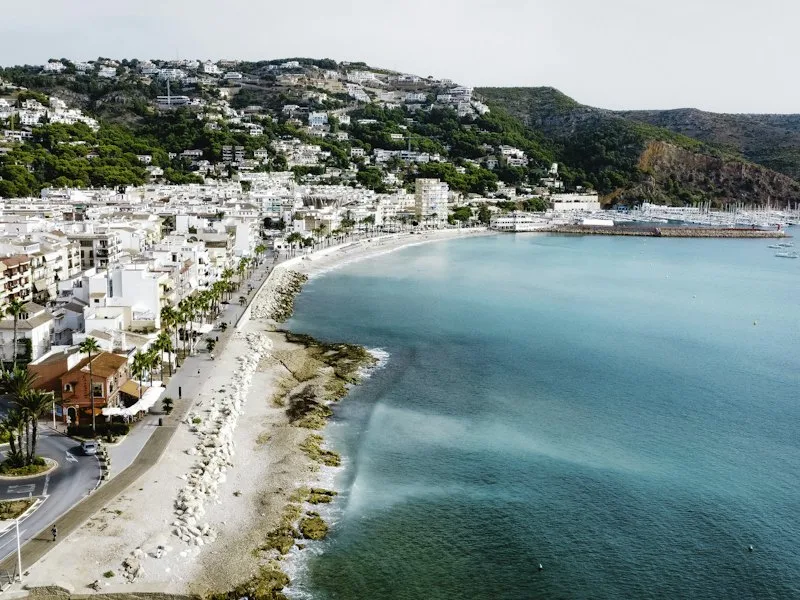

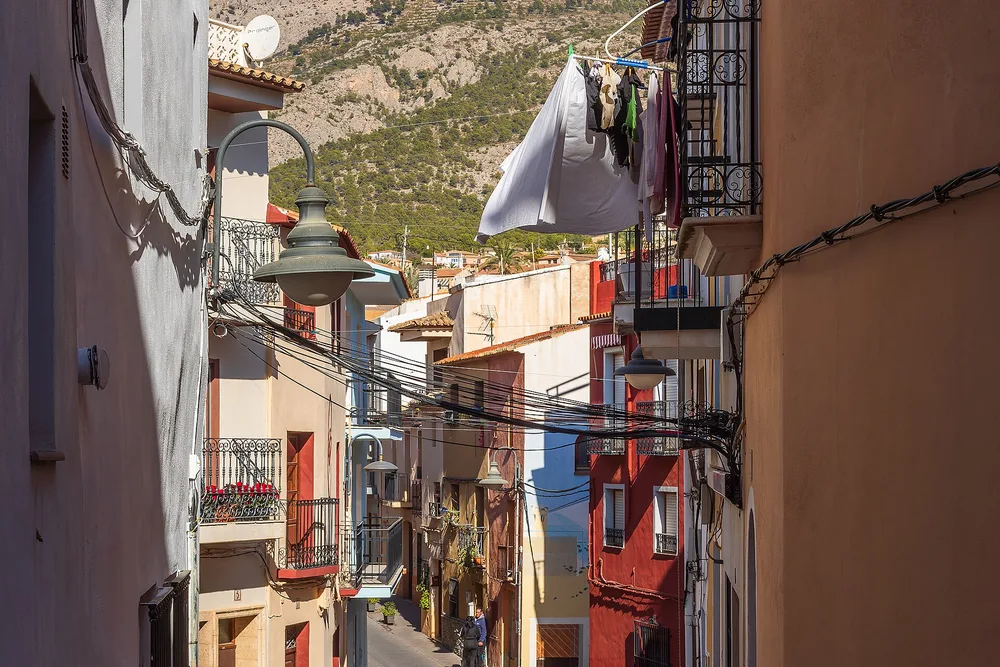
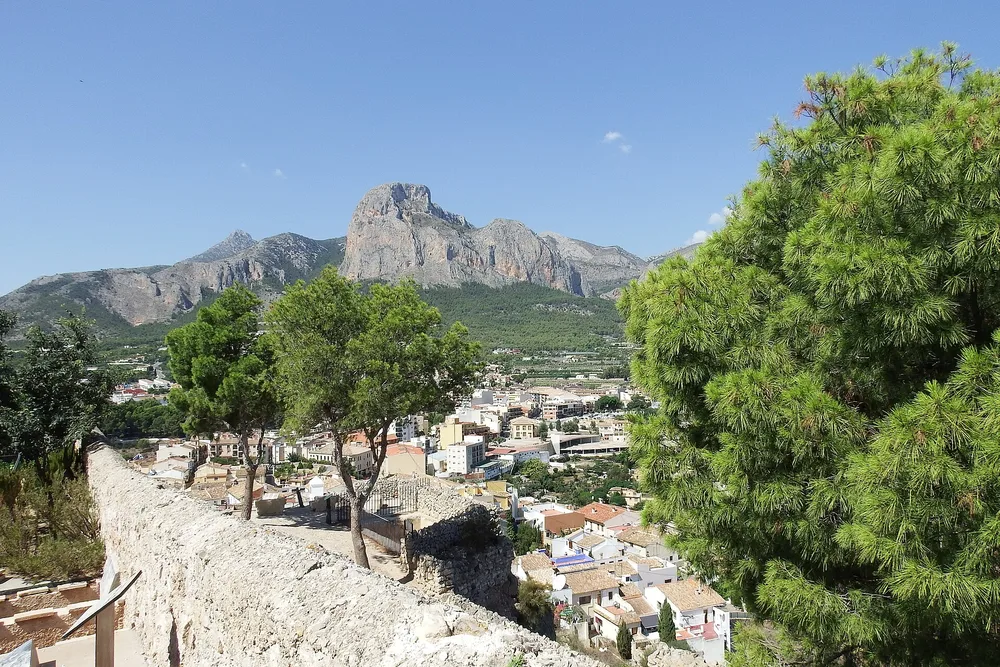
The castle crag of Polop above the valleyInland behind the coast

Penthouses in Polop

Inland from La Nucía and Benidorm: a historic village beneath its castle hill, with new-build complexes around the old centre. Penthouses here are generally newer and less expensive than on the coast — an inland alternative, comparable in setting to the hinterland beneath the Montgó.

Rocky shore with swimmers at DéniaCastle, port & Montgó

Penthouses in Dénia

The northern neighbour, beyond Cabo de San Antonio: a working town between the long Les Marines beachfront and the northern Montgó slopes, with a castle and port. It offers the same main features as Jávea — mountain, port and beach — with a different daily rhythm, making it a useful comparison.

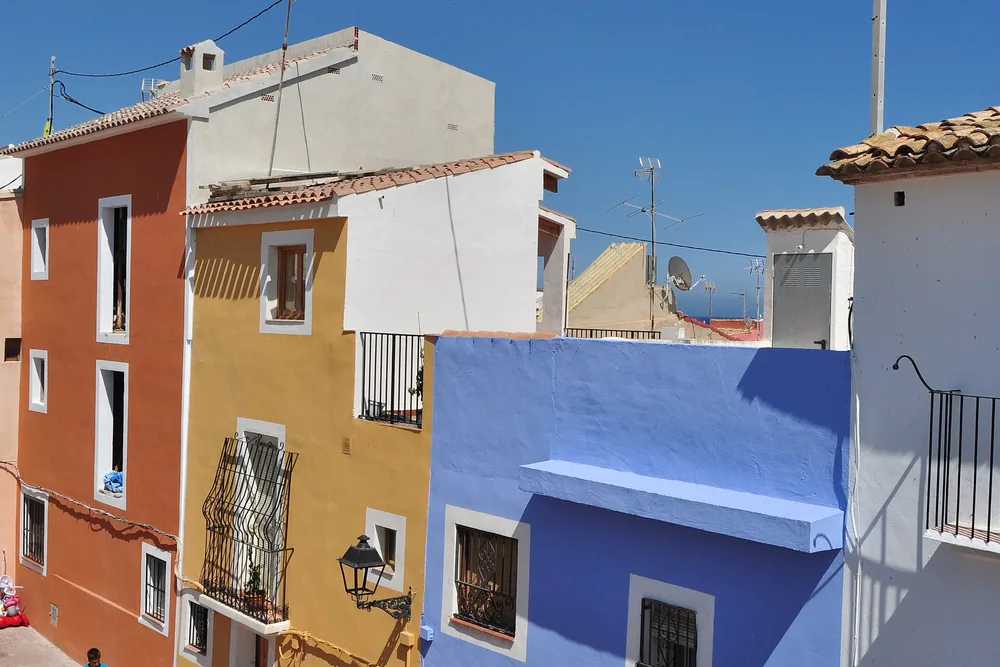
Colourful façades in La Vila JoiosaThe colourful port town

Penthouses in La Vila Joiosa

The colourful town further south, beyond Benidorm: sea-facing façades, a working port and year-round town life. Its penthouse market is smaller than those of its high-rise neighbours, offering another port-town option to compare with Jávea.

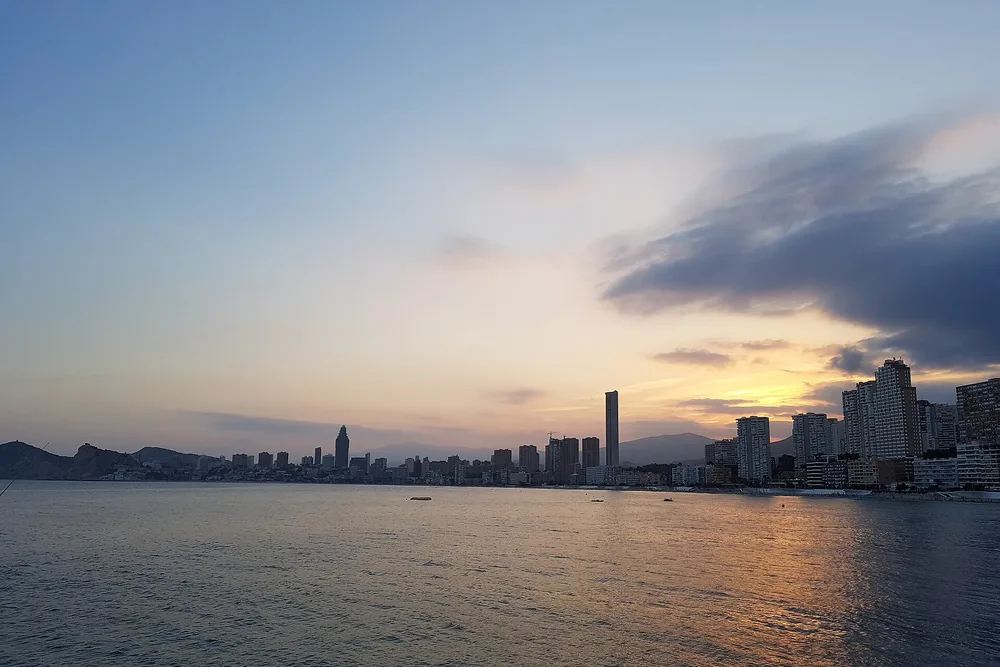
The skyline of Benidorm above the bay at duskThe tower city

Penthouses in Benidorm

The southern end of this coastal comparison: the Costa Blanca’s largest high-rise market, with penthouses at heights rarely found in Jávea. A taller skyline and a larger selection offer a different market to compare with Jávea’s three main areas. Explore it on the dedicated page.

Area guide

Explore Jávea with our guide

The Montgó above the town, the bay between Cabo de San Antonio and the southern coves, El Arenal beach and the port of Duanes de la Mar: our Jávea guide covers the whole municipality and puts the locations on this penthouse page in context.

The sandy beach bay of Jávea with buildings

Contact Altea Casas

Looking for a property on the Costa Blanca? Tell us what you’re looking for, and our team will get back to you shortly.

Send Us a Message

Data protection information under the General Data Protection Regulation (EU) 2016/679 (GDPR) — read more.